

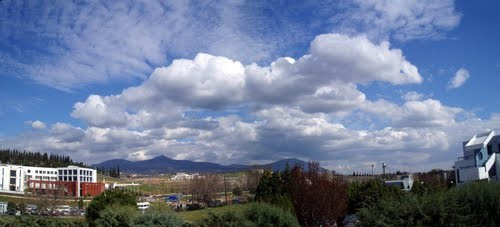
Hello from a back porch in the Midwest. Though I live in the suburbs, I feel at home here at Celi’s site. You see, I like to think that I grew up on a farm. One that is still productive in Northern Greece.
Well, I didn’t actually grow up there, I was 30 when I arrived. But I did grow—a lot. In awareness of nature, history, and culture. Living on a farm there, I also grew in appreciation for some important things children can learn, like watching the world . . .
It was 1970. I was engaged in a two-year project in Thessaloniki, the second largest city in Greece.
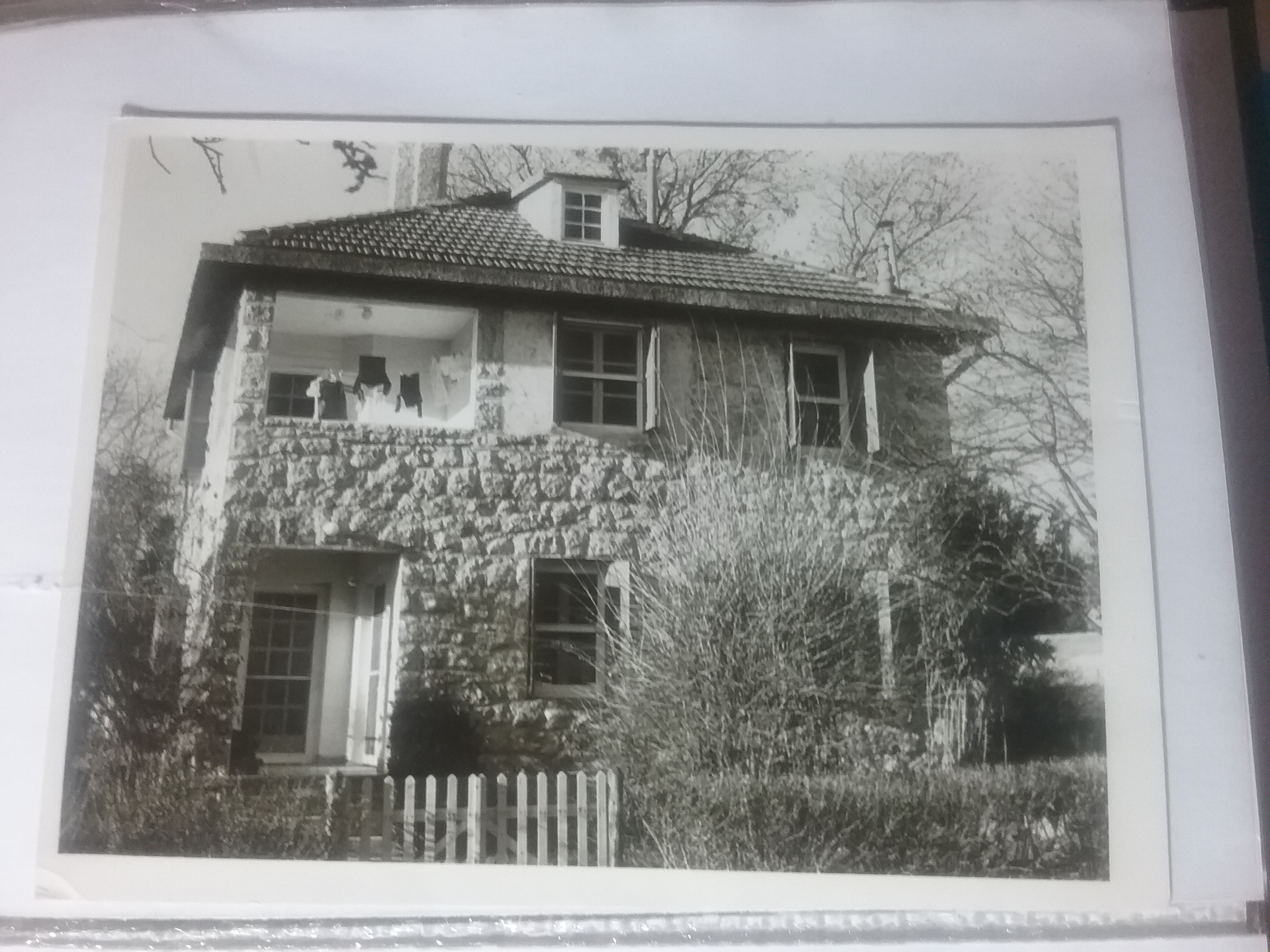
We were renting a house on the property of The American Farm School.
Each day that I went off on the half-hour bus ride to work, my wife and our three-year-old son walked the lanes and visited other families employed there.

During those two years, I discovered a significance in poetry and myth that had escaped me in my own schooling. Among other things I learned the meaning of halcyon days. It may have been an effect of the light or the always present sea.
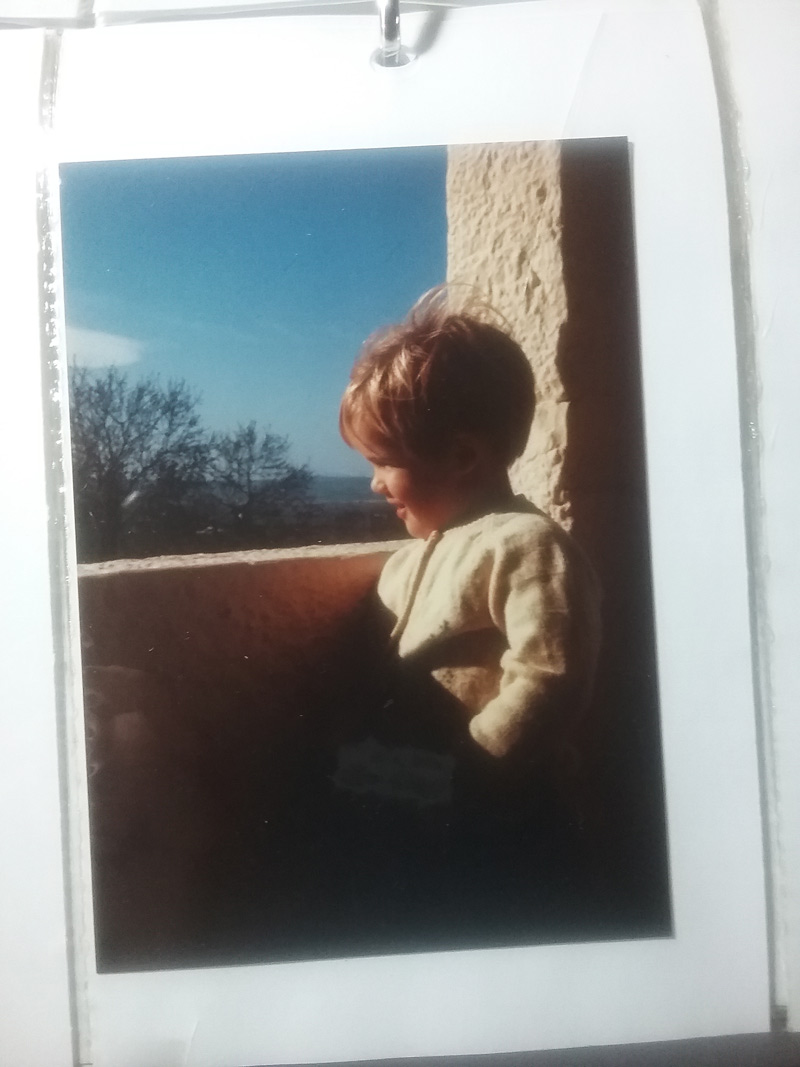
We could see it from our porch.
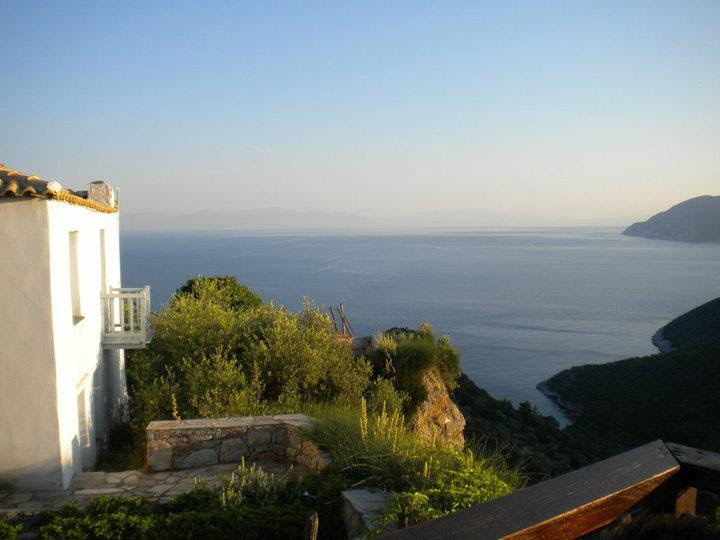
We thought we could smell it, though most days it was the fresh manure from the farm animals that had been recycled as fertilizer on the field across the lane from our house.
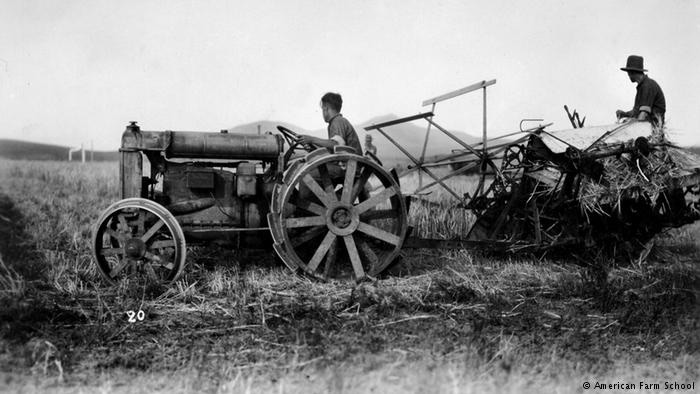
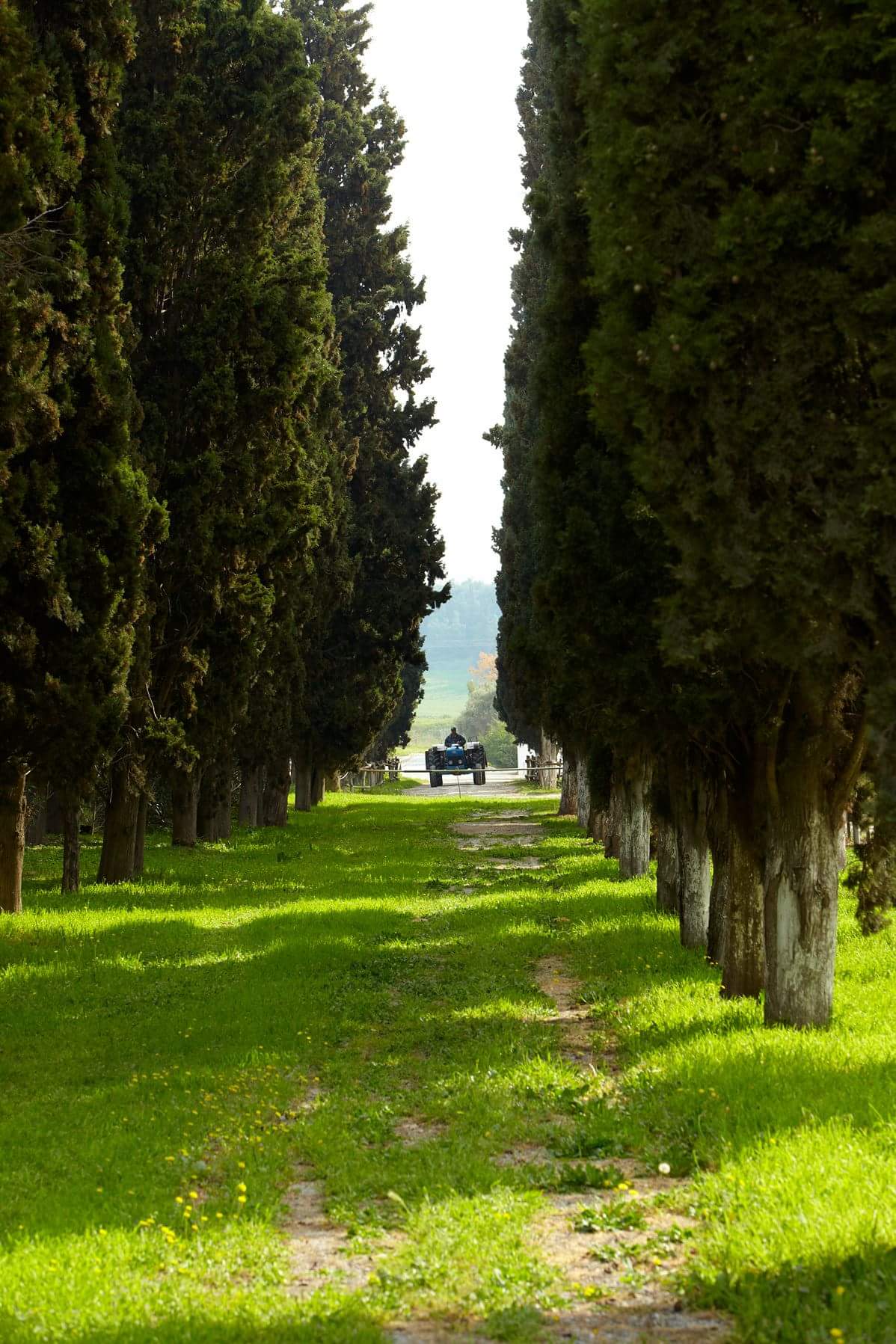
We all grew in appreciation of nature and of the simple life. Some mornings I would be awakened by an old tractor chugging along the lane. In winter the stone house was cold, with only slices of sun breaking through the wood shutters. I had to fill the oil stove in the upstairs hall, light the wick, check the black stove pipe for leaks. Soon we could huddle in the hall, dressing, our four-year old son eager to get outside where the action was.
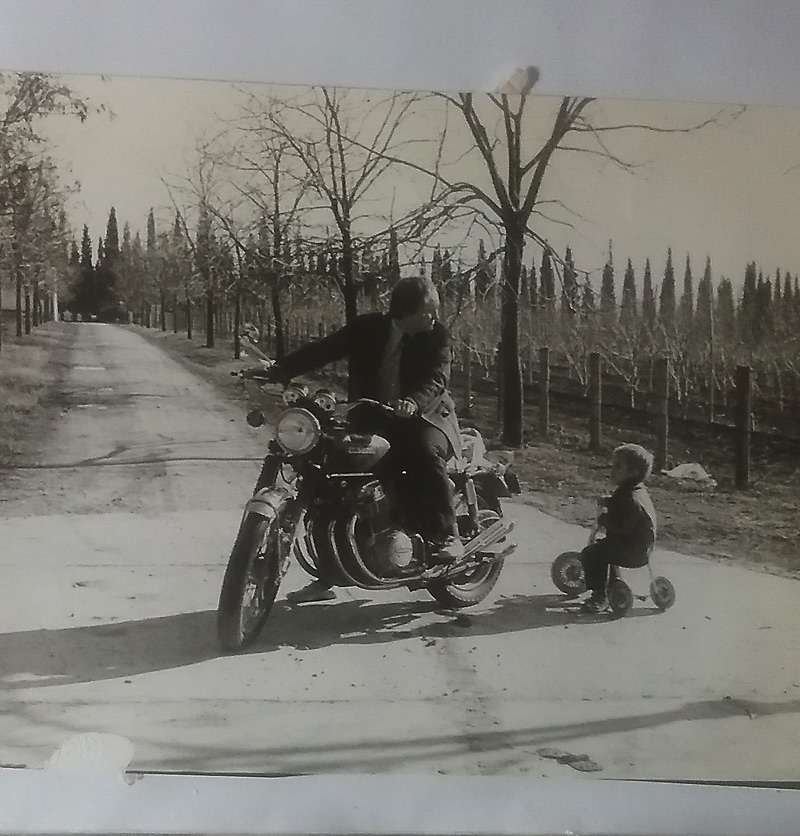
No matter the season or weather, Albie often followed the tractor, scattering the chickens as he pedaled down to the two large barns, one for the pigs and one for the dairy cows. Sometimes he tried to climb the small trees, like the one we sometimes sat under waiting for the ripe persimmons to fall into our plaos.
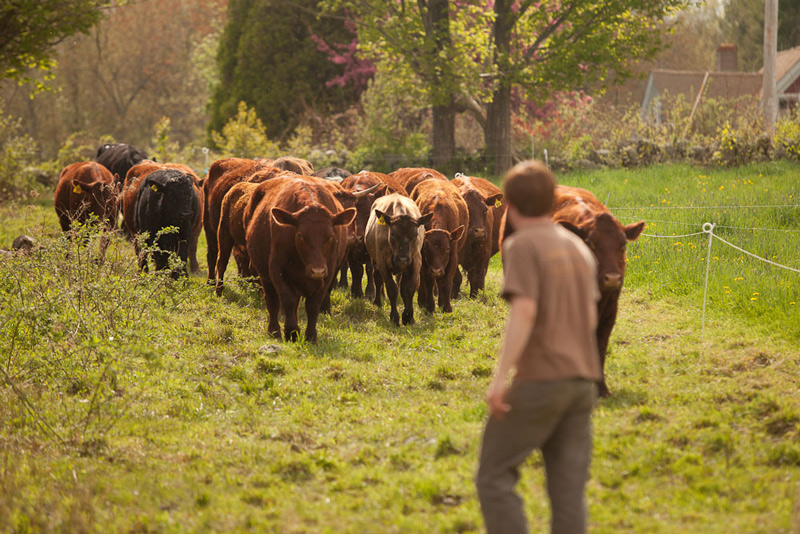
There were no cell phone cameras of course, but I have retained many images, some of which match the pictures I see now on Celi’s blog every day. I am not aware that the workers at the Farm School named their cows and pigs and cats, or talked to them affectionately, but I’m pretty sure that Albie did. Probably the students did too..
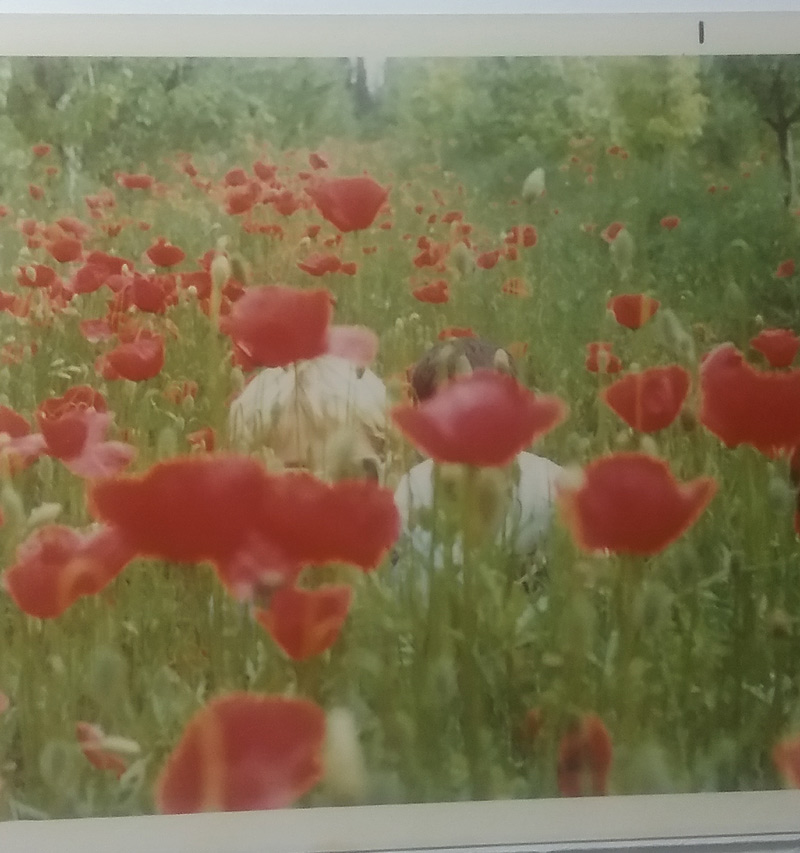
Albie loved the flowers too. He even told a neighbor lady once that he was a flower. Another time he came home with tiny white petals in his hair and on his clothes.
* * *
“Here’s my coat. I got flowers on it,”
The boy said, as if flowers were punishable, like dirt.
The blue coat was white with petal parts
that looked like snow. He must have rolled in it.
What could the father say,
Who had instructed the boy to follow rules of cleanliness,
And to report infractions.
He might have said,” Next time stay away from flowers,”
If he hadn’t realized what it sounded like.
He started to say, “How in the world did you manage that?”
–really wanting to know,
Instead, he thanked the boy, smiled, and walked away
Holding the coat close, and holding on to a dream
Of one white-haired child, crouched behind a bush nearby,
Waiting to surprise his friends with flower balls.
* * *
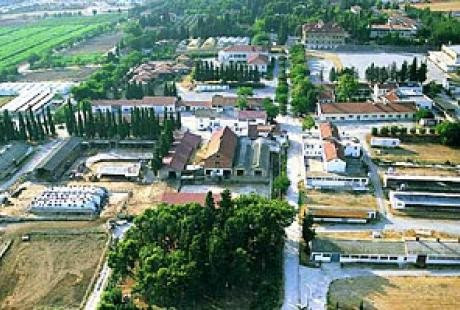
Backed by bare mountains, the Farm School rests on a gradual slope leaning towards the sea.
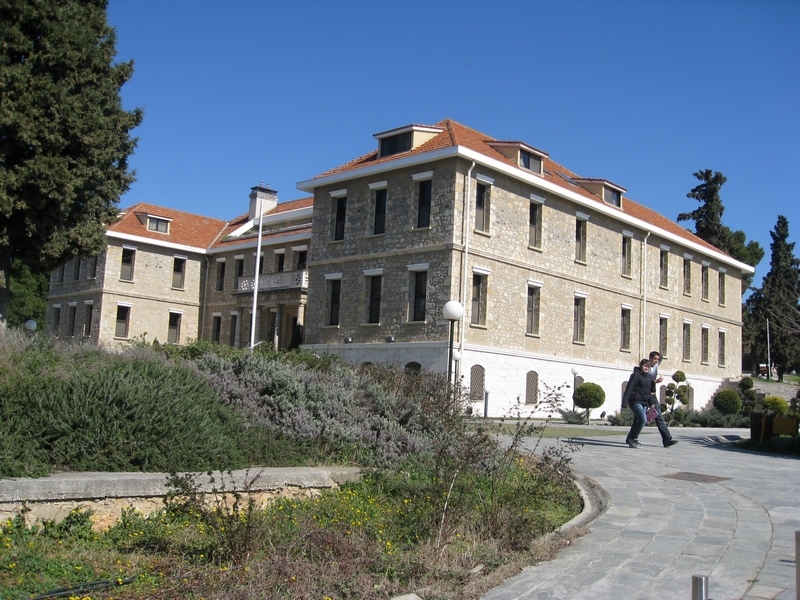
It was founded in 1904 by John Henry House and his wife, Susan Adeline. They had spent the previous 30 years doing charitable work in Bulgaria.
The first students were boys orphaned in one of the many uprisings marking the collapse of the Ottoman Empire in Europe. Dr. House was known as a practical idealist, dedicated to “educating the whole individual: the head, the hands, the heart.”
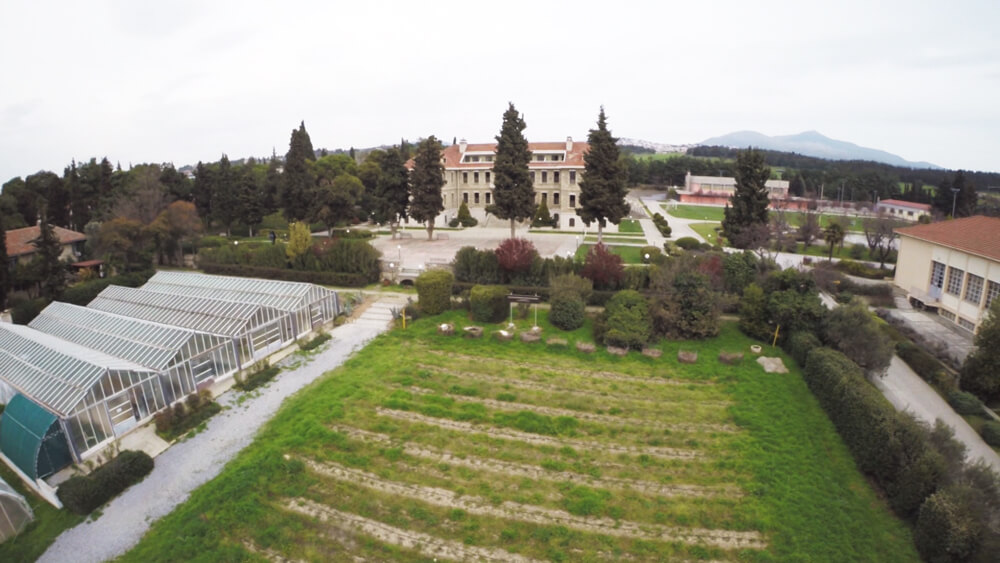
By the time we arrived there, boys from villages slept in bare dormitories at night and by day followed a curriculum based on the goals and principles set by the founders. My son was welcomed by them and by their instructors, and he spent happy moments being “home-schooled” occasionally at the edges of barns, sheds, paddocks, and fields.
Albie has his own family now. And he seems to be teaching his son some of what we both learned back in those years together on a far-away farm that was also a school.
* * *
Notes:
The school has grown a lot since we were there. Some of the photographs above are borrowed from its website or from associates and friends of the school. You can tell which pictures are from our family album.
Albert.
Albert blogs and writes at Albits. Occasionally you may find other poems of Greece if you visit.
 The Kitchen's Garden
75 responses to “Guest Post: A school of Farming”
Oh, that picture of Albie in the poppies! That happy image will stay with me all day.
Cheers, Elizabeth
Isn’t that something! And it wasn’t posed, believe it or not. He and his friend thought they were spying on us. The funniest part for me was the sunglasses.
What a wonderful post! I agree, travel can be so enriching, and the fact that you had the chance to live there for a few years is even better. I miss the Mediterranean… I wasn’t that far from you a few years later, in Israel. I never did have a chance to do any traveling in Greece, although I studied Classics and Archaeology!
I have travelled to Israel often in my mind. It seems as though I must have been there. It saddens me that I never took the chance. That land and the one I lived in for a time are sources of inspiration for all of western culture, I believe. And I understand that there are certain environmental similarities –e,g., rocks, heat, and light — which lend themselves to visions of sorts. I didn’t study the classics too hard, but travel gave them a reality I never found at school. Enjoyed your comment!
That sounds like a wonderful experience.
It feels a bit awkward and maybe overdone to say, but I found wonders there, and found a bit of myself. (Probably that could be said about any dramatic travel experience. You know, “you have to have been there….”)
Thank you for a wonderful read and delightful photos. I taught in Thessaloniki as a visiting professor from 2002- 2005 and had no idea about this farm school! And how remarkable that it has continued and even expanded.
I’m guessing that Thessaloniki has changed a lot too. What did you teach, and where did you live while there? (Just curious). Yes, I was so surprised to see the latest version of the Farm School operation, but in another way I’m glad that I never looked for it until now. I like to live in the romantic past, which will be that for my grandchildren fifty years from now, no doubt.
I taught International Marketing in an Executive MBA course held on week-ends and two evenings each week. Half of the students were from Skopje and frequently experienced delays at the border crossings but were very dedicated. I was only there for a month each time so stayed in a hotel near the university; the hotel had another property, Agionissi Resort, on the island at the foot of Mt. Athos, where I spent one of the most restorative vacations of my life. Eat, swim, contemplate, sleep, repeat.
Ah yes, the Holy Mountain. We camped at various spots within sight of Mt. Athos, but I didn’t want to get too close myself. I was a bit spooked by stories and pictures. The “culture” there had declined at lot from some of its previous glory, and I hadn’t yet learned to appreciate Orthodox liturgies. Now I wish I had visited. I understand it has once again been revitalized. What a history that place has.
What is so wonderful about this post is the fact that by sharing HER blog we readers of Cecilia get to expand our world all over this world–and today, Greece! Such beautiful and unique photos.. I’m thinking of the photo of you on the motorcycle and your son on his bike. As someone above said: priceless! It could not have been so easy for you and your wife to pick up stakes and move to Greece–exciting as it must have been. But what an enchanted place to “grow up” in. Best of all the poem Flower Boy. What the father could have said and didn’t! Yes!! Thank you! (I visited your website and read The Altar.)
That’s so true about Cecilia’s work — in all its versions. She may not realize how mind-expanding as well as socially and humanly enriching this magical place is (pardon the gushing, Miss C; age is freeing and I don’t mind saying so). The motorcyclist is a friend who came to Greece for a break after a two year peace corps stint in a small town in Iran. The way Albie looked up to that big bike made me want to get one! I finally did, later on, however like so many other “manly” adventurers it was a foolish and dangerous dream. But that’s another story. Mary Anne didn’t really like the idea of picking up and leaving our extended families, but she is spunky and now treasures the memories as much as I do. What made it so easy for us is how much the Greeks we met — in restaurants and stores in the city and in the many villages we visited — how much they liked and welcomed children. Us too, but oh how they embraced our two children!
Ooops! I assumed he was you! Sorry!!
No no no, it was a compliment., reminding me that Albie no doubt looked up to me the way I did to my dad, although neither I nor Albie expressed that directly. Why didn’t we? An unhappy cultural (or male?) Inheritance probably.
Very enjoyable blog. I’ve visited Greece and travelled around staying in hostels. The Greek people were very welcoming. Thanks for sharing.
I hope you made it to the northern part. It is unique. And you are right about their attitude. Even the name of a national hotel chain, Xenia, makes reference to their ancient tradition of welcoming strangers.
What a wonderful experience for you and yours. Loved your poem thank you.
Yes, it was wonderful, Janet. And I’m glad you liked the poem. I had lost it for many years. Then one day not too long ago a friend mentioned it, so I said sheepishly, “Could you make a copy for me?” It turned out to be pretty much the same one I head in my head.
A most uplifting post! Thank you! I imagine Ceci’s WWOOFERS have much the same feelings and remembrances. There are certain times and things in each person’s life that seems to be a turning point, whether it’s recognized or not at the time, but blossoms in the memory as the years pass. Thank you again for a most wonderful read!
Thanks for your kind words. I have thought about how lucky those WWOOFERS are. I sometimes wish I could be one! And I agree about turning points — you don’t always see what’s right there around the corner, but sooner or later it stands out.
Hello, Al, great to see your memories and photos posted here. I’ve been following and enjoying TheKtichenGarden ever since you told me about it. It helps me escape for a few minutes from the inside-the-beltway din and step into the warm and fuzzy world of farm animals and critters.
What a wonderful story Albert, I enjoyed reading it. I will check out your website. I was raised on a farm in Germany.
Thank you, Gerlinde. Did the farm upbringing bring you closer to food, preparing it I mean? I just saw some pretty nice looking dishes at Sunny Cove. My cooking skills are quite limited, but I’m still trying to learn. I used to love watching cooking shows on a lonely Sunday afternoon when there was no sports to fantasize about. But that’s all, I just watched. It seemed as though they were cooking for me, and enjoying themselves too. I’ll look further to see if you provide simple recipes ( my meat, so to speak).
The farm upbringing didn’t bring me closer to food , maybe later in life. These days I love farmer’s markets . Learning to cook and loving it came gradually. There are some simple recipes on my blog. Let me know if you need any help.
Miss C has again been a wonderful teacher in picking the cadre of storytellers during her current family journey. Think of all the places we have had a chance to visit all over the world. As I clicked on my computer in Eastern Australia but minutes ago I could hardly guess I would be transported to a family story in Greece !! Thank you Albert for not only the knowledge about a part of Greece I have not visited but the warm tale of your little boy spending some ‘growing up’ time there: he may not remember much but all his experiences have helped form his persona here and now . . . . have a big smile on my face . . . .
Smiles happen a lot at Miss C’s place. I’m smiling right now. It’s just amazing how I can listen and speak to (by reading & finger-tapping) persons with similar interests but far away whom I would never have been in touch with if it were not for her efforts. Thank you, Eha. Thank you, Miss C.
Amen !!
You make it sound lovely.
Thank you. It was. Indeed.
Delightful; always enchanting to learn and witness new things
Wonderful story, Al. That was truly an adventure for you and MaryAnne (a “schooling”, for sure) all those years ago. I especially loved the photos of young Albie.
Hi Ham! Those photos are priceless, aren’t they. I hadn’t looked at them for years. I sent them to Albie so little Jake and Ella can compare their hat sizes to his, Jake especially. Must be in the genes. Maybe big brains? Possibly in Albie’s case, but for the rest of us, it just makes it hard to buy fancy hats.