

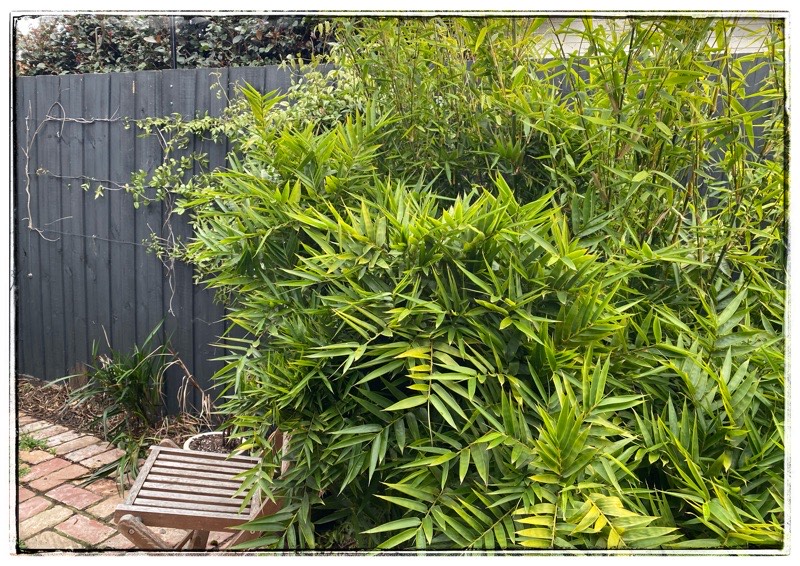
NOPE: I am not going to encourage you to replace plastic stuff with different stuff. Like replacing plastic with Bamboo.
Because really there is a ton of stuff we use that is just not necessary. Simple and frugal can be so elegant. These elegant minimalist, sustainable solutions are where I prefer to land. Not getting caught up in the myriad products purported to be ‘natural’ or ‘eco-friendly’ or ‘whatever’.
I think we all need to focus on reusing items and taking care of what we already have not chasing the latest fad. .
We CAN do without:
- Cling Film
- Ziplock Bags
- Tissues and Paper Towels
- etc.
But I do NOT intend to do without:
- Toothbrushes
- Toilet paper (I buy bamboo toilet paper in bulk already)
- Cloth bags for shopping (with Sheilas face!)
- Sheets for my bed
- Bright white T shirts with a Sheila logo on them
So I do need a replacement. This led me to researching bamboo. I would like your opinion.
- BAMBOO fabrics vs
- ORGANIC cotton
We all know about the downside of cotton production, so let’s look at bamboo fabrics:
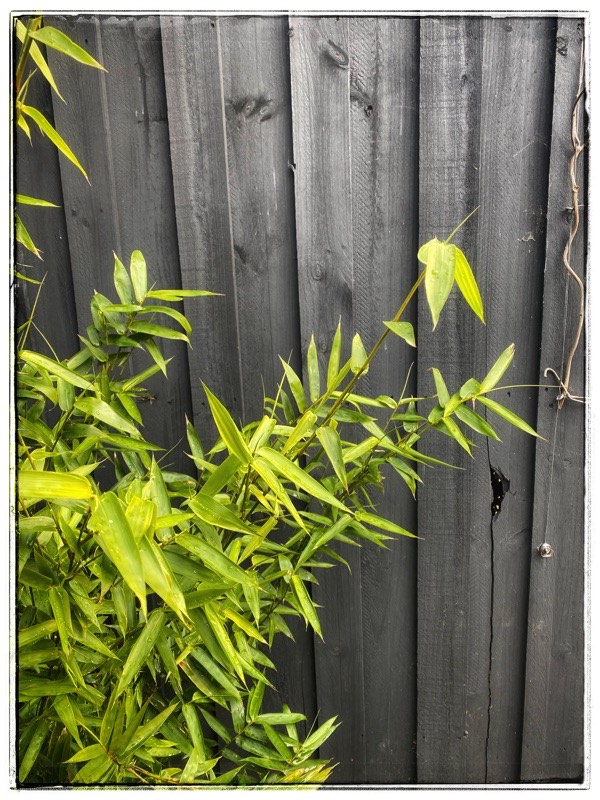
Bamboo as a fabric or paper option
PRO: Bamboo is known to be a sustainable and eco-friendly crop because of its fast-growing nature. The plant culms can be harvested every 3 or 4 years, and it is regenerative in that the plant is left to grow on.
CON: However, large-scale bamboo cultivation practices can cause environmental issues. Additionally, the process of turning bamboo fibres into fabric requires the use of chemicals, which can be harmful.
PRO: Bamboo grows super fast, and as a crop, bamboo production can sequester 2.03 metric tons of carbon per hectare per year, based on 12 data points from four sources. *This value includes carbon sequestered in long-lived products from harvested bamboo.
CON: Since bamboo fabric made with the viscose rayon process is transformed into a semi-synthetic substance, it is impossible for this substance to be considered organic. Though it can be grown organically.
PRO: Bamboo fabrics do not release micro-plastics.
And then what? What do we do with the article after our bamboo T-shirt wears out?
PRO: Bamboo fabrics are highly water absorbent, able to take up three times their weight in water, so bamboo fabrics will be great in the RAGBAG and eventually compostable.
SO
What do you think? Would you be more likely to buy an organic cotton T Shirt or a bamboo T SHIRT?
PS: There are bamboo disposable diapers now (often shipped in paper) that are 60% degraded within 75 days, which is better than nothing, and even more sustainable: washable bamboo cloth nappies. (now there’s a blast from the past!).
ON THE FARM
I am looking at putting in a small planting of bamboo next summer. There are varieties that might grow well in Illinois especially with things warming up.
For stock bamboo leaves are rich in protein. The leaves in tender stages can be fed to the cows and pigs. If we get into a drought period we need alternative crops. Several studies show that bamboo leaves are an important source of roughage for feeding to livestock.
IN THE GARDEN
Bamboo canes can be chipped and used as a mulch. (I am considering investing in a 2nd hand chipper to stop John dragging all the branches away to be burned – burning does return carbon to the soil but I like to return the carbon to the earth in ways that feed the micro-organisms).
Bamboo Canes have a variety of uses in the garden as stakes and creating fences around the gardens. Though I am not sure any fence I build will keep Tima from the tomatoes.
CROPPING
Can bamboo grow fast enough in our area for this to be considered as an alternative regenerative crop. I need to do a bit more research. But it is a thought.
I am very attracted to the speed by which bamboo grows enabling it to quickly contribute to my carbon co-pay.
However bamboo does not like to have wet feet so I would need to grow it in the drier areas of the farm. Lots to research. And I am not talking about the common garden type variety of bamboo that grows like a weed – I need to research the biggest bamboo that can grow in Zone 5.

Do you own any bamboo products? What do you think?
Celi
 The Kitchen's Garden
46 responses to “Is Bamboo Better?”
I saw a house where they planted a bamboo border to shield from their neighbors and it took over the whole area and they eventually had to use very harsh chemicals to stop it :-/.
That does sound nasty. It certainly does need to be managed. I wonder if sheep would eat it?
Neither sheep nor goats do much to control bamboo, though goats are used around here to manage poison ivy (which is at least native, yes?)
I did not realize goats could eat poison ivy. Animals will mostly only eat the fresh shoots of bamboo.
I think I might stick with cotton and I don’t buy much clothing these days. The world needs more Sheila 😉
We do need more Sheila – I still miss her you know. The way she used to talk.
I miss her presence on the farmy too, though I do appreciate Tima holding the torch!
Tima would hold the torch but have a taste first in case it was an edible one.
Ha ha – of course!
Please rethink this! It’s now illegal to plant bamboo in my county and property owners can be held liable for its incursion onto their neighbors land; the stuff is impossible to limit or remove, even with metal barriers three feet down into the ground, and digging the corms out by backhoe is not sufficient. Even the cultivars sold as ‘non-running’ are aggressive. And bamboo has no enemies to limit its spread. You would be creating a real problem for future owners of your property. Think kudzu—that vine was introduced by the USDA as a miracle crop, a fast-growing cattle feed with lots of side uses—and I’ve seen firsthand how it can carpet a yard in a couple weeks, no exaggeration!
The way it can take over in warmer climates is something to think about for sure. Bamboo prefers a warm climate. What state are you in? And I am definitely not going to be planting kudzu!
Wait — you collected the wrong takeaway from my post! Kudzu is a disaster for many warmer areas (I live between Washington DC and Baltimore MD, so in zone 7B, but travel extensively to cities farther south, like Atlanta GA and Charleston SC.) The USDA researchers *SAID* that cattle would eat kudzu — but in reality, cows rejected it, even as silage, and the cut pieces of vine would themselves root and expedite the spread when composted. The stuff grows incredibly fast, has few enemies, and readily engulfs trees and houses. Please don’t jump from one evil invasive plant to another!
That was a typo. I corrected it. Definitely not planting kudzu either!
Oh my, I think I’ll stick with organic cotton. It’s so hard to figure out the right move sometimes. Thrift store is always a good idea, use what someone else tossed.
Yes! My thoughts exactly – and even at the 2nd hand store I have to be careful not to buy too many items!
I too buy bamboo loo paper, unbleached and only “wrapped” in the cardboard box it arrives in. I used to buy a different make which was so white and each individual roll was wrapped in paper, totally unnecessary! I too struggle with the bamboo v organic cotton problem. On the whole l tend to go for the organic cotton, l do buy as infrequently as possible. I must admit a friend bought me some bamboo socks, they are rather lush and comfortable. Nothing is straight forward!
What loo roll are you buying? I think it is a good use of bamboo vs mature trees.
The loo rolls l use are from Naked Sprout, but l am in the UK!
I love organic cotton but cannot afford it. I am wearing what I have until it falls apart then really want to simply stick with things I can find in thrift shops. Bamboo has some pros but also seems to have many cons and it is incredibly invasive which may make it not worth the effort for the farm.
It can be invasive in humid climates but as a rule it does not even grow out in Illinois so probably would not be an issue anyway, but I do love those long straight canes – so useful in the gardens.
My mother in law had bamboo on her property (zone 5, was there when she bought). Very invasive. We burned it down every year to keep it under control. It was happy with ‘wet feet’ took over her septic field and clogged all drain pipes with roots. If it’s not native to where you live…I would call it a bad idea.
I wear clothes until they fall apart, then wear hand me downs from my daughter – or go to the thrift store.
Don’t you just love hand me downs from the daughter! My daughter is not much of a shopper either so she tends to take my stuff when I am visiting! And yes – we actually don’t need that many clothes anyway!
As a fiber artist, one of the factors that I consider is the processing. As you pointed out, bamboo requires chemicals for processing, but so does cotton which is almost always bleached, etc. As I understand it, the bamboo process is a closed system, though, and so the chemicals are used and reused. I know that is true of lyocell (Tencel) as well. Growing and processing cotton requires a huge amount of water and is not a closed system.
I so wish there was an easy and unequivocally good answer, and there’s not. Except for limiting my consumption overall.
I would not plant bamboo. It’s too hard to control. A neighbor had it and ended up having to have an excavator come and completely excavate their yard down five feet to get all the roots and the had to get clean dirt fill, it was horrid. The bamboo was lovely to look at but not worth the misery, I’d leave it where it’s native. I’m still wearing clothes I got 30 years ago and more. Some of them don’t look so good but I don’t go anywhere except grocery shopping and occasionally other shopping so I don’t care. Far better to plant fruit trees, or other trees native to the area. I will buy products made of bamboo, some of the new yarns for knitting and crochet that have bamboo in them are lovey and soft and there’s a process using some by-product of cotton as yarn, which I just learned about and which they used to put into landfills, which looks and feel like silk.
Yikes, that sounds like an expensive mess to deal with! I have thought about planting it to hide a yucky area under my patio. Glad I didn’t.
It was very expensive also necessary. The bamboo roots were getting into the pipes and foundation. They ended up spending almost 30K to get it out and the yard reclaimed. Fortunately there was minimal damage to the foundation as the roots weren’t strong enough to penetrate the concrete.
How exciting to have found a yarn that is a by product and silky! I would be interested in reading about that. I still love wool for my jerseys – If I see home knitted garments in the 2nd hand shops I buy them to unravel and crochet into hats – I can’t knit – wish i could but I just cant.
I’ll find it and let you know.
When it comes to bamboo it is the worst for greenwashing. While bamboo itself as a plant is sustainable replacement for plastic and wood because it grows easily and fast, but also invasive. However, as a fabric its processing is horrible for the environment. It uses a lot of water and very harmful chemicals. Bamboo is the raw material but rayon is the resulting fabric. Viscose Rayon production is the most commonly used method and unfortunately uses several chemicals and solvents. These chemicals are known to be harmful to the workers and the environment if they are not properly extracted from the wastewater. Which I would be very skeptical if they did since alot of production is overseas we all know the track record there with respect to safety of workers and environment.
The processing is also my biggest worry and not only for the fabrics but for the paper products too. Plus like you say the processing is being done in countries where there is no oversight. I do love cotton. Though it also uses way too much water. We have to be careful not to be influenced by marketing – the natural / green marketing machine!
Yes I tend to be suspicious of everything as we are constantly being manipulated. I think the best to to use as little as we can. I also like a nice soft cotton. We need to mend more and make items last. I recently mended two tops for a couple of 20 year olds at my office. Fast fashion that wasn’t meant to last. They were so happy to have their tops fixed and were very impressed!
Mending is wonderful!! I feel like teaching classes for that too. Do you remember the old days when you could buy traveling mending kits?
How fantastic to have mended a couple of tops for your workmates. Visible bending is quite the thing now!
Yes I remember travelling mending kits. They also used to have them in hotel rooms next to the little shampoo and shower cap. It had a needle, threads and a couple of buttons. I love mending classes the world needs more of that!
Yeah. Naah. As per the other comments there’s no even remotely good solution. Except buy less new stuff… toothbrushes are a quandary, I haven’t yet found bamboo toothbrush I’d recommend… be very sceptical of everything and do the best we can. I turn my focus back before pre-war pre-commodification of everything… even so I consume/buy way more than people did then but it’s a useful benchmark.
I agree. The only answer is the third option and I have not found that yet. Sadly pre war few people kept their own teeth for long! There is marginally less plastic used with an electric toothbrush with removable heads but then we add up all the industry and extra components and back I go to the plastic toothbrush. Maybe we should be looking for ways to reuse toothbrushes. Stakes in the garden? Any ideas?
We never throw a toothbrush out unless it’s trashed… they get a second life as cleaning implements. But I guess they could be repurposed as plant tags in the garden.
I love bamboo fabric. It’s so soft, absorbent, fluffy!
I do NOT recommend planting bamboo without a well-thought-out plan to keep it under control. It is WILDLY invasive, and it will turn up in places you never expected it to. We have to redo pathways at the zoo every few years because bamboo roots break up the concrete and asphalt. Its ability to destroy foundations, driveways, etc is the stuff of legend, which is what makes it so hard to contain. Some cultivars and species can grow a couple of feet in a single day, and it doesn’t take long before the runners have taken over where they shouldn’t have. Not every herbivore has a taste for bamboo leaves, either. I’d recommend ordering some leaves and seeing what your animals think of it. Except for the tender, new shoots, the leaves don’t taste good to many animals. My Ploughshare (Astrochelys yniphora) tortoises are native to bamboo forests of Madagascar. They live IN it, but they don’t EAT it.
Bamboo is awesome in its native environment. Otherwise, I do not love it, except for its fabulous ability to turn into things that are less harmful to the earth.
I LOVE your zoo lessons. And I agree that I don’t think much eats the bamboo or the deer and rabbits would have cleaned it out in many areas. I just love that black bamboo but I don’t think even that will grow through our cold winters – though they have not been that cold lately. There are bamboo bushes here in town that have not grown much in the years I have been visiting Melbourne. But they get peed on by the dog – so maybe that is the secret!
I grew black bamboo 40 years ago and it was very slow to grow…….5+ years. Ultimately I decided to remove it and replace with less invasive native plants.
I have to agree with everyone regarding the planting of bamboo on your property. No matter what you’ve read..it is highly invasive and would most likely choke out everything else you have planted.
It is never a good idea to introduce a non native species where it doesn’t belong.
As far as clothing..just buy stuff that’s already here.. whether bamboo or organic cotton.
There is a native North American bamboo but I don’t like it – too scraggly. And I try hard to grow only natives on my property – apples are not native but I let a few of those in to eat!
I guess I should have clarified not planting “invasive” non natives as apples are clearly not invasive.
Anyway, the point is, most everyone here is trying to discourage you from planting bamboo as a livestock feed. 🙂
And a great conversation was had too!
I live in a cotton-growing state. I’d always buy bamboo if the option was there. Cotton needs LOTS of water to grow, bamboo much less, as you’ve noted. I use bamboo bedding already and much prefer it to even high thread count pure cotton. I use bamboo batting in my quilting, and it’s light and supple (although it does make more nuisance fluff during the process). I use bamboo picnicware instead of plastic, and bamboo cutlery. I’d get bamboo flooring if I could afford it. I have bamboo cutting mats and baskets and bowls. There are multiple types of bamboo, and if you’re going to plant, ensure you get a clumping variety so it doesn’t spread everywhere and become a nuisance. This link explains really well (https://www.bamboodownunder.com.au/running-vs-clumping-bamboo)
I love bamboo cutlery. It lasts for ages!
I am very attracted to the idea of bamboo flooring. How does bamboo wear on the floor I wonder.
It’s fairly hardwearing, but isn’t suitable for very humid climates as it absorbs moisture. But if you want a fast-growing, renewable, carbon-sequestering option, it’s hard to beat. And bamboo ties up around 30% more carbon than wood because it grows so fast.