

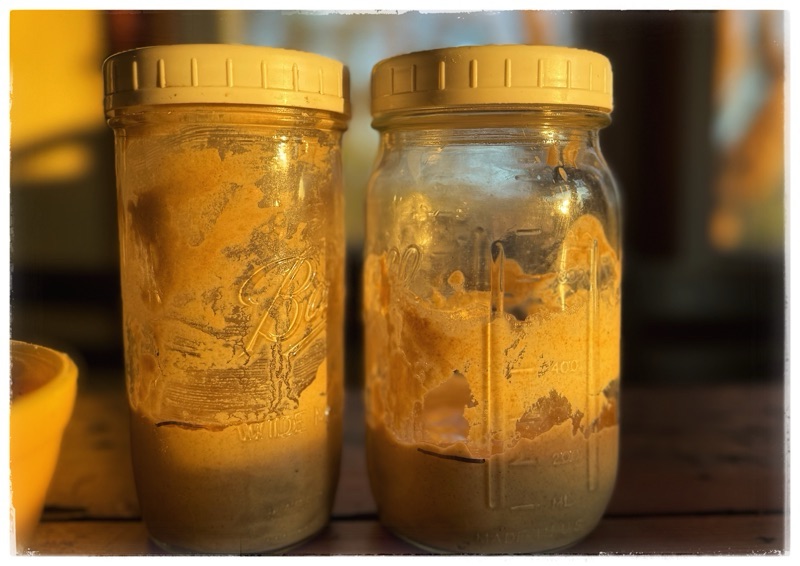
Sourdough starter is so forgiving. Especially Godzilla. But I have never tried to revive such an old jar of it before.
But here we go.
I often leave a jar of sourdough starter in the back of the fridge for emergencies. If my current sourdough starter dies or I need more than usual – something like that. Usually the I take tye emergency jar out and feed it every few months. This rendition of Godzilla has been in the fridge for around two years. Undisturbed. Unfed.
As I begin to collate all my bread recipes (with a Working Title of Loafing About “thank you Kate”) for the first in the series of Celi’s Little Books (I need a better name for that too) I thought I would bring this starter out and revive it. Just to see if I can revive such an old starter.
It has been right in the back of the refrigerator so has been consistently cold. (As an aside you can freeze starter too).
See that black line of watery liquid? Basically the starter runs out of food and with fermentation alcohol presents itself and rises to the top. Which is why this is called the Hooch. In addition this layer seals the starter putting it into a deep sleep.
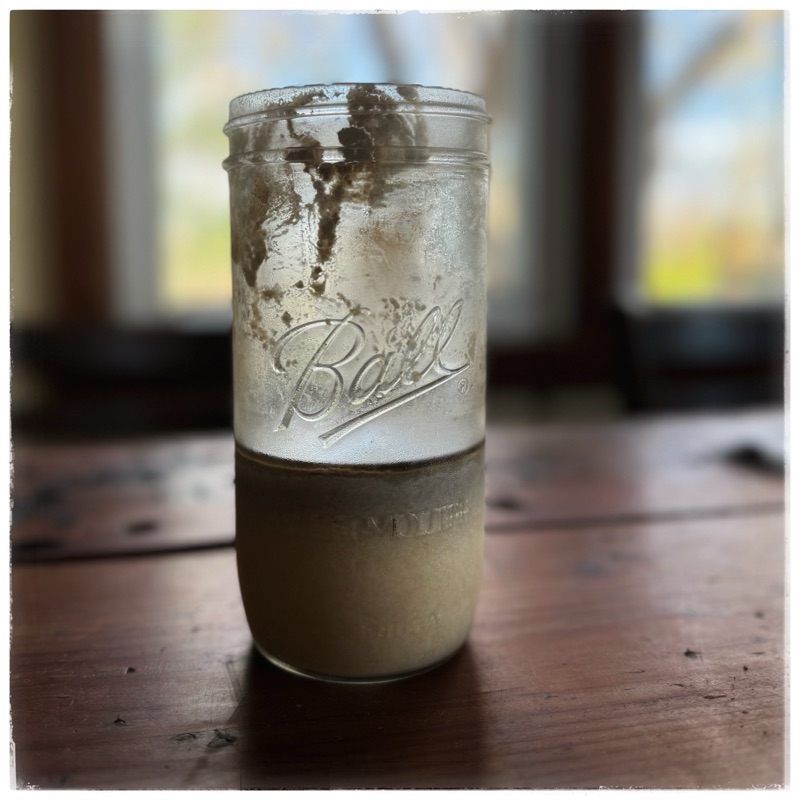
If it smells ok – I stir it in.
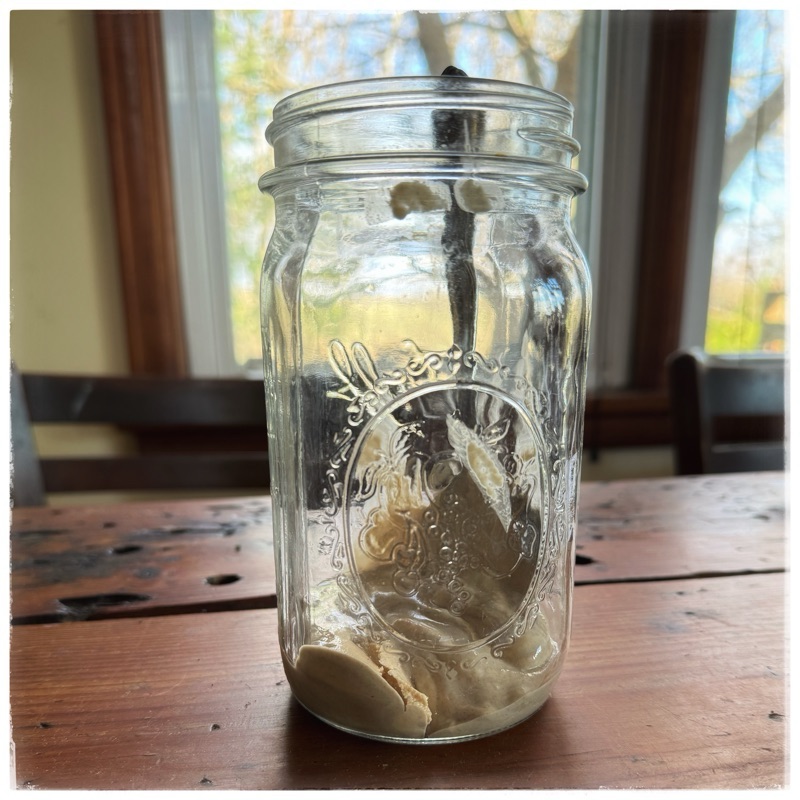
This smells like ripe bananas which is a good healthy smell for a hungry starter. Albeit an old one.
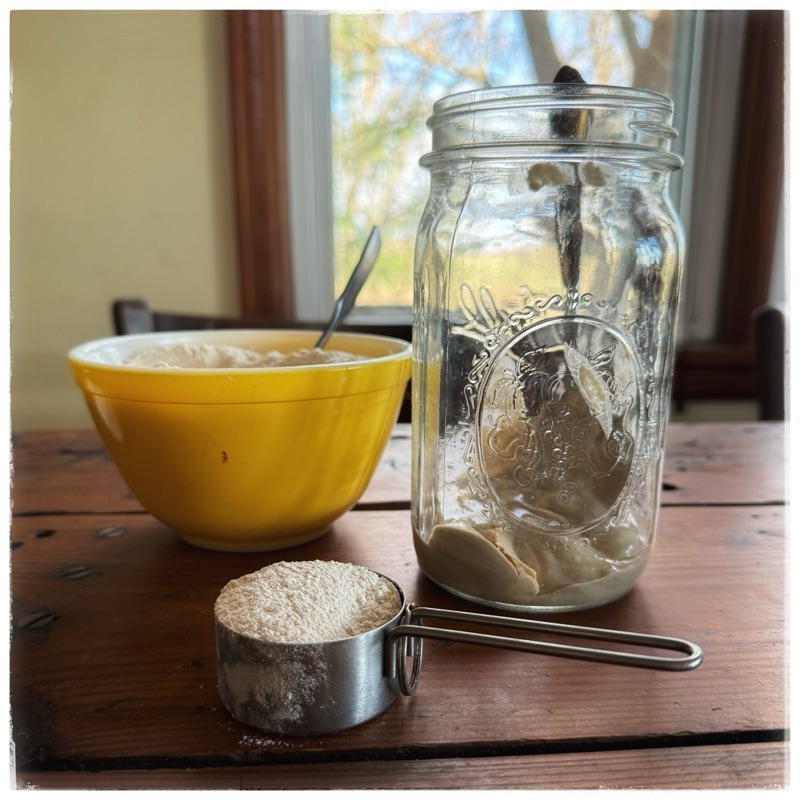
I have never tried to revive a starter this old but Godzilla has been with me for maybe thirty years now and is a good doer.
Here is my quick recipe: (all my recipes are like this. Short. To the point. No frills. Perfect for the lazy baker like me.
Sourdough Starter Restart
• 1/4 cup old sourdough starter
• 1/4 cup water
• Heaped 1/4 cup flour, I needed an extra tablespoon (I blended red fife and bread flour) to make it good and thick.
Instructions:
1. Place the starter in a clean jar.
2. Add the water and flour, blend.
3. Stir well until fully combined.
4. Cover loosely and let sit at room temperature.
5. Every day pour off half and refeed. This may take a few days to get bubbly and active.
6. Put a mark where your starter rests so you can see any rise and fall.
I combined one in the old jar too just to experiment.
Now we wait.
No activity by this morning. So I will proceed.
Good luck to Godzilla.
This is the first of the old chickens I relocated to the barn.
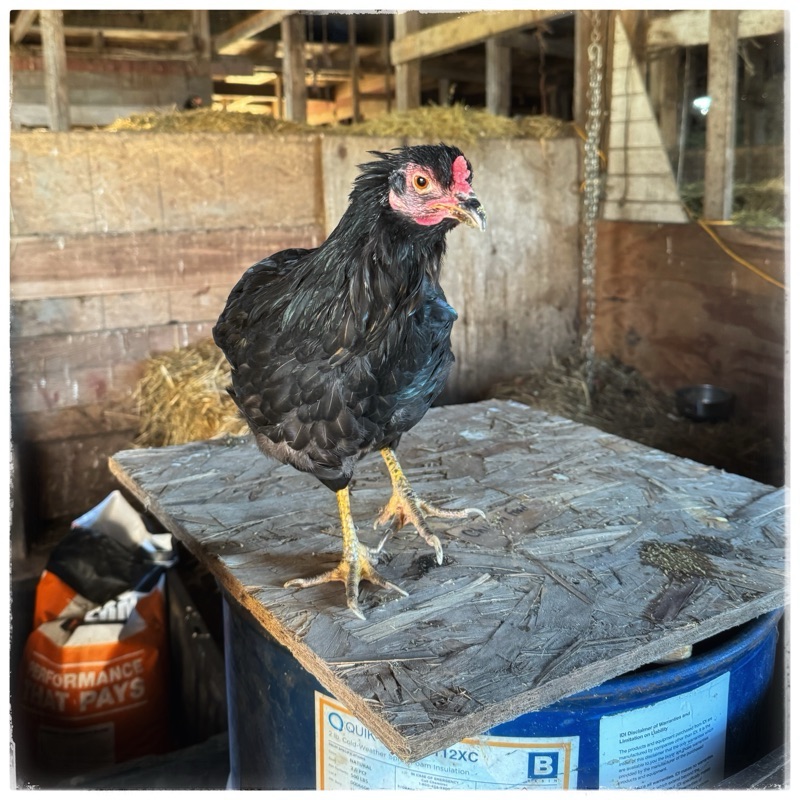
She is feeling so much more vigorous now and yesterday hopped down off the hay bales and lurched up to where I was mixing pig food to eat it off a spoon. This is unheard of!
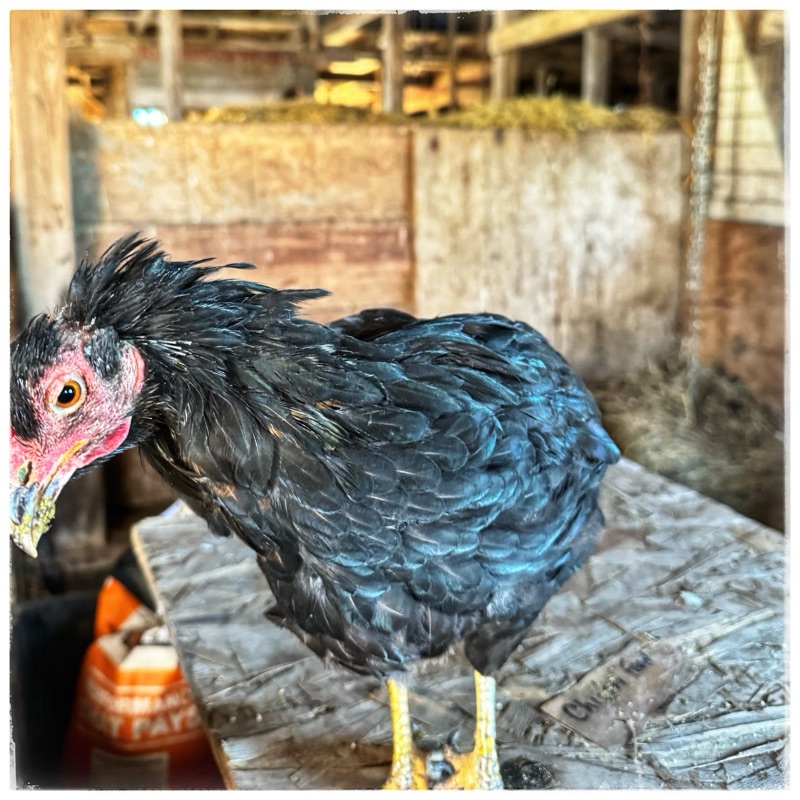
She was never tame before, so I am mystified.
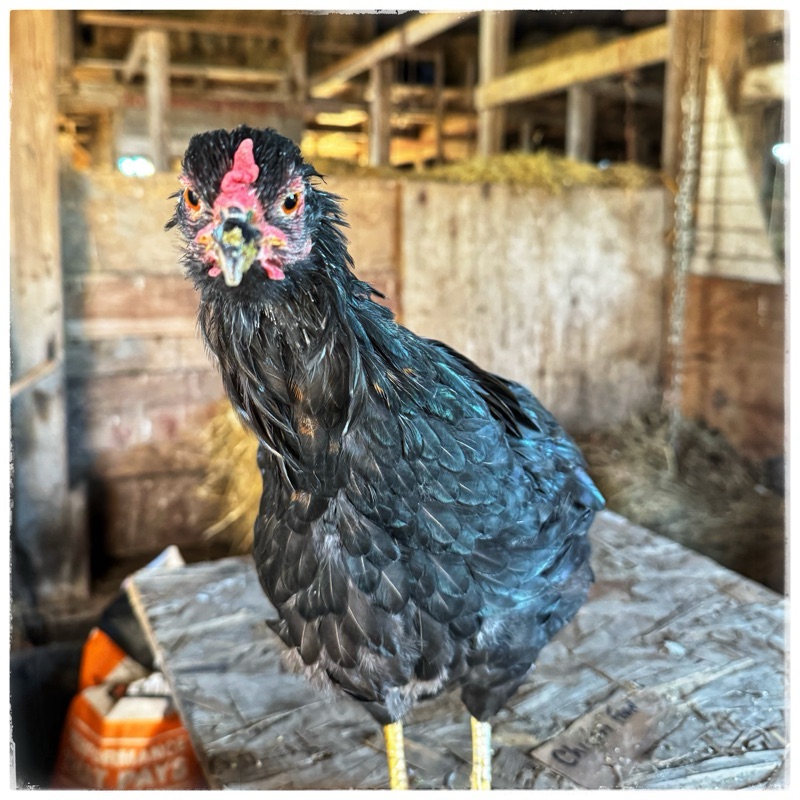
I let her eat then picked her up and returned her to the hay racks. There is another old chicken in the hen house I need to bring out. She is often seen hiding in the corners. Maybe she will do better in the barn too.
There are layers in the barn too. Noe that the possums have been relocated to the other barn far away I am collecting eggs in my barn again.
Plus these old hens are safe.
R and I suspect there may be something else in the barn too – there is big scat up there. As big as big dog poo. Hmm. Raccoon maybe?
Go HERE for your TKG Sunday newsletter with our world famous Farmy WalkAbout!
Have a lovely day.
Celi
 The Kitchen's Garden
25 responses to “Old birds Both”
Fingers crossed for the sourdough mother – the smell sounds promising!
I think that hen knows who her real friend is 😉
It is strange though. How gentle she is now. Like she forgot to be afraid.
Perhaps she was afraid of everything and you’ve reduced that threat.
I agree totally with Mad 🙂
Lucky old chickens being so well cared for in their dotage. Possums and raccoons sound so exotic. Though l know for you possums are definitely not seen as exotic, just very troublesome. I do get badgers and foxes in my garden every night. Always pleased to catch sight of them. The badgers dig holes all over the lawn, hunting for earth worms, not remotely precious about the lawn though. Mind you there are more weeds than actual grass! Good luck with that bread!
A fascinating read….For someone like me who doesn’t make bread or much else for that matter….I take my hat off to you and learn from you…..
Always worth trying, and often never too late
I have never had any luck with sourdough starter. I got one from a neighbor in the early days of the pandemic (she left it on her porch so I could creep up and get it) when everyone was making bread. But it didn’t work for me. Maybe I lost patience? Probably. But I’ll follow your starter’s resurrection with great interest.
You are right. A person needs endless patience when starting a starter! I am watching too. No movement yet but still smells ok!
It took me many flat dense or overly holey loaves before it got right. Once it gets going it is quite easy. It just takes practice to know the timing and consistency. That is what I found. But I was very discouraged at times, especially after using up flour and time only to have it flop. The flopped loaves made good croutons though!
Maybe I’ll put my big girl pants on and try again. I do love me some croutons.
When I was teaching people how to bake sourdough bread (we could not find yeast in the pandemic) I would tell them – there is no such thing as a failed loaf! There is always toast!
And toast (with butter, of course) is one of God’s gifts to humanity.
That old hen has seen better days. Good for her she is still going.
I have revived my starter many times. I’ve never let it go as long as yours but the cells are in there so I expect within 48-72 hrs you’ll start to get bubbles showing it is waking up. I haven’t made sourdough in many months, probably closer to a year. I want to though. I’ve been feeding my starter every few days to keep it somewhat active so I can start soon.
I have my regular starter rocking along – this one was forgotten! I am reviving it as a science experiment really! The smell is changing so by tomorrow I hope to see a change though to be fair by then I will have discarded about half again and introduced all the fresh flour so it may be the fresh flour that has begun to ferment.
Re “it may be the fresh flour that has begun to ferment” – I’ll guess the answer to that will be in the making; )
The sourdough discard makes for great pancakes (add an egg, flour and a little milk if necessary) and crackers (King Arthur recipe) but in my house mostly dog biscuits (add an egg, peanut butter, substantial flour e.g. spelt/buckwheat & turmeric powder… mix, roll into balls, flatten onto non-stick baking tray/silicone mat/paper and bake in slow oven until dry.
I have used the discard to make pikelets. Sort of like a cross between a pancake and crumpet. Nice for breakfast with a drizzle of maple syrup.
Excellent about the ‘old chicken’ looking more interested in life Celi; and good luck finding the origin of the monster scat before it gets what it’s looking for!
Oh yeah, a good luck with raising the dead; )
I’m playing about with poolish right now; it must be a character defect but I cannot persuade a sourdough starter to live longer than a month or so. Perhaps it’s the climate. Poolish is much more forgiving, I find, and easy to calculate quantities; one third poolish to two thirds flour. And when I want something reliable and mindless, high hydration, slow prove (8 hours) commercial yeasted bread.
I love using a polish. It strengthens the gluten strands beautifully.
Sounds like the old hen has a new lease on life! ❤️
Go girl ..good luck with the starter! And your little chookie