

After the winter, the beehives need a wee hand with their spring cleaning. Also during the winter the whole hive has often migrated towards the top of the hive leaving the bottom levels neglected. Sometimes there is honey down there that they may need.
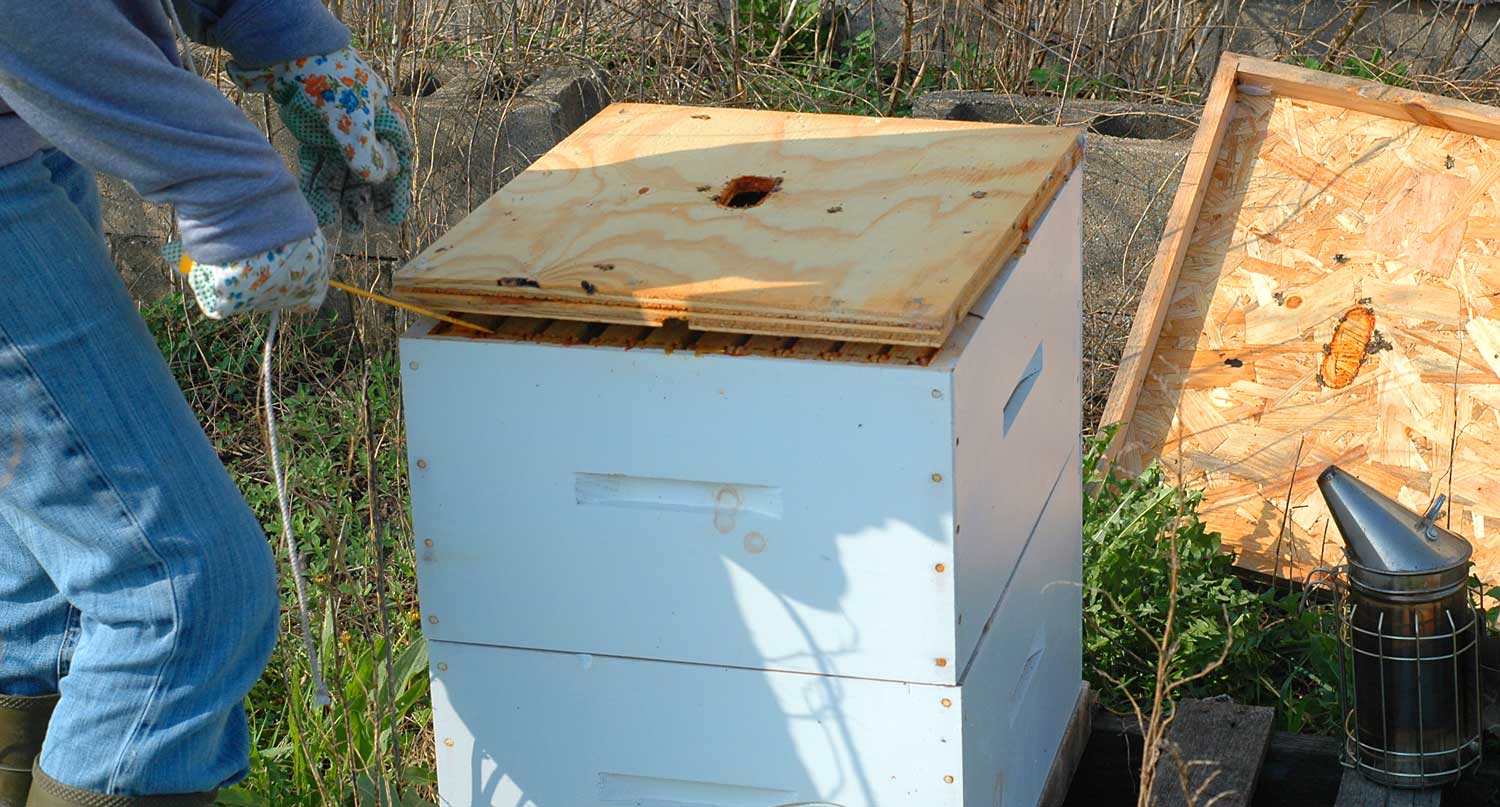
So in the spring, usually late April early May. When I am sure it will stay warm. I take the hive apart. Check for health. Clean the bottom tray where dead bees accumulate over the winter, then rotate the Supers (boxes) so that the Bottom Super is on the top and vice versa. We are very early but the bees have been active for over three weeks now. We have had a huge number of blossoms all out at the same time. New bees will be hatching very soon. If the hives get crowded the worker bees will make a new queen then escape with her and sometimes over half the hive, swarming to find a new home, leaving only the old queen and a few worker bees behind. So I may need to add supers to make extra room for them and head off the swarming instinct. 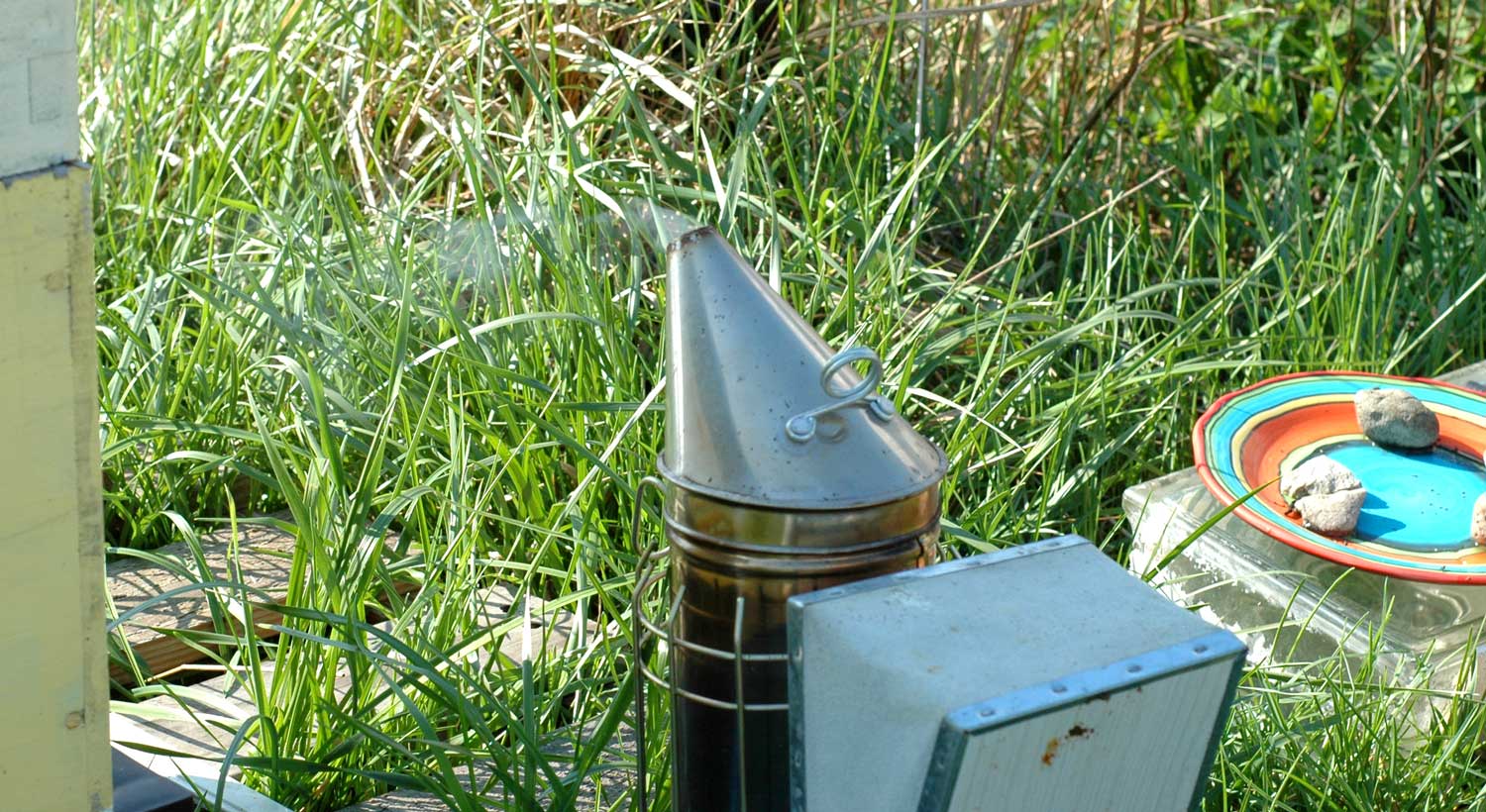
I always smoke the bees lightly as this inspection takes a wee while. And after the winter I do not know what I will find.
The swarm that I referred you back to yesterday, was housed and grew in the Blog Hive. This is what I found when I opened this hive.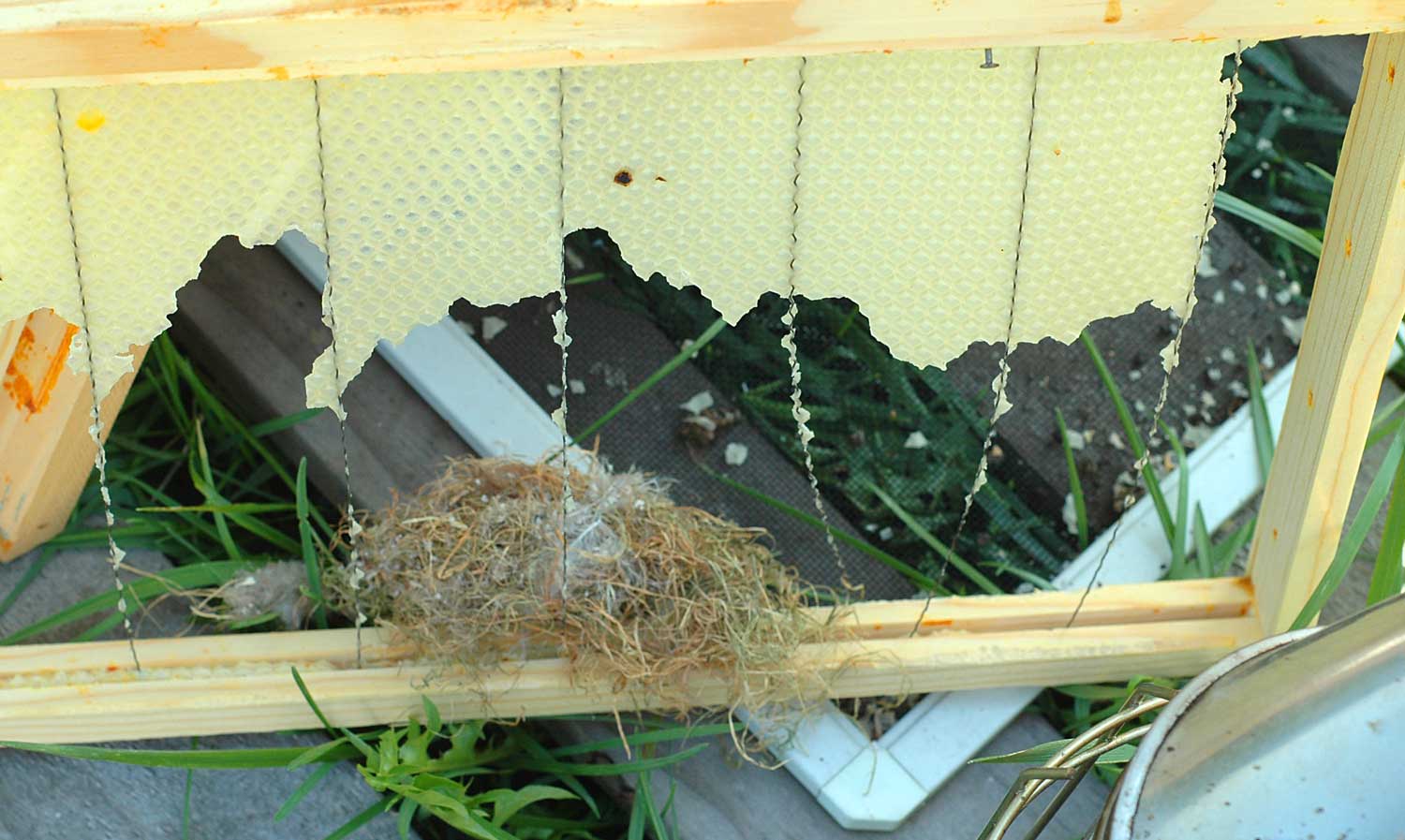
A mouses nest. A mouse will sometimes set up a winter home in a hive and often it will decimate the hive. It eats everything as mice do. If it is a bad winter sometimes nothing is left but the mouse. 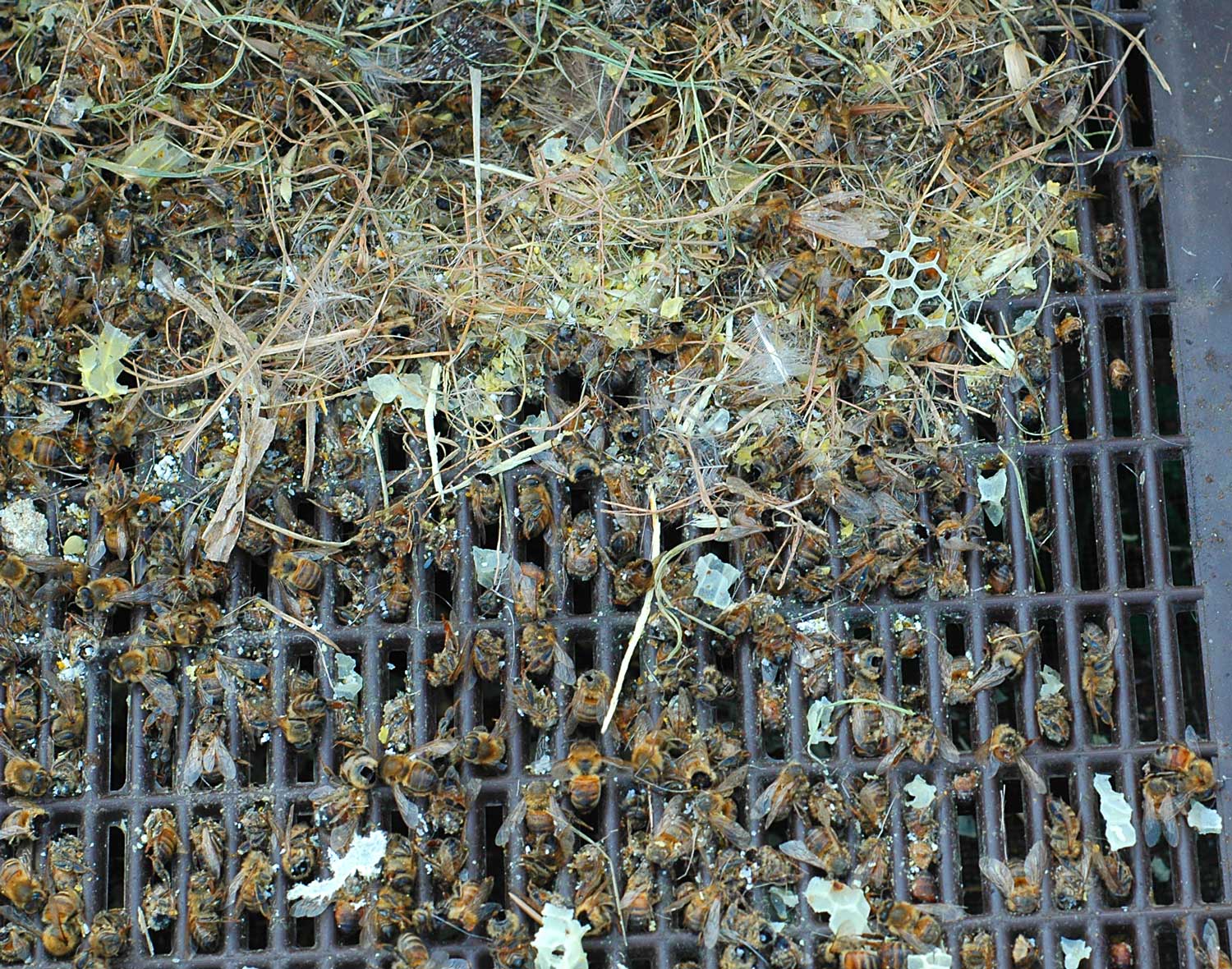
Not so this time. The hive is very alive and busy, has OK numbers, is feeding brood and seems to have recovered from its unwelcome and long gone visitor. I think he was thrown out with the garbage. This shot above is from the tray at the bottom of this hive. What a mess. This hive is filling up fast so I shall put on a new super on in two weeks.
Next I opened the little Rat House hive. This is the one we have been worried about. Their bottom tray was piled with dead bees. More than I have even seen. A terrible loss.
But to my delight enough survived, including their queen. And look below. Bees feeding brood. They were quiet and good and busy. I rotated their two supers and their numbers are very low, but they have an active queen, a little honey already and as soon as their babies start hatching they will begin to grow. No extra super for them yet though, as they still have plenty of room. I do not think they are a flight risk. The warm winter saved them. 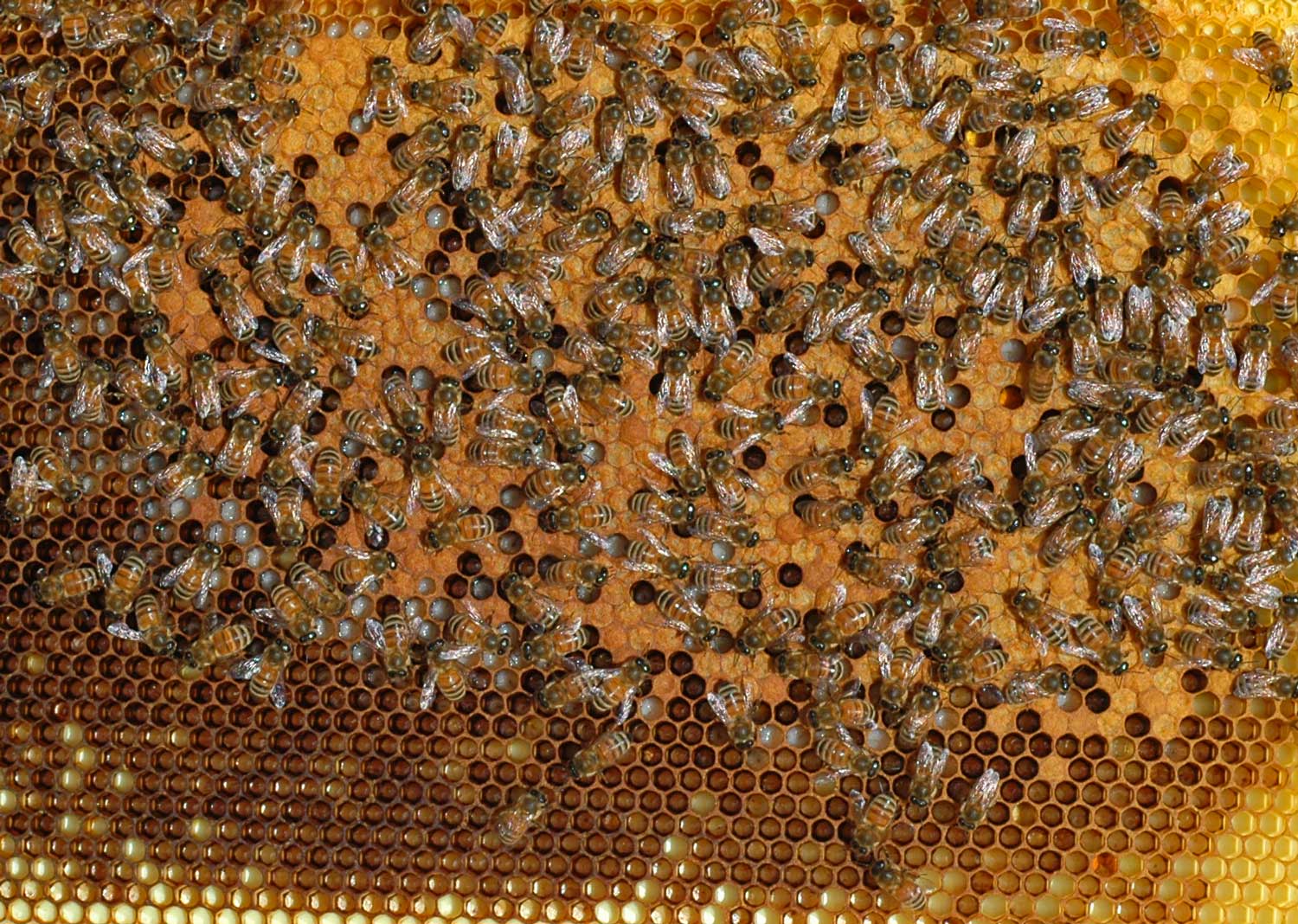
Do you see the little white deposits in the wee hexagon shaped holes, that is a developing bee. They are still at the larvae stage being fed by the nurse bees. They will grow into pupae and in twenty days they will emerge as worker bees. 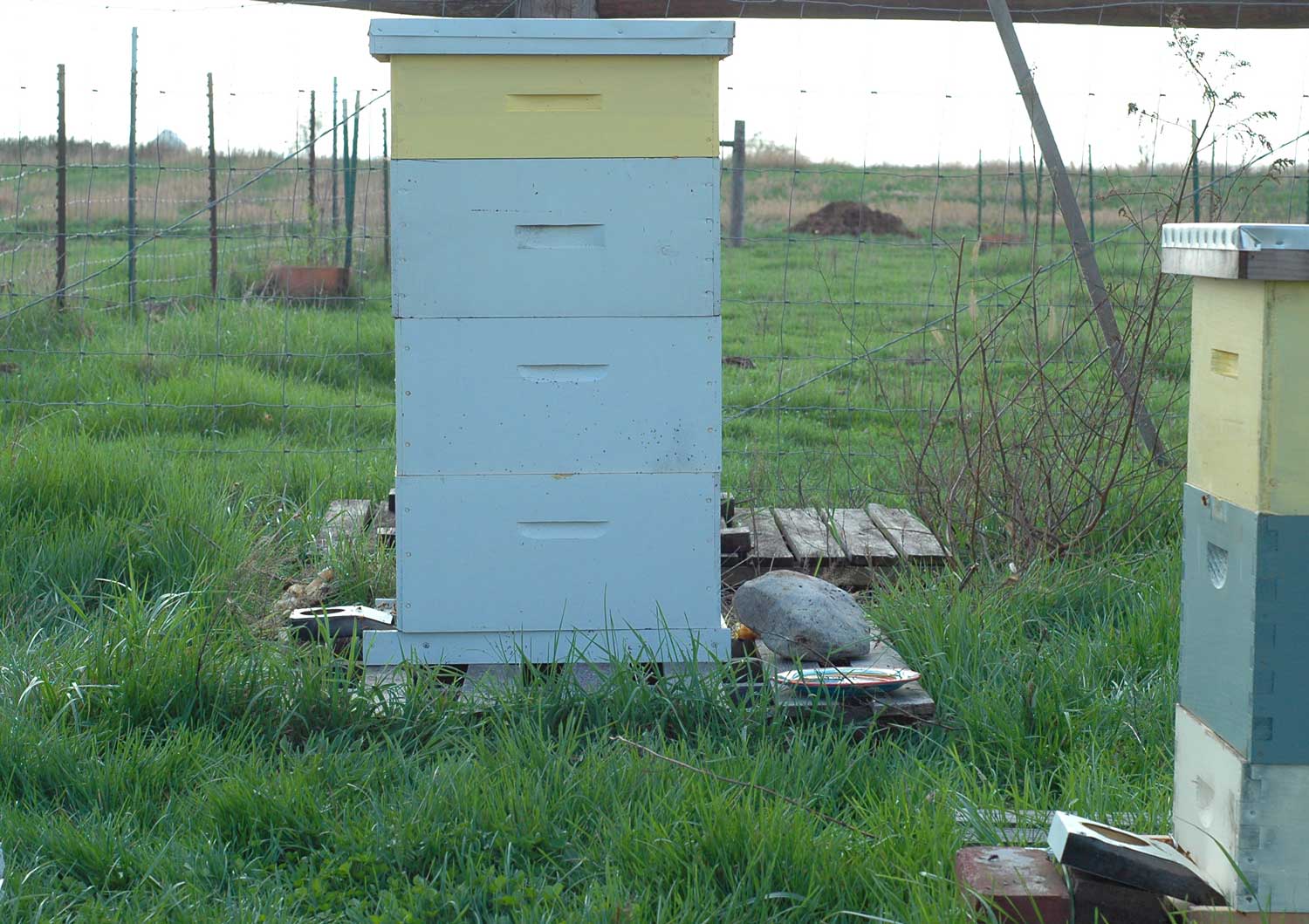
The Jennifer Hive is doing astonishingly well. This hive is heaving with bees. The supers are heavy with honey. They are filled almost to the top. There is brood everywhere, no mice, no moth and so I have added another empty super already. This hive was hard work. Rotating these heavy boxes made my skinny girly arms ache. John who was only wearing a hood was chased off by a small squadron of fighter bees and kept at a distance. I could not understand where my help had disappeared to. They took him right back to the grape vines and held him there. No stinging. Just circling and buzzing loudly at his face. But he is wary of the bees. Sensible chappy. So chuckling I finished the last hive alone.  Not looking! I was loading this shot and thought that you all know that the sweet clean fluffy black and white sheep in a perfect pasture is a myth! Sheep sleep on the ground and the grubbier the better! Their wool is a magnet sticks and straw and mud.
Good morning. It is cooler this morning and windy. Back to warmer clothes for the day.
Time to start work again, the sky has lightened. My visitors have gone back to their family. And I expect a quiet busy day. My favourite actually. Quiet and busy. Have fun.
celi
 The Kitchen's Garden
59 responses to “Mouse in the Bee’s House”
There is something – or maybe everything – about honey bees that fascinates me. Loved this inside look from Celi and John’s – and I can just imagine the thrill to see, at the start of spring, a healthy thriving hive! How exciting!
Hope you’re enjoying your quiet and busy day! I am too.
I found out a few years ago that there’s an enterprising teenager who keeps hives on London rooftops and sells his honey at his the street market in town. Your story reminded of him 🙂
Do you know why did so many bees died in the Rat House hive? You clearly expected a toll.
this was the weak hive, it had had moth damage in the summer, which left it with only a little honey and a small group of bees. So i was very impressed to see that some had survived. I almost ordered a replacement shipment of bees. thank goodness i didn’t! c
What a great post!
thank you..
I like learning as well as enjoying a story…
Thank you for sharing
Take Care…
)0(
maryrose
Goodmorning Cecelia. What kind of flowers or clovers do your bees pollinate? Does the honey taste like these flowers? Do you wear a full hazmat suite when you deal with the bees?
I have red clover, and yellow blossom clover and Alice. And yes the flowers definitely influence the honey but for example i cannot smell lavender in the honey I am using this winter though if we had fields of lavender i am sure the honey would take on a distinctive taste. I long to have fields of lavender, wouldn’t that be wonderful! Oh and no I do not wear a suit, i just tuck everything in and wear a hood and gloves. Actually sometimes I don’t wear gloves either, it depends on what i am doing. But I definitely wear a hood as I have a horror of being stung in the eye. Which I am sure would almost never happen but I wear the hood anyway.. c
Very interesting. I am sure your honey harvest is going to be very tasty.
Hi Cecilia. I am fascinated by these bees. TFS. Really enjoyed reading the post.
Regards Florence x
You are such an incredibly hard worker! That you still find time to contribute to this blog is a miracle, to me.
I was just telling my husband all about your beautiful little farmy last night! He said, “Wouldn’t that be so nice to live like that?” I think he’d like to leave the corporate world as soon as possible and I can’t say I blame him!
Why didn’t the bees kick the mouse out or or attack it?
Love you bee posts – so interesting.
So fascinating to see the inside of the beehive. I’ve heard that the supers are very heavy, but it must be so worth it to have your own delicious honey, and to be helping bees to survive.
I enjoyed this post immensely because I know less than zero about bees and their keeping, and always love how well you spell out such things without losing the thread of your charming and compelling storyteller’s voice–which I must say, is the very definition of ‘spellbinding’!
I try to add a comment a few days ago but it seems to have got lost. I am writing a book on beekeeping in Australia and would like to include your photos of mice damage in hives. Can you let me know if you are OK with this? I would of course credit you with the photographs in the book.
Thanks in advance
Robert