
In response to your requests – here is my soap recipe and cold press method. I only know one method and would class myself as a beginner. But this soap works every time so far. I make soap using Lard from the pigs I raise myself in my own fields. I use the cold process to make the soap.
First: Render (cook really slowly until melted), the lard. Sieve out all the solids. Reheat and strain through a cheese cloth three times. The more you strain it the whiter it gets. (You can also buy lard in some supermarkets.)
When the lard is finally clean and still warm add three sliced vanilla pods, sit the pot on the back of the woodstove for a while where it will stay warm and allow the vanilla pods to infuse the lard.
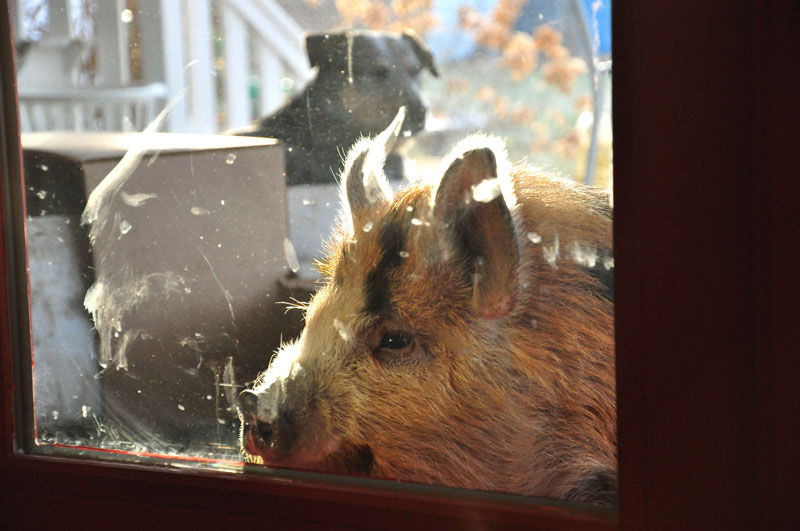
When it is time to make your soap – prepare your space. Get absolutely everything ready. Put the dogs, cats and pigs outside. 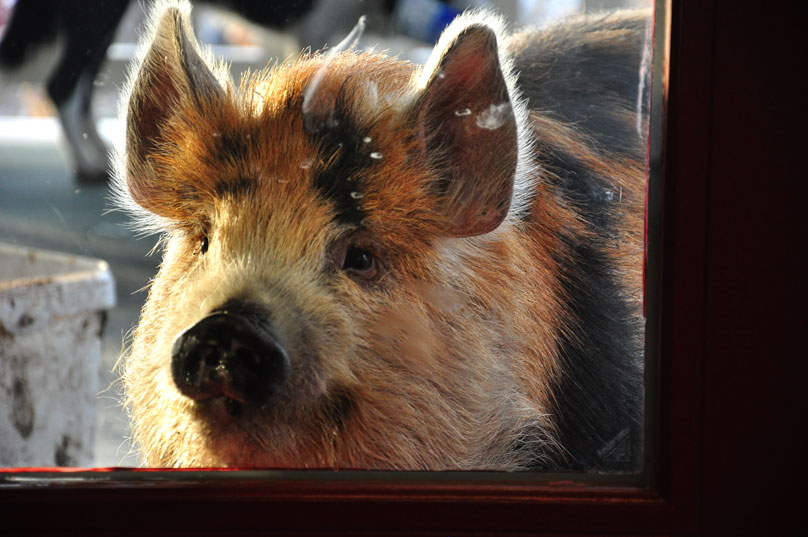
Tell anyone in the house to keep out of the kitchen. Arrange everything you need exactly where you will need it. Set up little stations. A stirring spoon and the blender on one side on a cloth. Containers for water and lye, etc.
Put on your apron, kitchen gloves and serious face. Wear glasses.
1. Measure 1000 grams of lard (take out the vanilla pods and discard) , 300 grams of olive oil and 50 grams of coconut oil into the bowl of a crock pot. (This is my standard recipe). Measure to the gram. Sometimes there is a little less lard or a little more of something else so note all your measurements.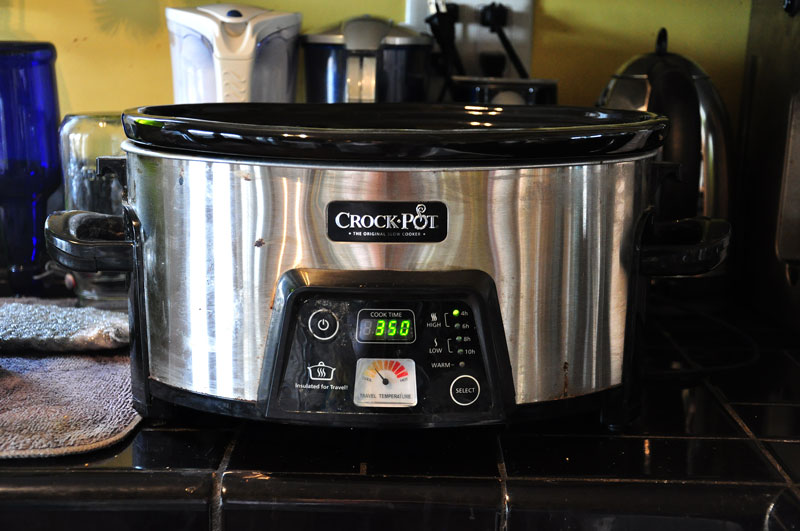
2. While your fat begins to heat in the crockpot go to your Lye calculator plug in the amounts of fats and it will tell you exactly how much lye and how much water. 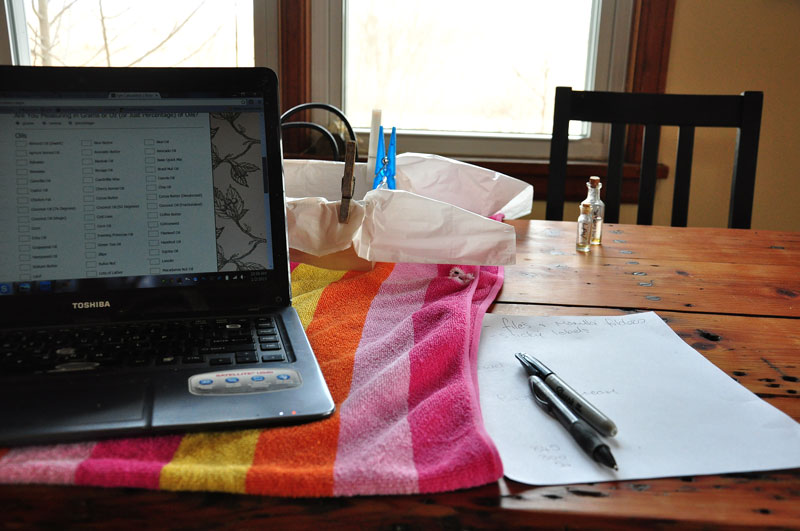
Measure your lye and water into seperate plastic containers. Then open the windows and set the container of water in the kitchen sink and pour the lye into the water, (‘snow onto the lake’.. can’t remember where I read that but it helps to remember the order) stir until dissolved. Do NOT breathe in the vapor. This stuff burns. (Some people do this outside but the cats and dogs and pigs are outside in observation mode! – not the place for burny lye.)
3. While the lye mixture is cooling, get your soap box ready or whatever you are going to use as a mold. I line the box with a white rubbish bag, keeping everything in place with pegs. Your fat is heating and your lye is cooling. Allow them to come to around about the same temperature.
4. When both mixtures are within 10 degrees of each other (usually about 120F) I take the inner bowl of fat and oils out of the hot crock pot and place it next to the stick blender. At this station I also have a spoon for stirring and a cloth to place the blender on when you are resting it. (Blenders are not made for continuous use so you have to swap the spoon and blender often so it does not overheat). Have your fragrance at hand. Have all this prepared ahead. When I start stirring I do not stop until it is done.
5. Ready? Pour the lye mixture into the fat. Stir and blend. Pulse, Pulse all over. Stir and blend. Keep going. It will slowly thicken to trace. Trace is when it is so thick that you will leave stir marks in the liquid. Sometimes this takes 10 minutes, sometimes 30 – who knows why – every batch is different. You want it as thick as instant pudding. When you pick the spoon up it will leave obvious traces in the mixture.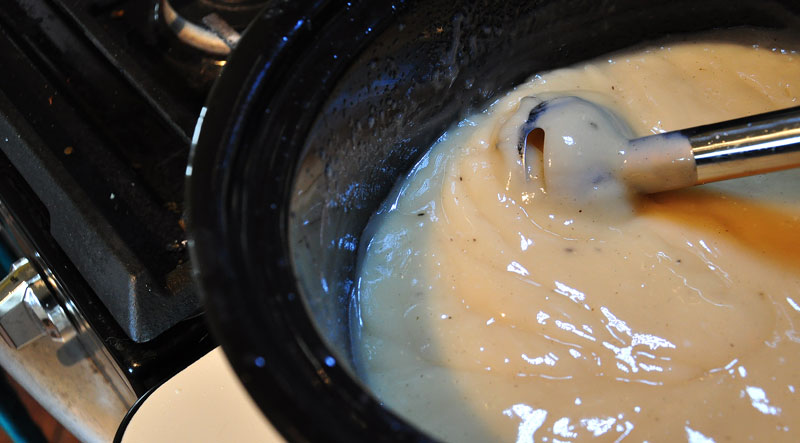
6. Then I add the dried ingredients (oatmeal and coffee grinds and a little sugar to make up 1/3 of a cup) and whatever essential oil you have chosen. Add and Stir quickly. Then pour your essential oils in and combine.
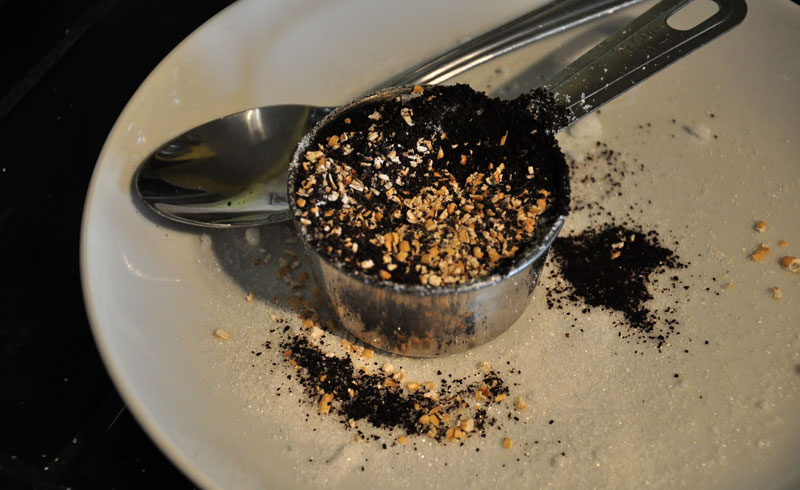
7. Pour into mold. (This is not called Ugly Soap for nothing.) The coffee grinds give just the right amount of scrub – with the oatmeal and sugar delivering some softness. This is every dirty farm girls favourite soap.

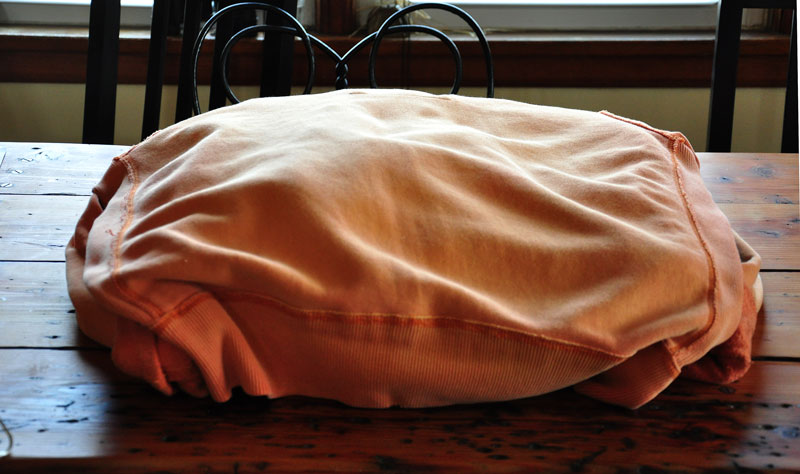
8. Cover the box with a lid or chopping board and pile on towels and sweatshirts. It needs to stay hot for as long as possible to set. Do not disturb for 24 hours.
9. Cut and lay out onto a rack to cure for 6 weeks. (I am taking some of these to New Zealand with me so I will attach labels with the date on them so no-one tries to use them too soon and burns themselves.) The longer they cure the better and every cake of soap lasts three times as long in the shower as a commercial brand.
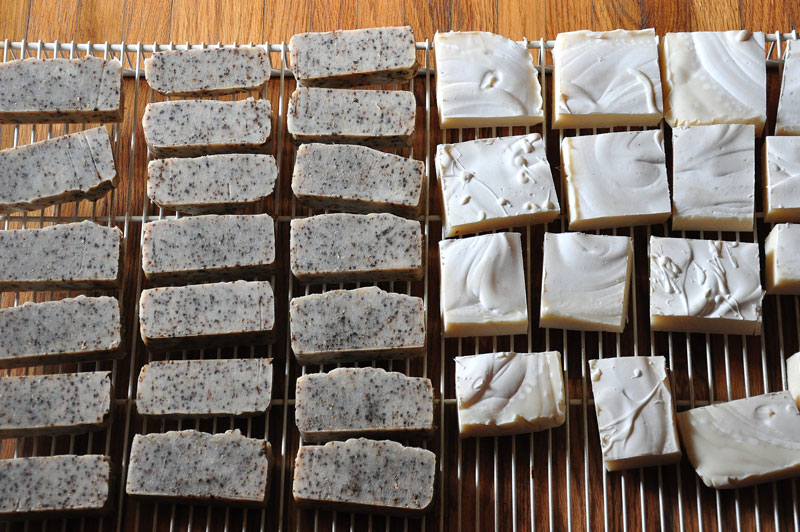
I used up the last of a batch of lard yesterday so I had just under a 1000 grams – here was that recipe calculated at 5% superfatting. (I began soap making because my daughter and I have skin that needs extra moisturising so 5% works well for us.) The bars on the right in the above image have no added dry ingredients and are scented with Rose Oil sent to me by Linda in Colorado. It is my current favourite scent!
Yesterdays Soap Recipe
835 grams sweet pasture raised lard
280 grams olive oil
45 grams coconut oil
I entered those amounts into the calculator and –
157 grams lye
394 grams distilled water
at TRACE I added
1/3 cup filled with oatmeat, coffee grinds and sugar. 1/3 cup in total.
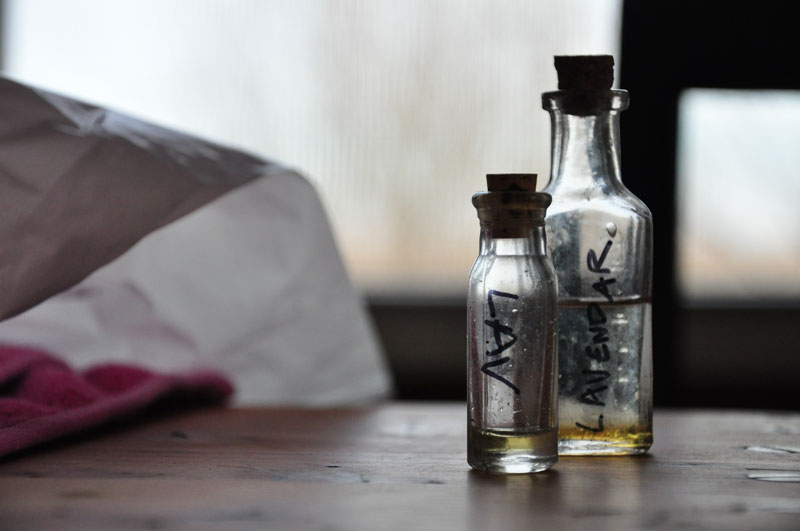
3 teaspooons home made lavender oil
It has set beautifully by this morning so at lunch time (24 hours later) I will slice it and set it on the racks to cure.
*The olive oil, coconut oil, oatmeal, sugar and coffee grinds are all optional, even the fragrance is optional. All you really need is lard, lye and water (and the lye calculator – I am NOT a chemist.)
*I always use the lye calculator. Always. And so far – touch wood – in two seasons of soap making I have not had a bad batch. (But usually I start with 1000 grams of fat and 300 grams of olive oil and 50 of coconut oil.)
There now. I love this soap and have not bought a bar of soap in three years. All the left over bits and pieces are melted down for laundry soap.. I wrote a post about that once but I cannot remember what I called it so I cannot find it.
Once again I cannot pretend to actually know what I am doing, but this recipe works for me.
I hope you have a lovely day.
Your friend on the farmy
celi
 The Kitchen's Garden
71 responses to “How I make Soap”
Thank you, thank you, thank you!
welcome,welcome,welcome! c
Hi Cecilia, I love this recipe – it looks very easy!! I can get liquid lye here in France, am wondering how that might compare to the lye you use?
We will have to ask Mr Google…
I didn’t even consider I could use my new slow cooker for soap making! Oh, my christmas gift just got even better- thanks for making me grin ear to ear!
I use an old one actually, just in case a little residual lye clings to the bowl, but it does clean up well..
Good to know! That makes complete sense. Similar to our ski wax iron, we don’t use it on clothes :-). Ill look for a second hand one for soap.
Coffee grounds! Who knew? I’m so tempted to try soap, but my husband guards his lard very jealously. Happy new year, Cecilia!
I am working up to another go making my own lye from wood ash. Needs to be hard wood for this to work apparently and it is difficult to get a really hard soap with potassium hydroxide which you get from ash compared with sodium hydroxide which is what you use.