
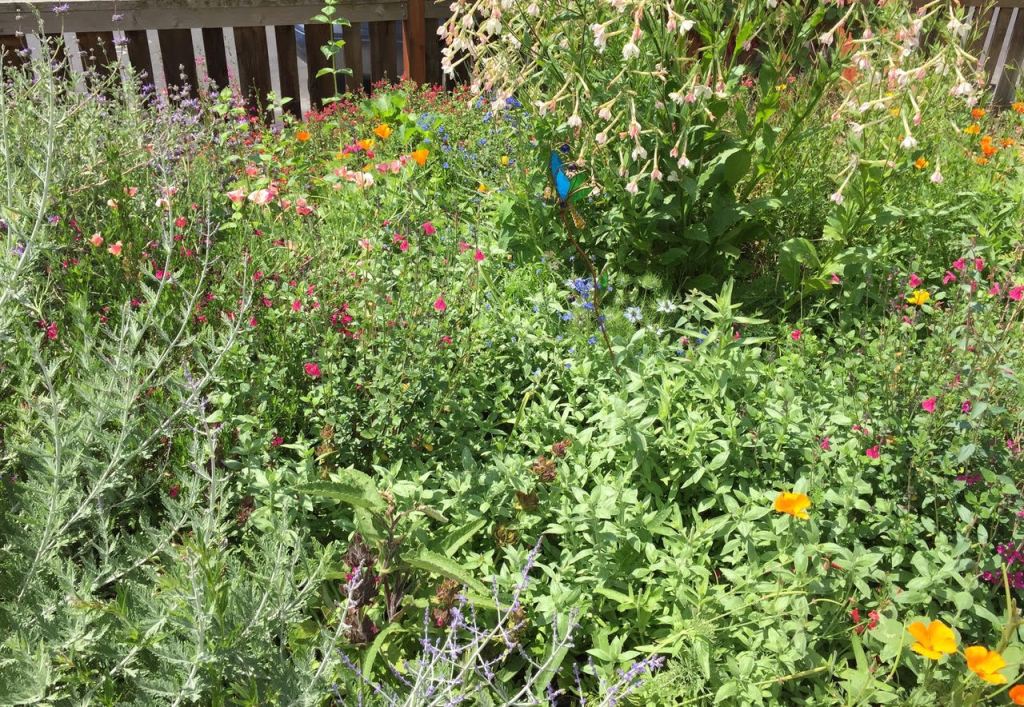
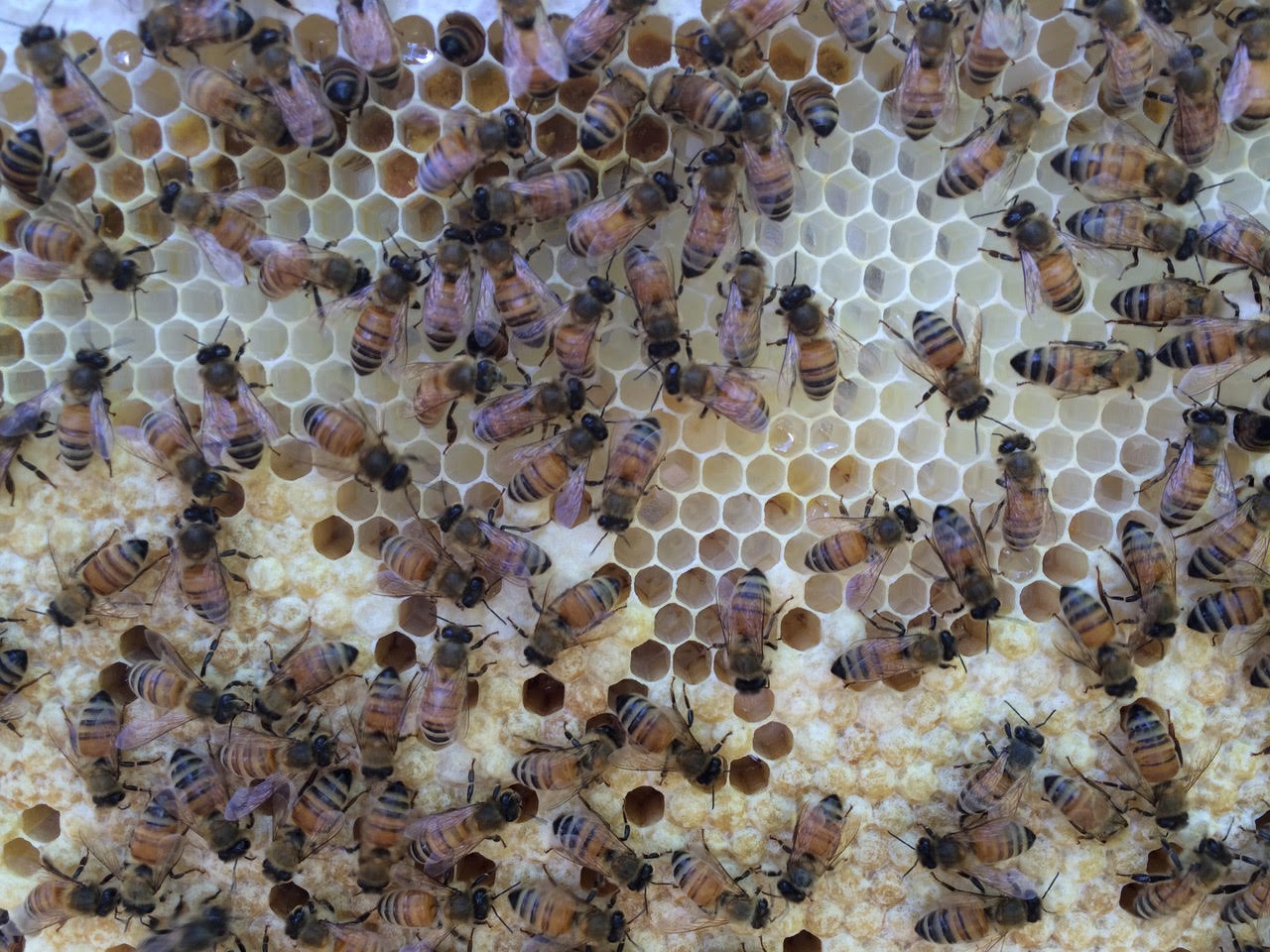
Greetings from Northern California! As I write, the rain is pouring down, a real boon for our drought-stricken area. Looking outside, I can see the plants in our raised beds looking a little limp, and our chickens huddled miserably in the dry corner of their run. I can’t see any honeybees at all, though, and that’s because they are snugly huddled together in the middle of their hive, between bars full of honey!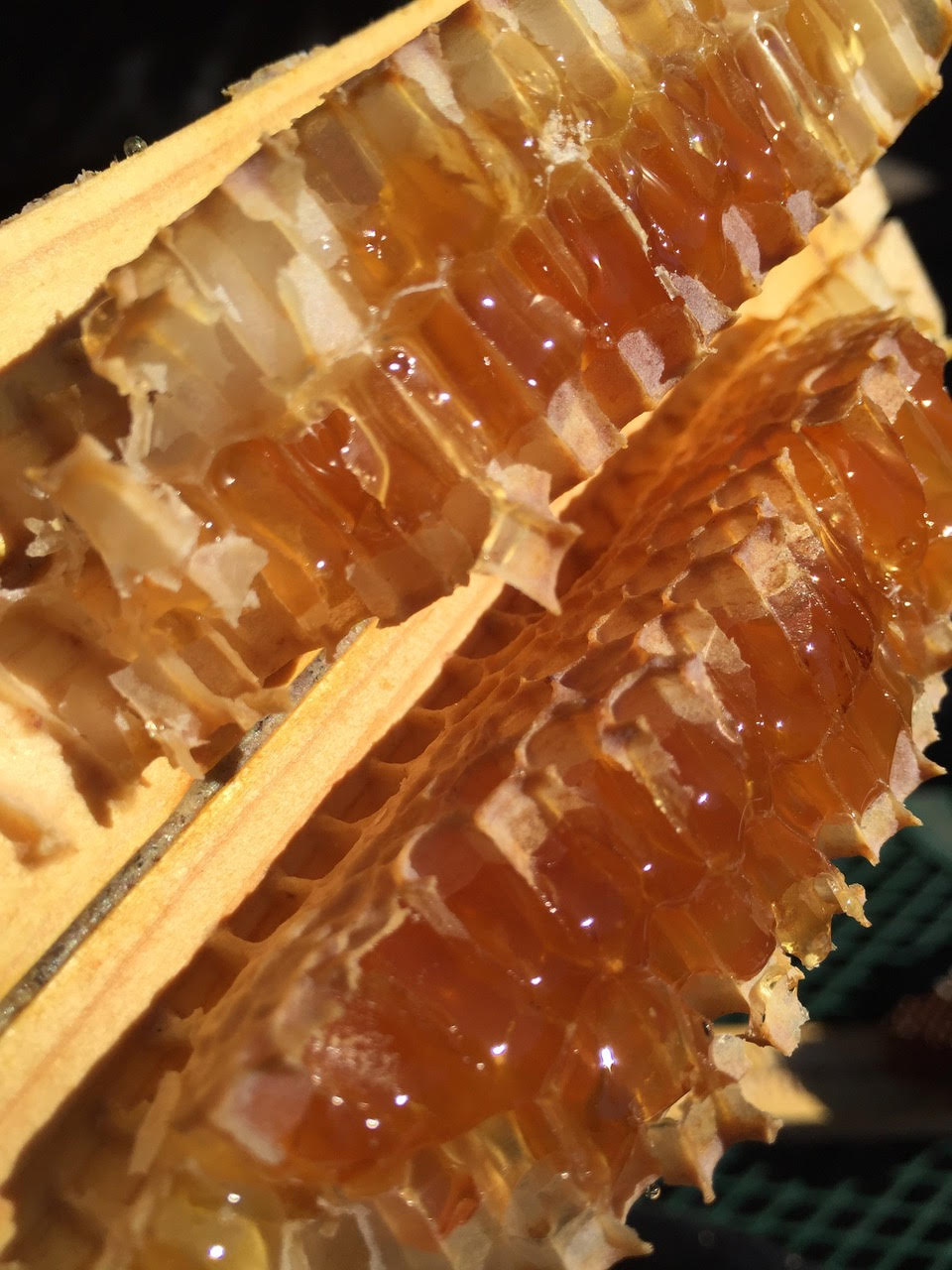
I enjoy reading Cecilia’s blog so much, for many reasons, but I think the thing I find most fascinating is the larger scale of her operation. Cecilia has many barns, pastures, and animals, spread across acreage. Heavens, she even has to zipline across a creek to reach some of them! (Ok, maybe not yet.) Reading about the size of the Farmy delights me.
Here at Poppy Corners Urban Farm, space is at a premium. Four of us live in a 1000 square foot cottage on a 7,000 square foot lot, surrounded on three sides by neighbors. Our home is 20 miles east of San Francisco, in a crowded suburban enclave. We grow as much of our own food as possible. Our garden is chock-full of fruit trees, 20 raised beds of vegetables and herbs, pollinator gardens, a chicken coop, and a hive of 30,000 bees (give or take).
Beekeeping at Cecilia’s is probably very like beekeeping here; we use similar equipment (though I prefer Top Bar Hives), and similar practices. But there is one element in which we differ greatly, and that is population! Our closest neighbors’ back door is about eight feet away from our apiary. This requires certain considerations. I’ve aimed the hive entrance away from the neighbors’ house and into our garden, as well as planted high native shrubs between the two, so that the bees tend to veer up and away rather than across. Regular gifts of honey (along with eggs and produce) is de rigueur.
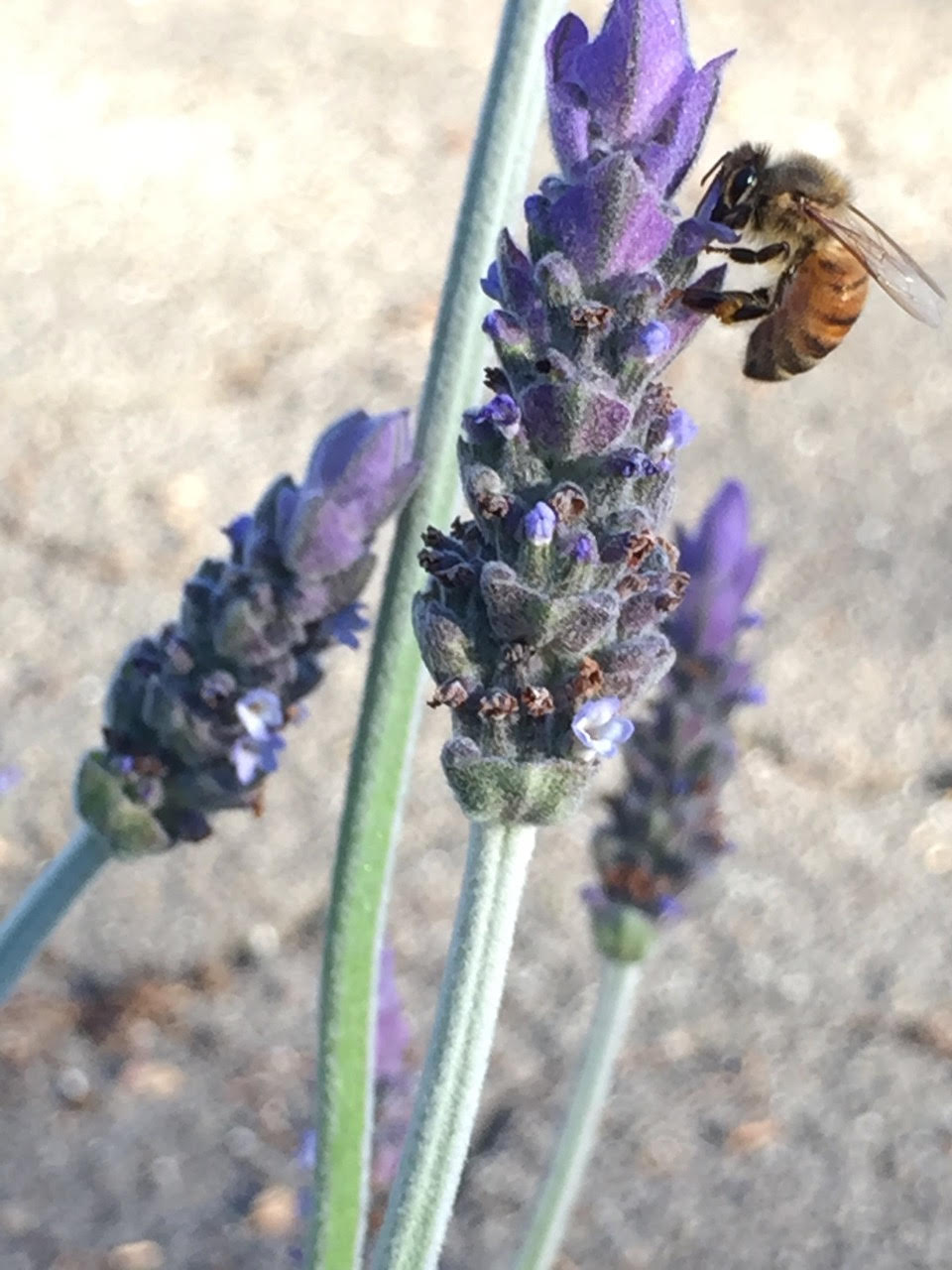
But the most important thing I can offer my neighbors is education. It’s amazing how many people confuse honeybees with yellow jackets. Most stings are caused by the latter, but who cares about identification when hopping around on one foot, cursing? It’s taken time, conversations over the fence, casual comments in the flower garden to passerby, and a lot of patience, to help people feel comfortable with bees.
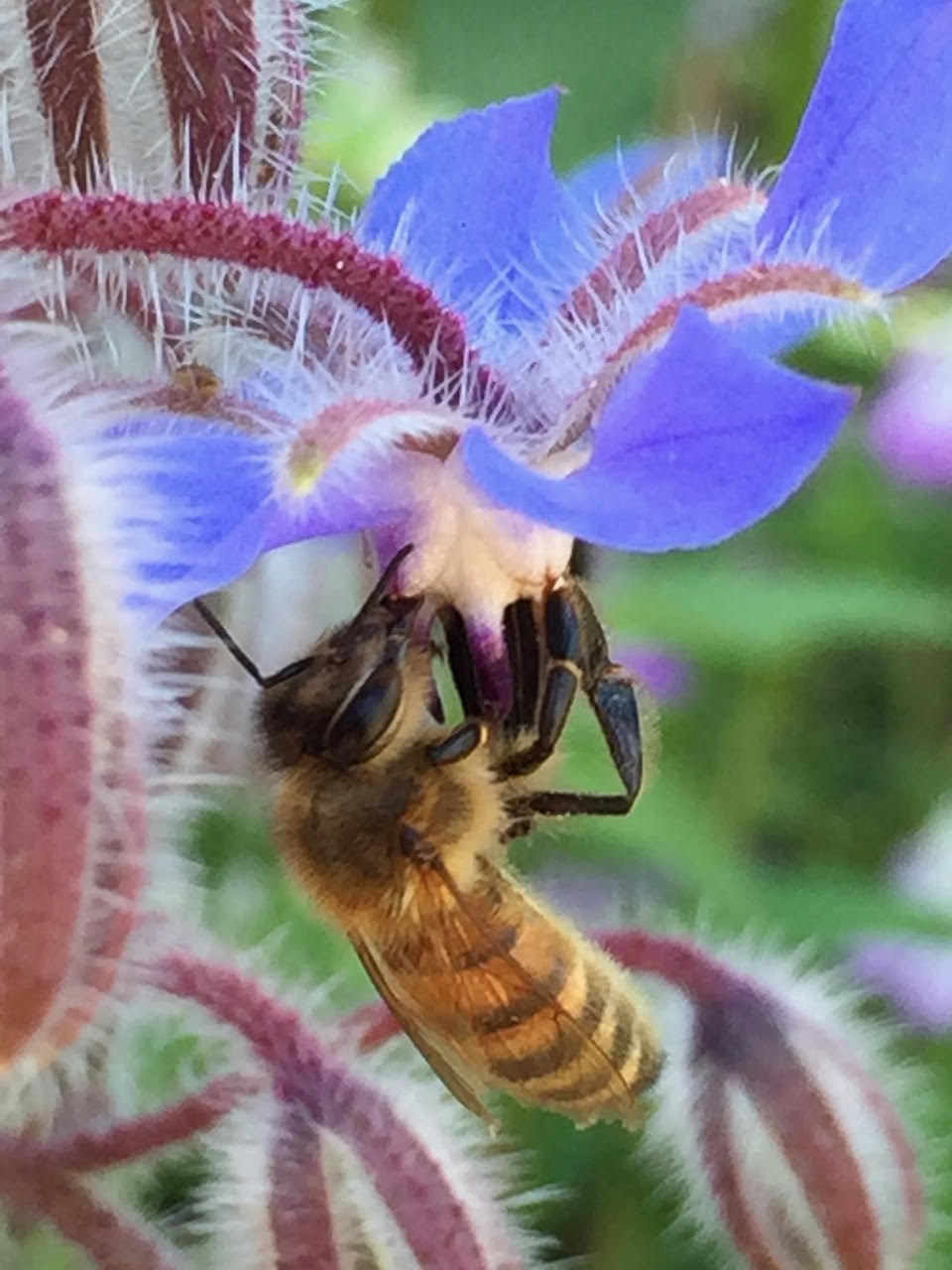
I’ll never forget a summer day at our neighborhood swimming pool, which is located about a block from our home. Honeybees need copious amounts of water during hot weather, especially in Northern California, where drought is typical. It’s a common sight to see a honeybee skim the surface of the pool for a drink. Unfortunately, the bees don’t realize that the water is deep, and most of them drown. Everyone in my family knows to assist a drowning bee by gently putting a hand underneath it, allowing it to perch safely; then it can be taken to the side of the pool to dry off. Many of our neighbors have seen us do this and now do the same. The bees never sting in this situation; I believe they are too confused to do anything but fan their wings, desperately trying to get dry enough to fly.
On this particular day, I witnessed a father showing his five-year-old son how to kill a bee with a foam noodle. The father said, “When you see a bee, just whack it. Kill it with this. (thwump, thwump.) Then it can’t sting you.”
Now, I don’t know this father. His child could be allergic to bee stings for all I know, which would be very serious indeed. But my inner beekeeper took over. I swam over and showed the boy how to rescue a drowning bee, explaining a bit about how they drink. The boy was fascinated, and hung on to my every word, his eyes shining. As I got out of the pool and went to dry off, feeling satisfied, I heard the father mutter, “Don’t do what she said. Just kill it.”
Sometimes, even education isn’t enough to change people’s mind about bees. Still, it’s incredibly important to keep trying.
So, close neighbors are the biggest issue here. But there is a problem that Cecilia and I share, and that is the lack of year-round forage. At the Farmy, this is due to the surrounding acreage of monocrops. For a moment, imagine you’re a honeybee, looking for nectar or pollen. You have a flight radius of three miles, give or take. If you’re hungry, that radius will be smaller because you have less energy on which to fly. You skim over acres and acres of corn, or soy. No hedgerows – they were taken out long ago because they don’t make money. No kitchen garden – the farmer of this land lives quite far away. No weeds, heavens no – this is herbicide country. What in the world would you eat?
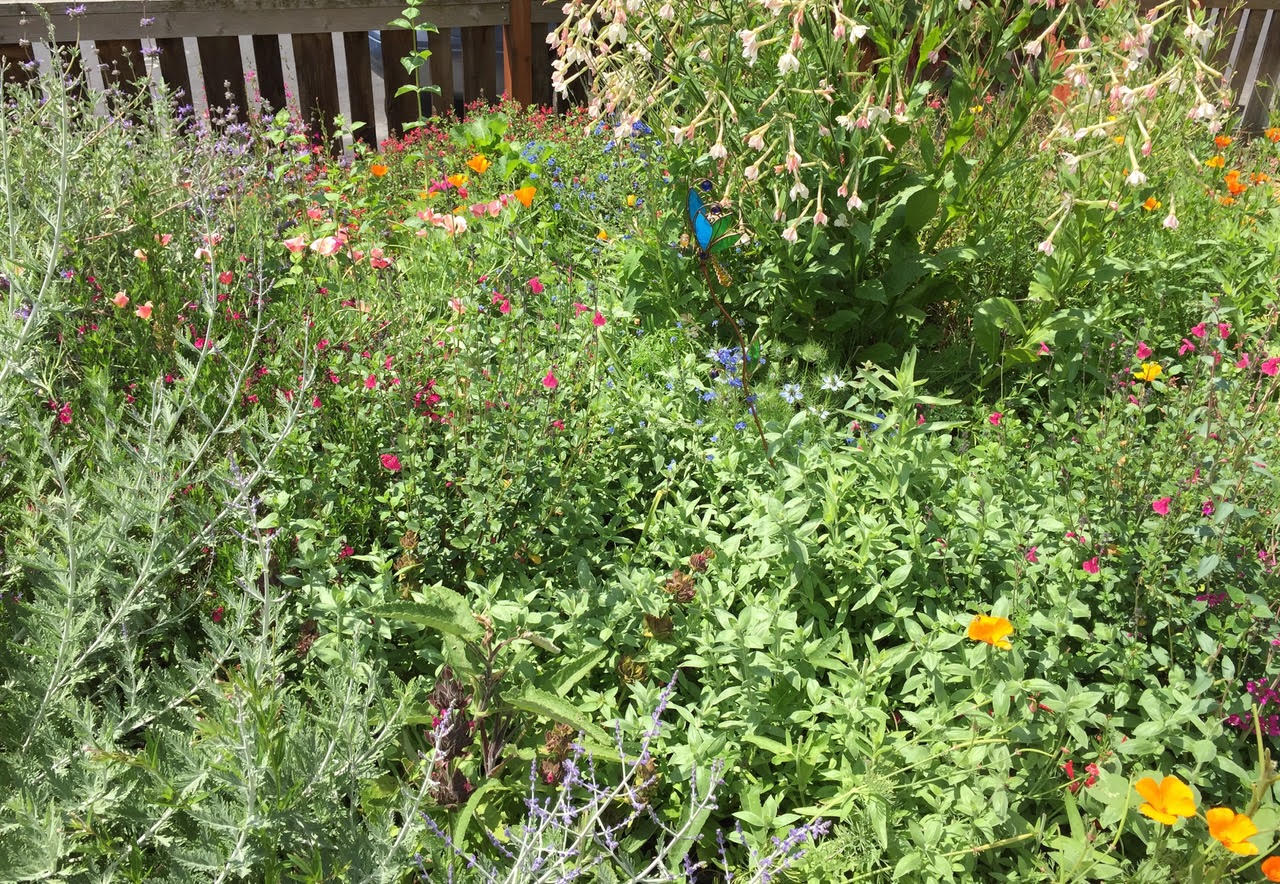
Urban bees often have an easier time of it, because most folks still like to keep beautiful yards full of flowers. Here in California, though, that isn’t the case, because we don’t have much water. I get around this issue by carefully sculpting and preparing our land and gardens to capture water when it rains, as well as collecting what falls on our roof. My flower plantings are mostly native and drought-tolerant, which means they do well on less water. I take care to keep flowers blooming 10 months of the year, which requires a good deal of research and time, but it’s so worth it – we not only have plenty of forage for the honeybees, but our yard has become a respite for native pollinators, too. It’s a haven, for us and for them.
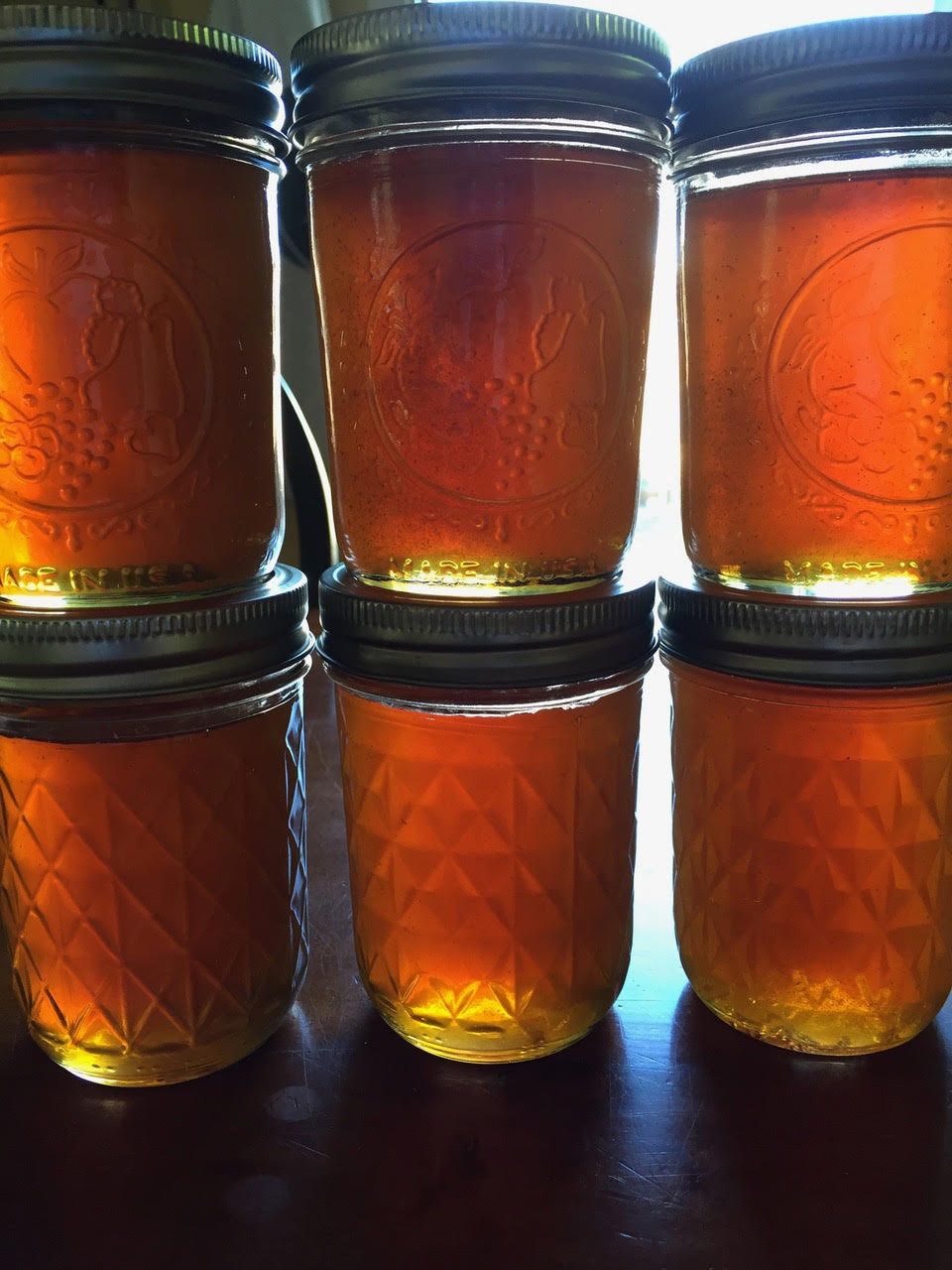
Beekeeping on any scale is such a rewarding hobby; I recommend it for anyone who doesn’t have the room to raise an Aunty Del or a Sheila. I can dream of that someday; meanwhile, I’ll keep gifting jars of honey to my understanding neighbors.
Elizabeth
Elizabeth blogs at poppycornersfarm
 The Kitchen's Garden
56 responses to “Guest Post: Suburban Bees”
We’re fortunate to [now] live in a rural village with a nearby river, surrounded by countryside, and people who understand the logic and value of bees. There are also quite a few local beekeepers and hives dotted around the valley, as well as native bees. Our 1930’s home is on a residential quarter-ish acre houseblock, we inherited the bones of its old garden which we’ve added to with bird & bee attractor plants, water dishes plus a small vege garden. We measure our success by sound… the hum of bees and bird call. It’s wonderful to read what you are doing, and inspiring others to do ♡
Your home and garden sound idyllic. A river! What I would give for a river! I love what you said about the sound of your garden. It’s so true, you really can measure the health of a garden by the sounds the native creatures are making.
Cheers, Elizabeth
It sounds like you inspired that little boy and hopefully he will remember how to save the bees next time and ignore his father. I am a London beekeeper so understand your space restrictions. Plenty of rain here! Today my brave little bees were out in it looking for food.
Brave indeed! I always worry a little about the bees when it rains a lot, mostly because of the bathroom issue. (For those who don’t know, bees will not befoul their hive – they wait until they go outside to take care of business.) They always seem to work it out, and I don’t really need to worry about that, do I? Clearly not, as your bees are quite accustomed to rain…
My folks lived in London for years, I fell in love with your city during that time and can’t wait to come back someday. It makes me happy to know that there are brave English bees flying around the city.
Cheers, Elizabeth
What a great and inspiring post! We’re wanting bees on our 0.25 acre lot in the suburbs and have attracted many native bees to the plot last year. This year I’m working hard to provide year-round forage plants for pollinators because where I live, there are very few flowers only lawns.
I hope that little boy continues to be fascinated by these wonderful little creatures, perhaps he is the next generation of beekeeper.
Wonderfully informative post! Have not read much about bees since Celi was forced to give up her hives because of two years of the Arctic Vortex hitting Illinois. *smile* Yes, living so close to others in an urban environment must lead to certain wariness by the neighbours: seems you have dealt well with the issue! Correct information is SO important!!! I live in a gated semi-urban community 100km S of Sydney, Australia . . . had to start my garden from scratch a 1/4 century ago when I arrived here . . . was lucky with my then gardening neighbours – was taught to plant a number of Australian natives as they attracted the honeybee population which would travel about 1 km up the road to their honey farm home! The plants were not so attractive but the 10% discount the beekeeper gave any of us ‘helping’ when buying his wonderful honey straight from the hive was not bad at all 🙂 !!
Whoa, what a deal!
I have several Australian natives in my garden – sometimes they do very well here. We have a local Australian plant guru, so I take his advice. You guys really know how to garden in drought; we could learn from you!
Cheers, Elizabeth
I too feel education is key in helping all wildlife, and our planet. I did not learn these things in school nor at home. I learned from neighbors and folks who were nature-friendly. We all have the responsibility and ability to teach! I have considered beekeeping. We have plenty of acres to manage it. Will I need to plant any type of plant or food plot to attract them?
Honeybees forage in a large radius; I see some reports that say they will fly five miles for food, others say three miles. My dad and I have this debate all the time, because he lives in an area where there are few flowers year round, and his bees often have very little honey in storage. I tell him that he should be planting extensive gardens for his bees, and he says they will fly as far as they need to. I guess it’s true that they will, but if they don’t have to, will they be stronger? I don’t know. I guess the responsible thing to do would be to scout out your area ahead of time, and think like a bee. What’s blooming in March? What’s blooming in August? Anything in the winter? If you own all the acreage around you, this might be easier than it is for me, say, since I’d have to sneak into people’s back yards. 🙂
When I decided to become a beekeeper, I made a personal commitment to keep flowers going as close to year round as possible. For me, that means dedicated pollinator gardens, which I am constantly re-seeding. I do not mulch those sections, hoping that the ground-dwelling bees can make homes there. I scatter seed at least once a month, thinking about bloom times two to three months out. In the other areas of my yard, I plant a lot of perennials that bloom at different times, a mix of natives (which I like the best) and other drought-tolerant species. November is the leanest month in the flower garden here – after a very hot, dry summer and before the winter rains begin.
If you want to attract native bees, the same ideas apply, though native bee queens will hibernate over the winter months. It’s a good idea to leave brush piles, dead wood, snags, and hollow stems around your property, for those who like to nest that way. Making a bee hotel is a fun project for adults and kids. I really rely on Xerxes for native bee information; also here in CA we have the Urban Bee Lab (www.helpabee.org) at UC Berkeley. There are lists of flowers on both those sites.
You might search around your area for ideas of native wildflowers that attract pollinators, and their bloom times. Generally, though, honeybees like swathes of flowers – many in a grouping – because they tend to forage only one kind of flower in a trip. They particularly like the round symmetrical flowers found in the aster genus – sunflowers, daisies. They also very much like umbels – cilantro, fennel. Native bees like those too. I have also found that tube or trumpet shaped flowers, while planted for hummingbirds, also provide food for bees even though they can’t reach in to get the nectar – they poke a hole in the top of the flower and ‘rob’ it of nectar.
I don’t notice honeybees as much in my vegetable garden (though they like the fruit trees!), however, they really go for cucumber and squash blossoms, the cucurbits. Native bumble bees like the tomatoes and actually buzz at a higher frequency which better pollinates those – their big bodies really do the job.
Hope this helps!
Cheers, Elizabeth
We love bees! My three-year-old daughter was obsessed with her bee book (The Life and Times of the Honeybee) for weeks on end, until I started phasing it out for my own sanity. She was actually stung by a wasp last summer, so there’s been a lot of talk about how wasps and bees are different. I’m fascinated by bees, but I’m happy to leave the beekeeping to others for now. We have a mid-sized apiary down the road from us, about a mile away, and I like to think that maybe those bees are flying all the way to our property. There’s certainly enough clover here to keep them satisfied! The bees we see most often are bumblebees, though. They’re so fun to watch!
Hi Anna! I love that your three-year old is into insects. That’s REALLY cool. It is never fun to be stung, though… I’ve had my share of stings and I sympathize.
I bet those bees ARE coming all the way to your house. Totally within their flight patterns!
Cheers, Elizabeth
I have always wanted to raise bees. However, we live in such a cold climate that many of my bee-keeping friends have struggled to keep their hives alive from one season to the next. I am so glad to know that there are successful beekeepers out there. Your “bee- loving” has inspired me to look into bees again. 🙂
Elizabeth
Hi Elizabeth!
I honestly don’t know how those cold-weather beekeepers manage; it’s a totally different skill to keep them going in bitter snowy weather. I admire them, for sure, and am sad that it is so difficult. I get annoyed with a lot of things in CA, but I must say I appreciate our temperate winters. Good luck to you in your beekeeping endeavors!
Cheers, Elizabeth
Thanks for the education. Everything we do to keep the cycle going with heathy bees, water, air and soil is a step to ensuring our continued existence on our planet. That child will remember and think for himself when the time comes. Good blog!
Thank you for such an informative post–and lovely photos. I’m wondering if milkweed attracts honeybees. I’m a city dweller and have just a narrow length of soil between the house and driveway, but I have milkweed. I see bees coming to it but I don’t think they are honeybees.
We’re starting a hive this spring. Wish us luck!
Thank you for your informative post — My father kept honeybees and I helped him in the bee yard. Good memories, except for the occasional stings.
[…] Suburban Bees by Elizabeth at Poppy Corners Farm […]
Your blog is such an inspiration!!! We just started beekeeping here in Canada, please check out our blog http://beescene.blog
This post wonderfully highlights the crucial role of bees in suburban ecosystems. I love the call to action for creating bee-friendly spaces in our backyards by planting native plants and avoiding harmful pesticides. It’s a reminder that small changes can make a big impact on the environment. Let’s all be stewards of our suburban landscapes and support the well-being of bees and our local ecosystems. https://ozarmour.co/en-us/collections/all 🐝🌿
Yes! Indeed!’ Thank you!