

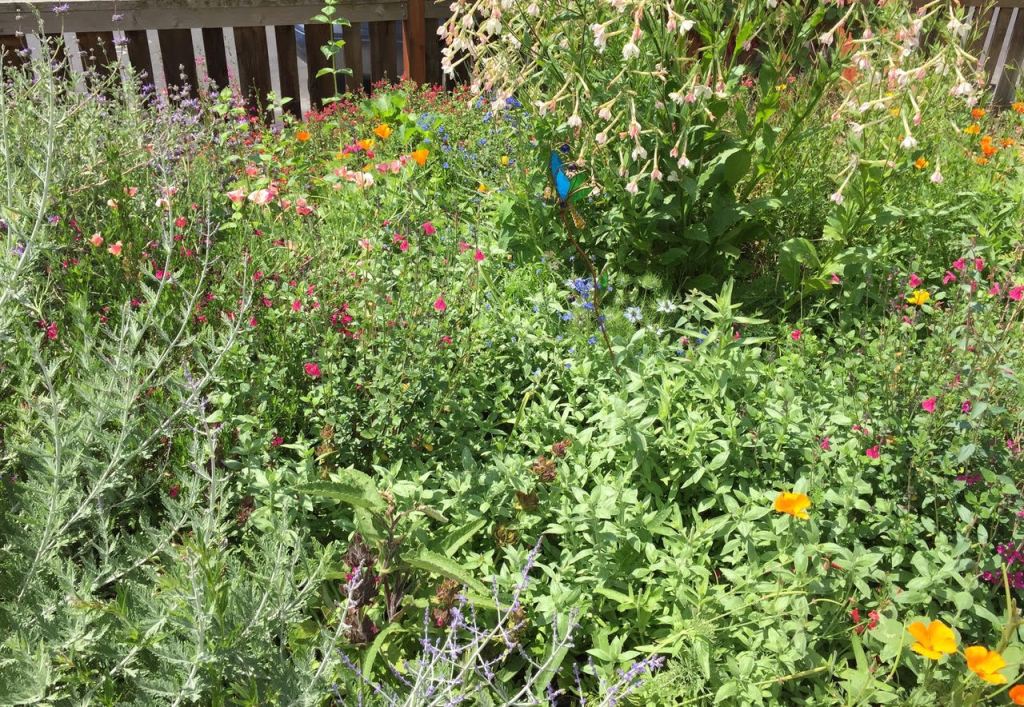
Greetings from Northern California! As I write, the rain is pouring down, a real boon for our drought-stricken area. Looking outside, I can see the plants in our raised beds looking a little limp, and our chickens huddled miserably in the dry corner of their run. I can’t see any honeybees at all, though, and that’s because they are snugly huddled together in the middle of their hive, between bars full of honey!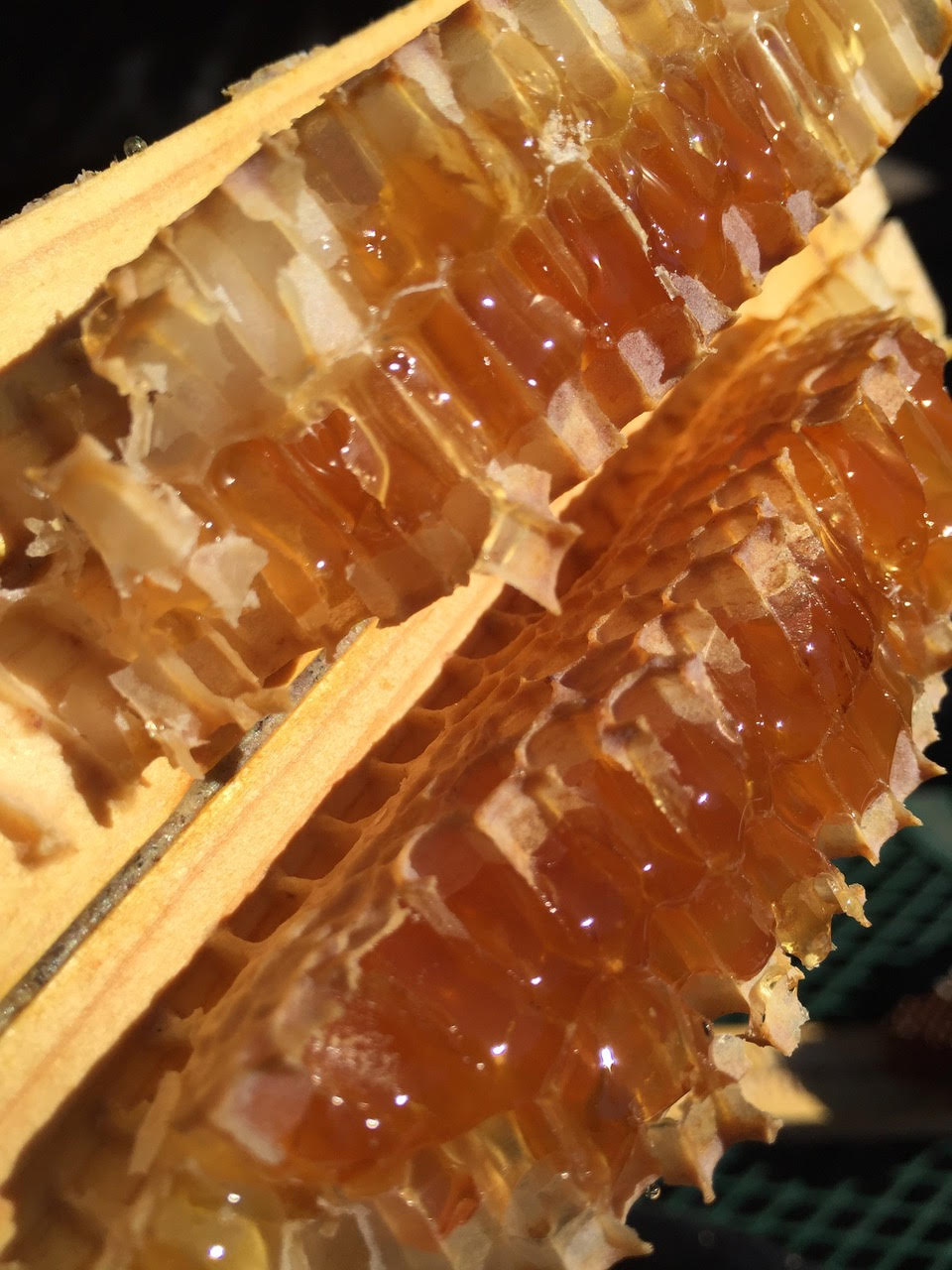
I enjoy reading Cecilia’s blog so much, for many reasons, but I think the thing I find most fascinating is the larger scale of her operation. Cecilia has many barns, pastures, and animals, spread across acreage. Heavens, she even has to zipline across a creek to reach some of them! (Ok, maybe not yet.) Reading about the size of the Farmy delights me.
Here at Poppy Corners Urban Farm, space is at a premium. Four of us live in a 1000 square foot cottage on a 7,000 square foot lot, surrounded on three sides by neighbors. Our home is 20 miles east of San Francisco, in a crowded suburban enclave. We grow as much of our own food as possible. Our garden is chock-full of fruit trees, 20 raised beds of vegetables and herbs, pollinator gardens, a chicken coop, and a hive of 30,000 bees (give or take).
Beekeeping at Cecilia’s is probably very like beekeeping here; we use similar equipment (though I prefer Top Bar Hives), and similar practices. But there is one element in which we differ greatly, and that is population! Our closest neighbors’ back door is about eight feet away from our apiary. This requires certain considerations. I’ve aimed the hive entrance away from the neighbors’ house and into our garden, as well as planted high native shrubs between the two, so that the bees tend to veer up and away rather than across. Regular gifts of honey (along with eggs and produce) is de rigueur.
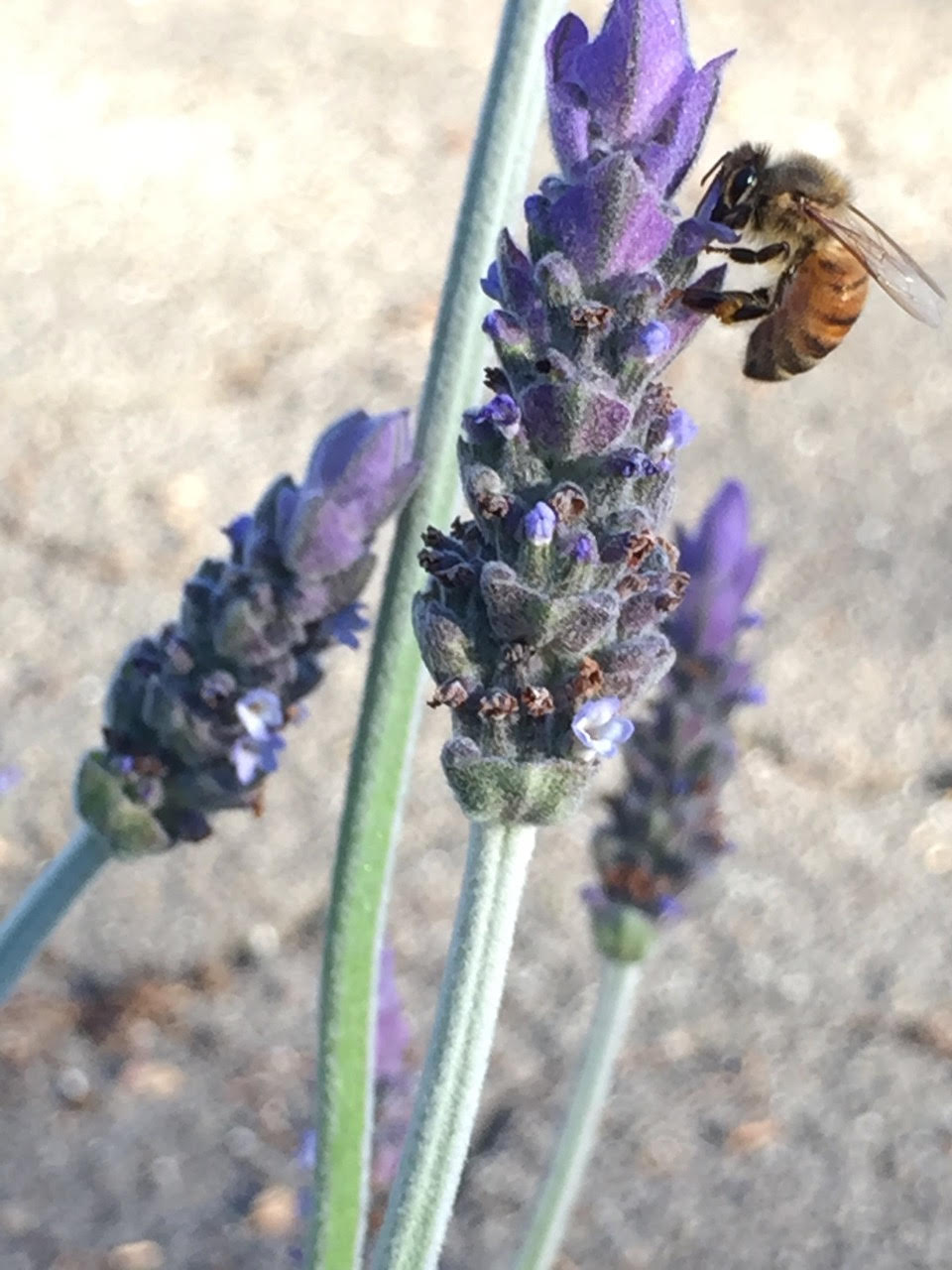
But the most important thing I can offer my neighbors is education. It’s amazing how many people confuse honeybees with yellow jackets. Most stings are caused by the latter, but who cares about identification when hopping around on one foot, cursing? It’s taken time, conversations over the fence, casual comments in the flower garden to passerby, and a lot of patience, to help people feel comfortable with bees.
I’ll never forget a summer day at our neighborhood swimming pool, which is located about a block from our home. Honeybees need copious amounts of water during hot weather, especially in Northern California, where drought is typical. It’s a common sight to see a honeybee skim the surface of the pool for a drink. Unfortunately, the bees don’t realize that the water is deep, and most of them drown. Everyone in my family knows to assist a drowning bee by gently putting a hand underneath it, allowing it to perch safely; then it can be taken to the side of the pool to dry off. Many of our neighbors have seen us do this and now do the same. The bees never sting in this situation; I believe they are too confused to do anything but fan their wings, desperately trying to get dry enough to fly.
On this particular day, I witnessed a father showing his five-year-old son how to kill a bee with a foam noodle. The father said, “When you see a bee, just whack it. Kill it with this. (thwump, thwump.) Then it can’t sting you.”
Now, I don’t know this father. His child could be allergic to bee stings for all I know, which would be very serious indeed. But my inner beekeeper took over. I swam over and showed the boy how to rescue a drowning bee, explaining a bit about how they drink. The boy was fascinated, and hung on to my every word, his eyes shining. As I got out of the pool and went to dry off, feeling satisfied, I heard the father mutter, “Don’t do what she said. Just kill it.”
Sometimes, even education isn’t enough to change people’s mind about bees. Still, it’s incredibly important to keep trying.
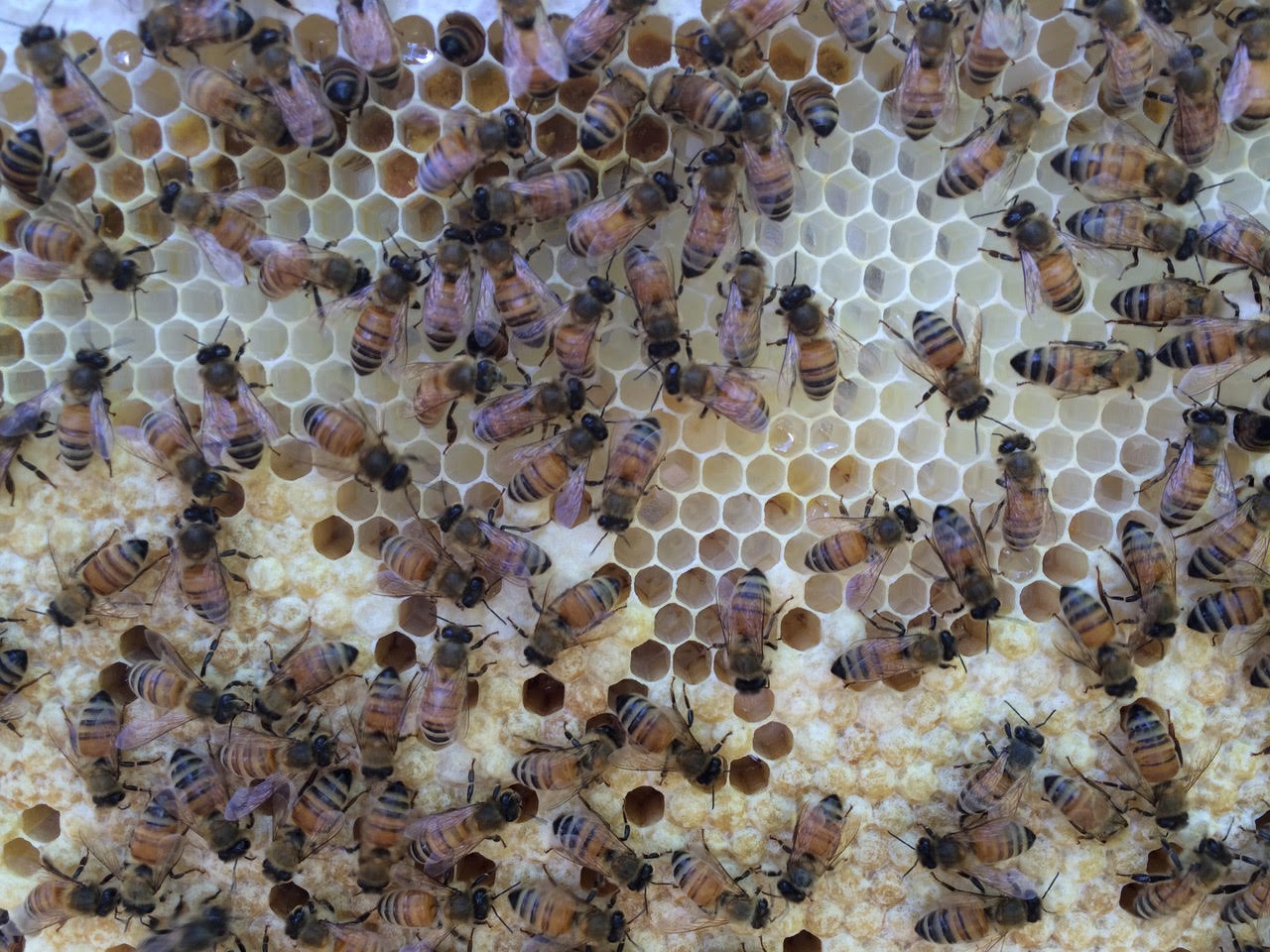
So, close neighbors are the biggest issue here. But there is a problem that Cecilia and I share, and that is the lack of year-round forage. At the Farmy, this is due to the surrounding acreage of monocrops. For a moment, imagine you’re a honeybee, looking for nectar or pollen. You have a flight radius of three miles, give or take. If you’re hungry, that radius will be smaller because you have less energy on which to fly. You skim over acres and acres of corn, or soy. No hedgerows – they were taken out long ago because they don’t make money. No kitchen garden – the farmer of this land lives quite far away. No weeds, heavens no – this is herbicide country. What in the world would you eat?
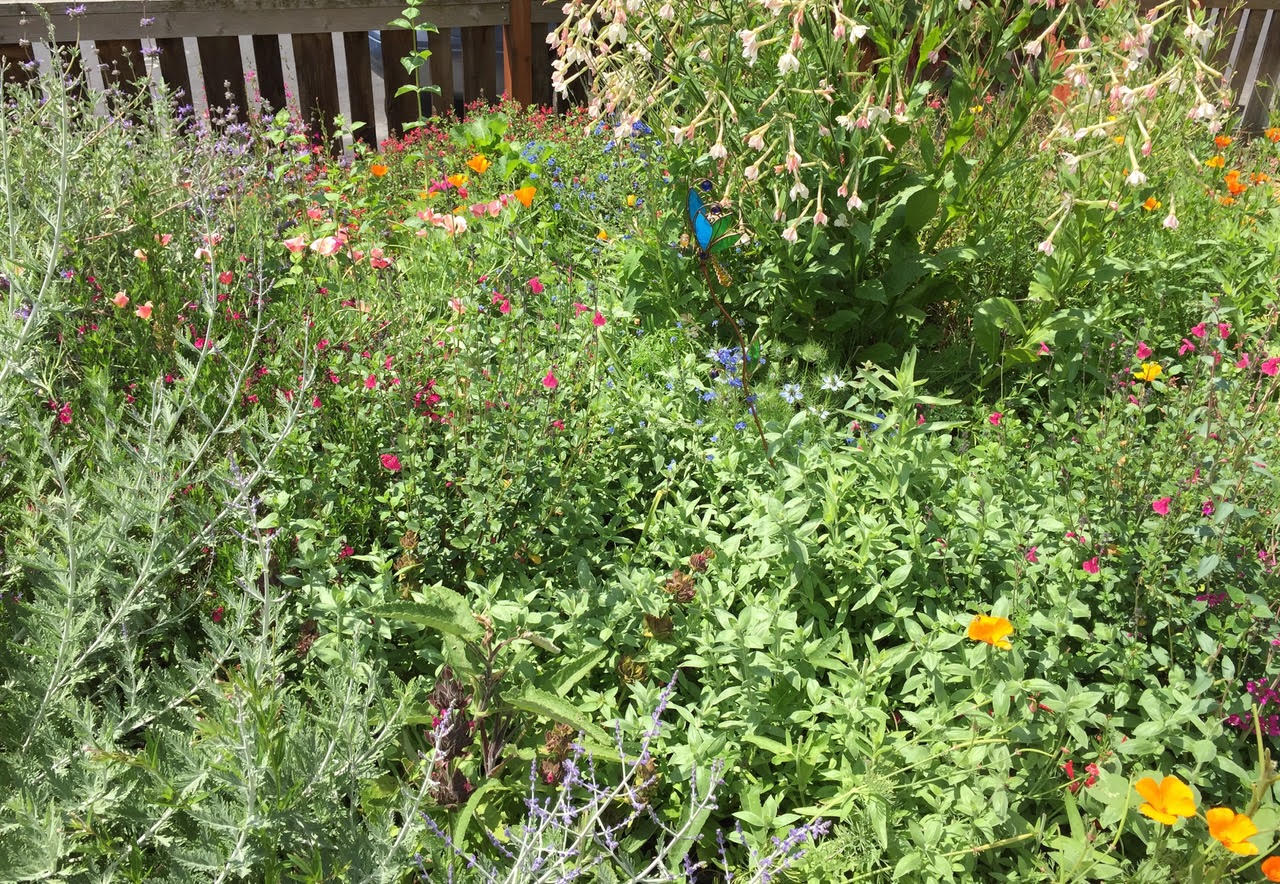
Urban bees often have an easier time of it, because most folks still like to keep beautiful yards full of flowers. Here in California, though, that isn’t the case, because we don’t have much water. I get around this issue by carefully sculpting and preparing our land and gardens to capture water when it rains, as well as collecting what falls on our roof. My flower plantings are mostly native and drought-tolerant, which means they do well on less water. I take care to keep flowers blooming 10 months of the year, which requires a good deal of research and time, but it’s so worth it – we not only have plenty of forage for the honeybees, but our yard has become a respite for native pollinators, too. It’s a haven, for us and for them.
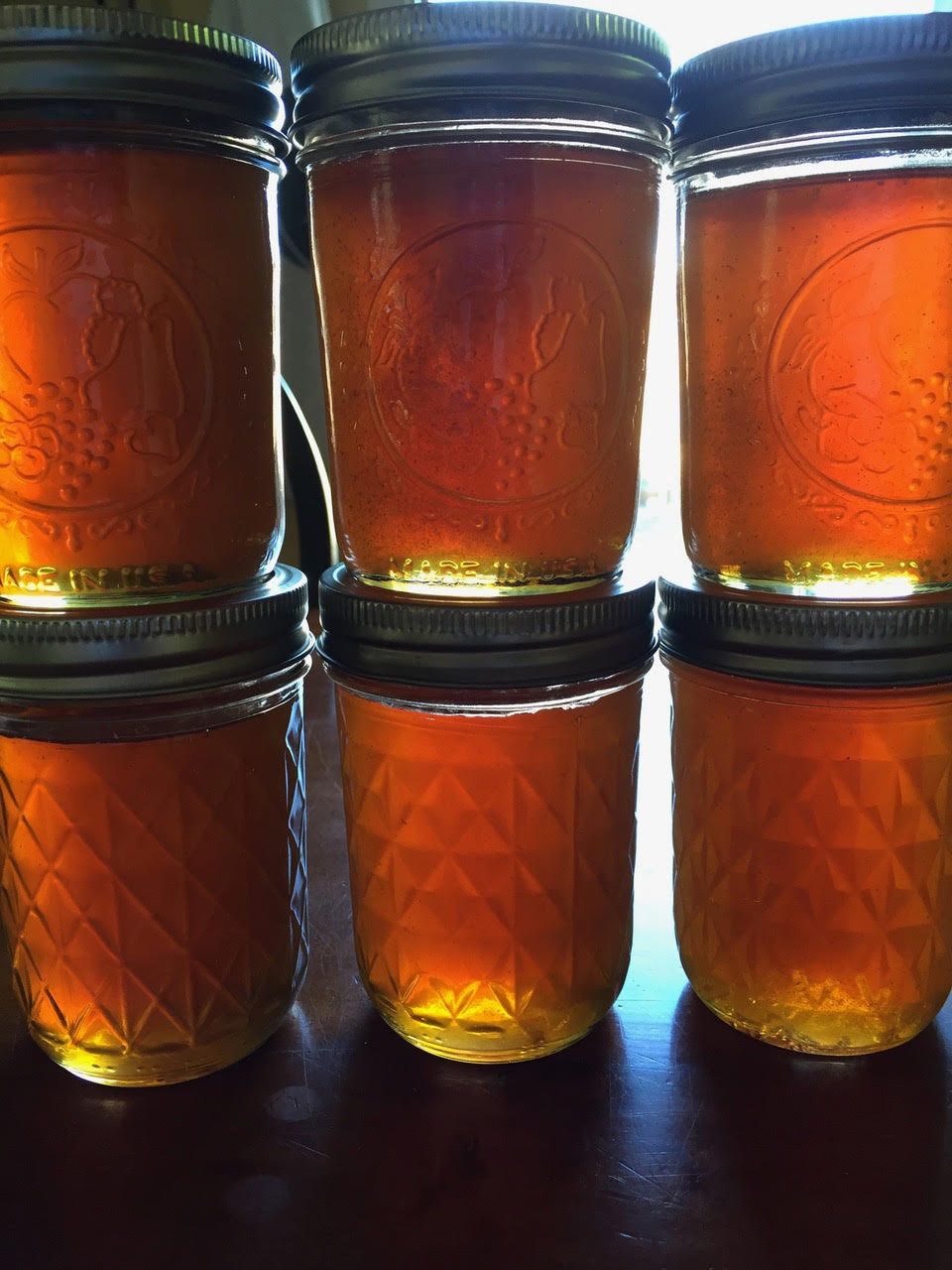
Beekeeping on any scale is such a rewarding hobby; I recommend it for anyone who doesn’t have the room to raise an Aunty Del or a Sheila. I can dream of that someday; meanwhile, I’ll keep gifting jars of honey to my understanding neighbors.
Elizabeth
Elizabeth blogs at poppycornersfarm
 The Kitchen's Garden
56 responses to “Guest Post: Suburban Bees”
I’d dearly love to keep bees, but my 3/4 acre yard backs onto a busy highway, our rainfall is massive in the summer, the climate is very hot and humid, and I don’t know how well the bees would take to it. I have tried putting out little habitats for our native honey bees, which are tiny and stingless, but without any luck.
I bet you HAVE attracted native bees, just haven’t actually seen them yet! There are so many different kinds. That’s wonderful that you’re providing habitat for them. In the farms in CA, there’s a new resurgence of folks interested in attracting native bees, which as you know are fabulous pollinators. That way the farmers wouldn’t have to hire hives of honeybees to pollinate their crops, which is a great expense, and one of the reasons honeybees are declining. So I like your idea of attracting native bees! Have you ever gone to the Xerxes society website? They have lots of good ideas for just this very thing.
Cheers, Elizabeth
Thanks for the tip about Xerxes. I would find it hard to see the native bees as they’re so small, less than a quarter of an inch long…
Thank you, Elizabeth, for explaining how beekeeping can be a possibility for urban dwellers. I never knew bees would drown in swimming pools just trying to get a drink! Keep educating! Some of us are listening! 🙂
Isn’t that interesting? Bees need a lot of water to keep their hives cool. A great thing to do for bees is to keep a shallow dish of water, with a few rocks in the bottom for perches, in your yard. Especially if you live near a pool!
Thanks for reading,
Cheers, Elizabeth
Great pictures and narrative. There’s definitely a huge boom in bee keeping in London and some of the honey is winning competitions over honey made outside of town 🙂
Oh, I LOVE London, I read your blog after C visited and I was so jealous of your foodie adventures! So I bet you are finding the best honey in all of the country! I always tell folks to buy honey from a local, reputable source. Some of the honey we get here in the states is imported from other countries and it’s only partially honey, mixed with corn syrup. 😦 I love that London is teeming with beehives, that makes me happy.
Cheers, Elizabeth
I’ve got some from the roof of a nearby pub at present 🙂
YESSSS!
Your garden sounds beautiful, and anybody who lives close to you is very lucky to receive “regular gifts of honey (along with eggs and produce)”. Yum! I wish I was your neighbour. 🙂
What a shame the father of the young boy couldn’t adjust his way of thinking. Bees are wonderful. I saw the first bumblebee last week — spring is on its way!
Good fences don’t make good neighbors – good food does! 🙂
I just saw my first big black Carpenter bee. I’m always so glad to see the native bees emerging from their hibernation. Those are queens, ready to start having babies and building their tiny communities. Native bees are so important!
Cheers, Elizabeth
Wonderful post thank you. I love bees and feel really happy when I see them in our garden. Ohh that hateful man! I’d whack him over the head with the foam noodle!
HA! this made me laugh, because I must admit I wanted to do the same! Can you imagine actively teaching your child to kill something? For no reason? It still burns my blood. Sigh.
Cheers, Elizabeth
Saw our first bumblebees a few days ago here in the Dordogne. We plant lots of lavender to attract them.
Oh, Nadia, I am so jealous of your location…. and I can just imagine those fields of lavender. One of the best bee plants, for sure!
Cheers, Elizabeth
Thank you for this enlightening, educational & encouraging post, Elizabeth. Your photos are beautiful. I do what I can for the bees by planting wildflowers & choosing flowering shrubs native to our Blue Ridge region & putting out plenty of fresh water. Once Celi showed how she put colorful marbles in her birdbath to make it more shallow for the bees. So I did that too with pretty river pebbles so our bees won’t drown. I wish you well in your neighborhood & hope that child in the pool will remember your teaching when he learns at school about the plight of the bees. I am sorry there are attitudes in our world like his father’s. I’m glad you have rain there.
You live in the Blue Ridge mountains? Wonderful area, we camped there frequently when I was a kid (I grew up in MD, outside of DC). You are doing all the exactly right things to help bees in your area – native plants are terrific, lots of diversity is important, and the water is SO helpful to bees. Yes, it’s finally stopped raining (I wrote this post a month ago-ish), and now we can enjoy some sun without feeling guilty – we got SO MUCH RAIN. So great.
Cheers, Elizabeth
I too live in an urban area with less space than you have. Part of our space is eaten up by a swimming pool, with gets a ton of use here in the Dallas, TX area. We move from Cecilia’s neck of the woods in Illinois to Texas almost 15 months ago and have been in our home for 9 months. My girls and I enjoy gardening and have been having many conversations lately regarding the need to attract bees and butterflies to our yard. So thank you for such an educational post on bees. We’ll use your advice when scooping honeybees out of our pool (although I typically only see wasps).
Oh, those wasps – they are prolific little buggers. It’s personally helped me (and my kids, when they were little) to try to identify all the wasps and learn about them, so we’d feel better about them, or at least as much as possible. I now can appreciate yellow jackets even though I really dislike them – they also eat my honeybees – well, they take them home to their nests and let their babies eat them. 😦 But some wasps are really great to have around, like paper wasps? They are pollinators, and they lay their eggs on soft-bodied caterpillars which then hatch and feed, killing the host – caterpillars like tomato hornworms. So some wasps are ok. None of them are ok when they sting you though. 🙂
Dallas sounds big, crowded, and hot. But I bet you could grow great tomatoes! Hope you’re enjoying your new home.
Cheers, Elizabeth
I would love to keep bees but my city bylaws forbid it. I live downtown and too close to other structures. We do get bees in summer and plant a little garden for them. I love how you educated that child and I shuddered at the dad’s response. Still the child listened and may remember your rational intelligent conversation and one day will be able to make his own decision. Maybe he will grow up to keep bees!
Wouldn’t that be great? I do get a lot of interest from the kids in the neighborhood. One little girl comes by every weekend and sits in front of the hive entrance and just watches the bees come and go. Other kids like to come feed the chickens. And then some want to help me plant and harvest. That’s fun, especially because my kids are teenagers and pretty much have no interest in anything I’m interested in. 🙂
I’m so sorry about your city ordinance forbidding bees. It seems like that is a very outdated way of thinking. Rooftop bees in San Francisco are all the rage. It’s great that you keep a garden for the bees – beautiful for you and good for them!
Cheers, Elizabeth
Great post! When we lived in suburbia and were keeping bees it was the same story. So many people still don’t understand where their food comes from and what a crucial part the bees play in that. I agree, I think that little boy may remember your kind words. During the summer we try to float little sticks in the livestock water tanks so the bees have something to hang on to.
Not everyone needs to have a farmy.. everyone who plants native plants for the birds and the bees, and everyone with their bees or their small scale chickenyards are helping all of us along!
Thank you for saying this, I do dream of acreage, vast and productive (maybe in retirement?), but meanwhile plug along on my own suburban lot. Which is maybe actually more educational, because my neighbors (who still have LAWNS, in our droughty climate, sigh) love to walk by and chat about what we’re doing. Maybe it’s sinking in.
Floating sticks in the livestock tanks is a great way to help bees! But being a former beekeeper, you know what to do. Do you miss keeping bees? I love having them, but like any livestock, they do cause me to worry a lot. Especially because I’ve lost hives to varroa.
Cheers, Elizabeth
What an inspiring guest post! We live on 13 acres in Southern Oregon, two thirds pine forest and one third grassland, and many deer. (Possibly because we feed them!) So growing many flowering plants has evaded these two Brits since we moved here in 2012.
But your post has delivered a very gentle ‘kick up the bum’ for me, telling me to work harder to encourage the bees. Even think of putting in our own hive.
Thank you.
I’m chucking wryly at your deer comment – oh, they’re so wonderful, except when they are in my garden! We live right next to an open space, so I have deer issues. Also the stray coyote or fox, as well as the usual raccoons, skunks, opossums…. sometimes I think half of our produce goes right back to nature. Right now we have lots of greens growing, and every morning I go out to see a little bit chomped away. We sort of jerry-rigged our fence to keep out deer and that works, but the other animals come right in. Our chickens live in a very pretty coop that is reinforced like a military fort – we know they are a draw for many carnivores.
Anyway, I am incredibly jealous of your 13 acres in OR. We are planning a road trip up there this summer, to WA too, because we are very interested in moving to an area that has land and frequent water. I know you Oregonians cringe when you hear that, like you don’t have enough CA transplants already! Sorry. 🙂 We can’t move for several years, but we’d like to scout out the area. I’ve always loved the PNW.
I think if you have any interest in beekeeping, you should go for it. It is a bit of an expense at the outset. It might be good to find your local beekeeping association and attend some meetings this year, so that you are ready to begin early next spring, although you’re not too late if you want to attempt it this year (most colony packages are sold in the spring). It also helps to have a mentor to guide you through the first year, and you can find that at your local association too.
Good luck!
Cheers, Elizabeth
Elizabeth, what a lovely reply from you. Please check your Contact page – just about to leave a message.
Truly inspirational post with beautiful photographs. I popped over to your blog and have been reading all afternoon, nearly forgot to comment here 🙂 Laura
Thank you so much Laura! I am a rank amateur at everything I do, so I really appreciate the encouragement.
Cheers, Elizabeth
Reblogged this on Save Green Going Green.
Thank you so much for the re-blog!
Cheers, Elizabeth
What a beautiful post dedicated to the bees. Your words and stunning photographs are so emphathic for that creature. It’s so sad to hear that cold “Just kill it!”, said to a kid! – Ah, and I’ve learned something new: Some times I happened to get the chance to play “bee rescuer”, thinking the weak bee might be hungry, when she / it (?) sat there exhausted. It was early spring and not much in bloom yet. Quickly I made a tiny portion of sugar water and watched the bee drinking it, soon spreading its wings and flying away. Leaving me satisfied with a fully loving heart. – So it maybe was not hungry but just thirsty? Maybe the sugar was not necessary? Next time I will think of it and just offer some water…
Yes yes yes! You did exactly the right thing. A little sugar water never hurts, that’s a great pick-me-up for the bees, and often in late winter/early spring, they’ve already eaten all their stored food, and there’s not a lot of forage yet (as you said). So I think you did the perfect thing! What great fast thinking on your part.
Cheers, Elizabeth
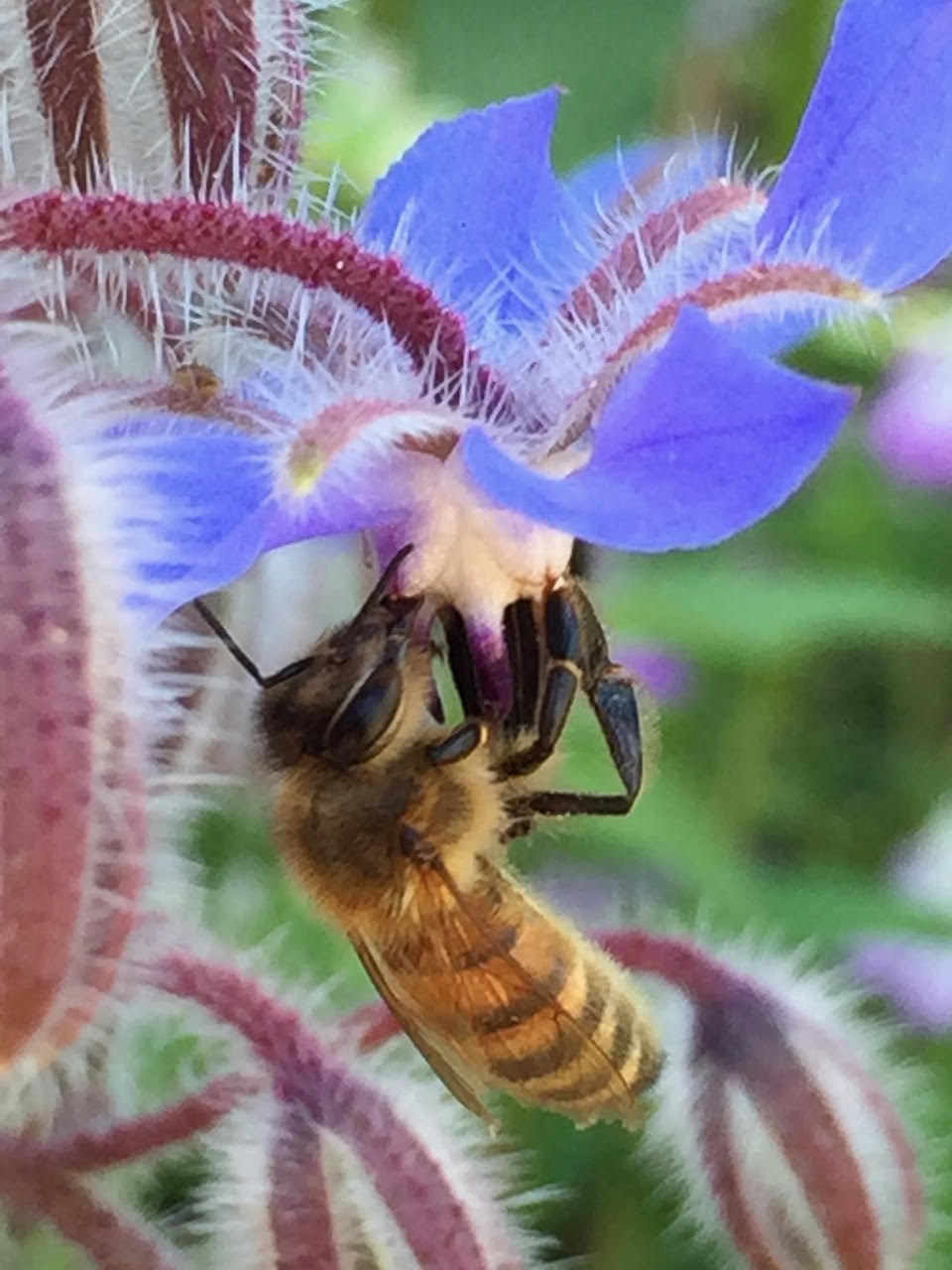
Wonderful post. I live in Southern CA and am not a farmer; but live inside a large house (the maids room) and we are amidst trees, fruits, veggies, coyotes; name it. There was a novel published this year called Bees, and I highly recommend it; new insights into bees; your photographs are stunning and of particular surprise and delight was the close up of the bee and the blueish flower; wow; thank you so much
Hey neighbor! I read that book, and liked it a lot. That flower you mentioned is borage – one of the most important bee plants in my garden. It’s an herb and many folks eat it; it reseeds vigorously; and the nectar refills very rapidly for the bees. I went down a rabbit hole trying to figure out how often bees can forage from the same flower. The short answer is that it depends on the species! But borage has one of the fastest refill rates around. Basically a bee can go across a whole patch, and then start again from the beginning. Cool, right? Thanks for reading and commenting! I’d be very interested to know when the wildflower shows start in your neck of the woods. I’ve heard that Anza-Borrego is already amazing!
Cheers, Elizabeth
I was moved by that photograph too, and awakened by your post and all your comment replies. I’m going to try the colored marbles in our birdbath. I did help a bee out of a pool in Palm Springs last month, but I was clumsy about it (fearful),, throwing him up on the deck with a big wave. The other vacationing guests seemed impressed, even a bit pleased. I did that twice last year in a pool in L. A,, with my 6 year old twin grandchildren who were frightened at first but then glad to see the bee walking instead of drowning. Now that I know how to do it more gently, I’m going to teach them the next time I visit. I very much enjoyed the beautiful photographs here, and appreciate the information. I plan to forward this to friends and family.