

So, I am writing a lesson plan this week for my course in teaching English as a Second Language. I have a question for you. If you were to emigrate to another country. Or if you are an immigrant. And you do not speak the language of that country. You are a Beginning Learner. What piece of language learning would be most important for you?
AND MAKE FOR AN ENGAGING HOUR OF LEARNING. 
Hullo, goodbye. Thank you. Please? (Let’s pretend we already know these) .
How to ask for and follow directions?
How to order food? Or buy the food for a recipe? I am leaning towards food – we could make food. It would need to be cold. Make a salad for instance or a sandwich – this would give us lots of vocabulary – verbs and nouns.
How to navigate a supermarket or the words you would use to describe yourself and where you come from?
How to order a coffee? ( this one I always learn before I leave home). And would make for a tasty class.
Throw out all your ideas. I like my lessons to be task based and like to add drama or role play into each class. And I would love your input.
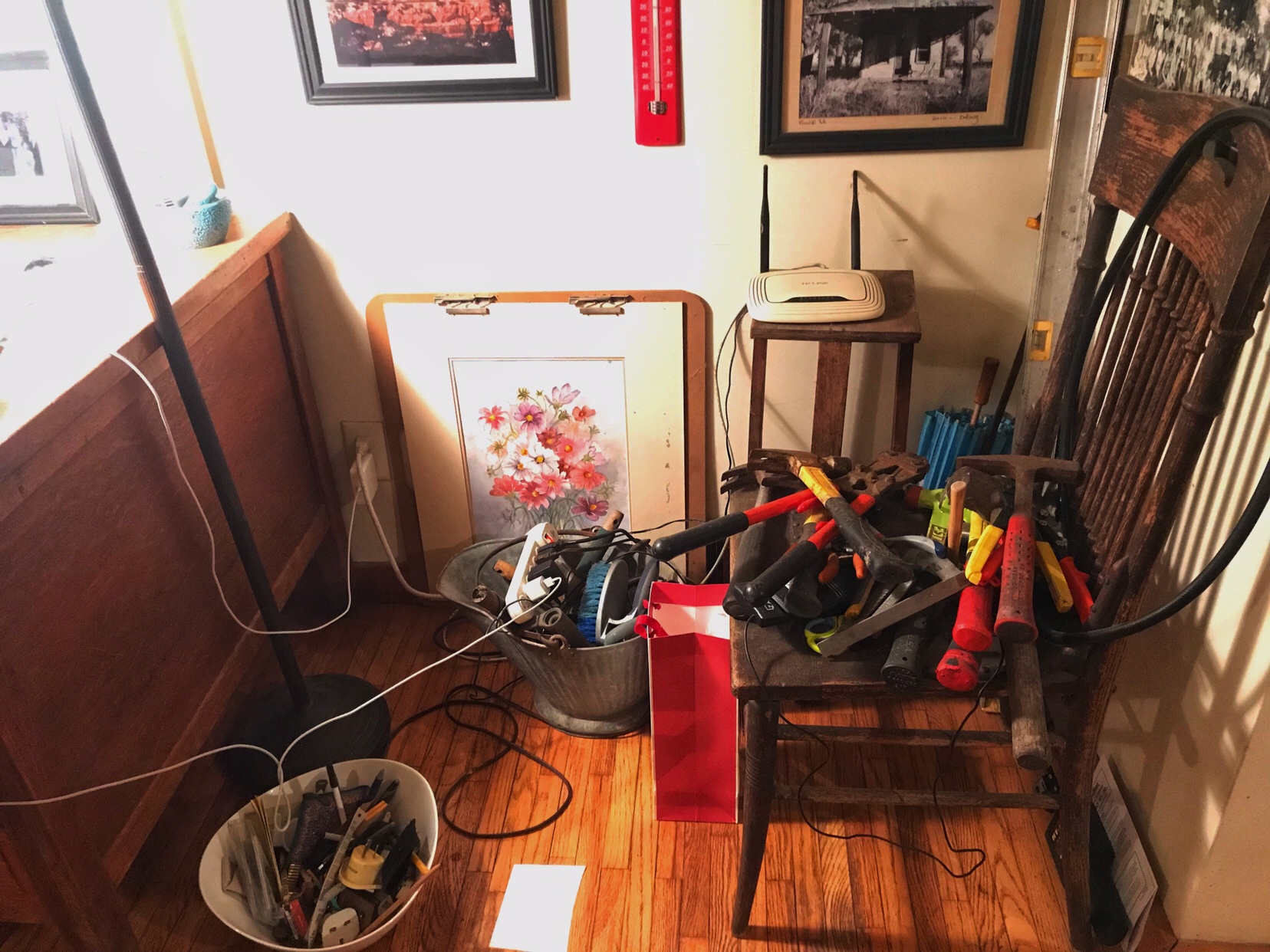
Yes, that is my tool chair – right by my desk. One day I am going to bring in the tin tool chest from the shed that I never use because I like to keep my tools close by so I can keep an eye on them. There is nothing more frustrating than knowing you own the right tool for the job but not being able to find it! And I do not see my snub nosed pliers. Someone borrowed them while I was away. Also my extra large red adjustable spanner is missing. I will put hunting those down on my list for today.
Work, work, work!
Celi
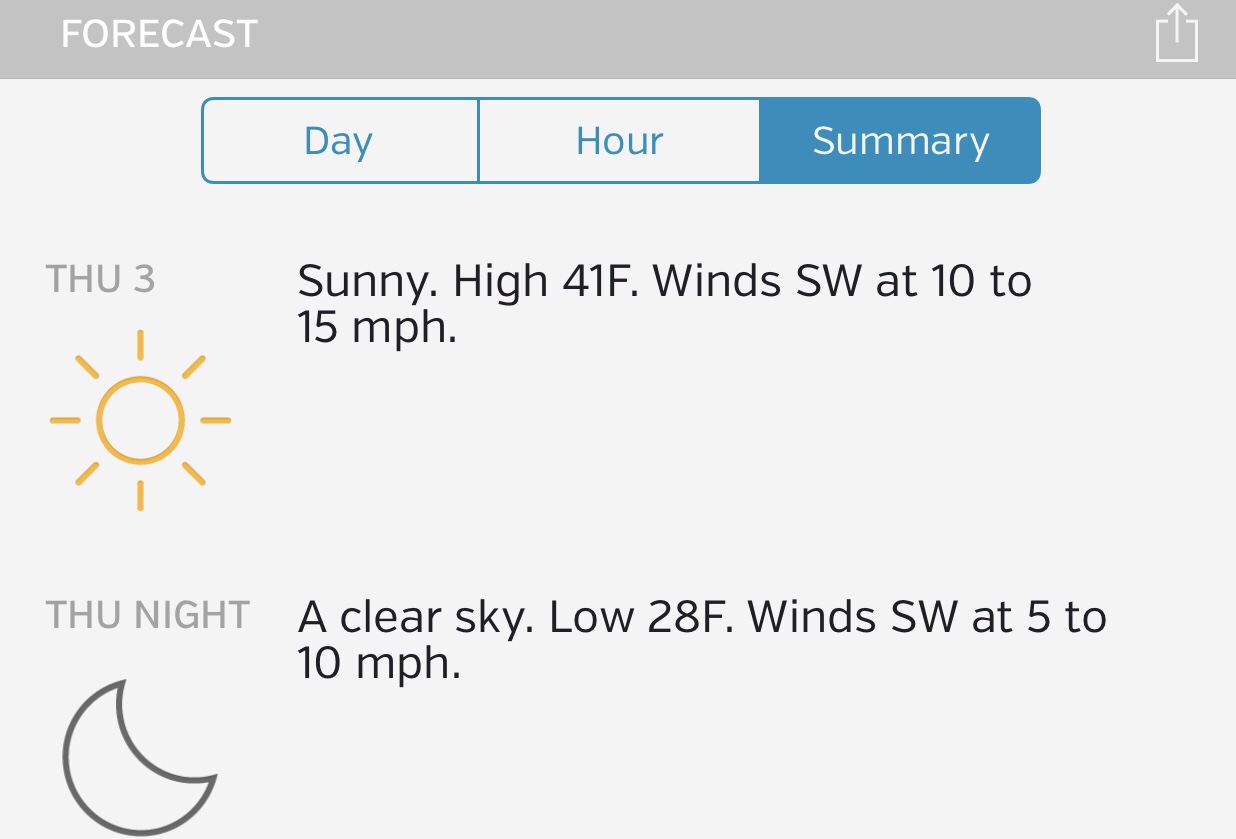
WEATHER: At last! A sunny day!
 The Kitchen's Garden
91 responses to “A QUESTION FOR YOU”
The bureaucratic stuff is important, medicare, dentist; how to open a bank account, get a credit/debit card, paying bills.
I imagine the banks get a lot of people through who have trouble with forms.
Some years ago I spent a month in Japan with absolutely no knowledge of the language. I had no difficulty in grocery stores, and even restaurants were easy because literally everywhere used ‘picture menus’ and one just pointed to the picture and magically that would be exactly what was set before you. As others have mentioned above, learning directions would be so useful: right, left, North,south, etc. And I think it was Kate who, above, suggested asking someone to repeat and that would be most valuable. Funniest thing is when people realize one doesn’t speak the language, instead of finding easier or simpler ways to explain, they simply raise their voices and repeat exactly what they’ve already said as if your problem was not language but hearing. Oh, and a phrase to request closest public washrooms. lol this is pretty critical. ~ Mame 🙃
I have heard people repeating stuff louder – so frustrating for the person on the receiving end!
Hmm…
Emergency Services: Fire, police, ambulance, hospital, doctor, alternative practitioners & health food stores.
Food: contents of their favourite recipes and where to purchase them. Grocery, Bakery, Butcher, Farmers’ Markets… Learning about the food cultures of others in the class might find commonalities and form friendships.
Religious & Community Centres and their functions
Money: denominations and how it works. Cash, debit, credit…
Directions: not just cardinal but sunrise and sunset.
Weather terminology and what’s important to know in your area.
Weather is a good one! Lots of words to learn there too. Thank you.
May I have… Thank you very much. Excuse me please. Do you know where/Can you show me… Hello! How are you?
Love your pile of tools “in plain sight”
There is NOTHING more frustrating than trying figure out where X was using/would leave your… (and logic normally has nothing to do with it, because if it did, it would be right back where you left it:/)
I call it the Tool Chair .
All I thought of has been suggested, but I might add one. Allergies and how to convey them would be very necessary, especially food allergies. When we visited Paris several years ago, I was immediately overwhelmed by the city. We found a street vendor who sold maps which helped tremendously. We walked everywhere as we couldn’t figure out the subway system without the language.
Walking was a good idea. You have to move very fast in the Parisian train system – those doors open and shut in seconds and if you hesitate you are lost – literally!
We would plan our day in the hotel room, Mark the map and forge ahead, several museums and then eat at restaurants that looked interesting. If was only a couple of days, but we packed in as much as possible. Lots of ideas here. I’m sure you will come up with a great lesson plan.
Im the same everything I thought of has been said. I think being able to ask for directions is really important, and left and right. We do a lot of pointing and smiling when we go abroad, I find a smile helps a lot! 😀
Yes! Smile and attempt the language- everyone likes us to try.
I took a solo trip to Napoli at the beginning of December, knowing precious little Italian. Per usual, my brain decided often to answer in French or mangled Spanish when I did understand and try to respond. Ah, brains are funny! I had a fantastic time, in part because Italians are such a laid back and hospitable people.
I went to the grocery near my apartment twice and it was marvelous. That is always one of my favorite places to visit in a new country, you can learn so much there. Helpful language for ordering meat and cheese would be nice, what are the customs when one is paying – do you lay cash directly in the cashier’s hand or in a tray? Do they provide bags or is it customary to bring your own? Those are all good things to know.
Ah, to be back on those tiny winding streets, smelling of fresh espresso and pastries in the morning…sigh. Nope. I’m here in Raleigh, bundled into my car, heading to the office. Le sigh.
Naples is mental!! I remember being in a car with my boss – he was driving and I was sure i was going to die!
All the great suggestions! Mine? Two easy aids, easy and cheap. Clear plastic page protectors and dry erase markers. Dollar store kinds work fine, for easy in-class or home practice. Insert sheets with assignment & write/erase on the protector. Also, spiral bound index cards come in different sizes & can be used as a more permanent personal pack of questions as well as functioning like flashcards for memorization. My lazy emergency aid is Google Translate for those with smartphones–
Do you mean carrying cards with your question on them? That is an idea.
Yes. kind of a personal help list– but to be an aid to learning rather than a crutch. Easily updated, learned phrases crossed off or whole pages torn out. And can use both sides of each card.
I moved to Sweden from Australia knowing not a word of Swedish and those first few months were a scary time. I can recall thinking every time I went out “Please, don’t ask me anything” or “Please don’t talk to me”.
The first things I learned were the polite words like “Hello”, “Thanks”, “I’m sorry” or “Excuse me” and “Where is the…” to help when I was negotiating the busy streets. I also needed to shop, so phrases like “Can I please have…” and “How much does it cost” were good to know. “Hello”, “Goodbye”, “Yes”, “No” are good to know as well as “I am…”, “I come from…” and “What is your name?”
I think vocab is easy to learn if its a subject you are interested in. For me that was food and cooking, so I concentrated on learning the Swedish for foodstuffs and reading recipes. I got recipe leaflets from the store and came home and looked up what each thing meant. I wrote shopping lists in both languages just to remember what I was buying and over time I learned the words without really having to try – just from the repetition. Having gained confidence in the area that was my passion, I was ready to branch out.
Others have mentioned forms and that is also an area where I noticed that a lot of immigrants in my Swedish class needed help. I was lucky in that my husband is Swedish, but those without someone at home who spoke the language struggled to fill in basic forms that they’d need to register with doctor, dentist, social security, open a bank account, order broadband, rent a flat etc.
It is so much easier when we are engaged – working with something we are interested in. Like food. I should imagine everyone can engage with food
I have a million stories about being the newly arrived expat in Hungary and, later, in France and trying to learn the basics as quickly as possible. So many mistakes, some hilarious and some embarrassing! Once I told someone I had four younger lovers when I meant to say four sons. In a class on Business Hungarian, I was asked to say ‘The Ukrainian computer market is ours!’ I would emphasize the survival vocabulary above all: how to ask for and understand directions, handle the currency, use public transportation, maneuver through the supermarket or local shop, describe a problem and ask for help. And please also teach the ‘cultural keys,’ that is, the way things are done here which we all take for granted. Queueing correctly is so important if you want to get waited on. The appropriate response to a cheery ‘Have a nice day’ or ‘Have a good one!’
What would you call the cultural keys to America.
Well, they vary a bit from one coast to the other but, in general, use of the first name immediately, saying ‘Hello’ to complete strangers one meets in passing, the notion of tipping 20% in restaurants, freely volunteering one’s time to help others, the lack of affordable health care (seen as a ‘good thing’ by so many!) are the first ones that come to mind as being so different from most European countries. And again, queueing.
Others have covered what I would have said….being in Japan, having no Japanese and needing the toilet was a big one for me! How people are feling is hard too, to convey. I worked in Immigration Dept. in the late 80s/early 90s and counselled newly arrived refugees from El Salvador, most of whom had been tortured. I had no Spanish, they had basic English but no words to tell their stories. They didn’t want an interpreter sitting in either, so it was very hard, but we got there, lots of sign language, I used children’s books, those ones with pictures of faces and various feelings. We drew pictures, acted out various scenarios…..very harrowing….. as well. Laughed and cried a lot too.
You could always get graphic like my husband did in Senegal (French-speaking). We needed eggs and couldn’t find them in the grocer’s, so he went to the clerk, tucked his arms up, started flapping his elbows, then made a pushing sound, and held out his hands and said ‘egg?’. She pointed him to the back of the shop and there they were in a low-down cooler! What a hoot THAT was!
Mercy! Just glanced at the title of this section and thought it said “Welcome to the Language of Comments” – which makes perfect sense for today’s topic
Yes to all of the above and also be able to explain your symptoms–pain in chest, upset stomach, earache, etc.
Lots of great suggestions above. I was in that position 55 yrs ago and honestly can’t remember how I learned but I was young and was able to pick it up quickly at school where a lot of vocabulary was thrown at us. My parents had to go right into the work place and, especially with my mom, had a more limited, work related vocabulary, all their lives.