
Have you ever wondered how our future will look? Not exactly my future but our children’s and grandchildren’s future. And not the doom and gloom one but the future of a terrifyingly adaptable species – the Homo sapiens. Us.
I only have two predictions that have arrived whole in my head.
Soon – we will be paying our restaurant bill with our phones. Maybe through PayPal or something. No cards. Just a bill to the phone – hit a few buttons and bam- paid. This is so obvious I am sure it is already being done somewhere.
But my long term prediction is that villages and cities will become more self contained more self sufficient energy wise. They will close their gates like medieval castles and casting off massive government will become smaller and more self sufficient. With their own renewable energy and water and food.
Let’s look at 150 years down the road – not long. There will be little or no oil. Municipal Water will be severely regulated. Households will collect and make their own water probably using household units that draw water from the humid air and purify it for drinking. The weather will be wilder for a while as the climate recalibrates so our houses will have less glass, more shutters, air locks in doorways. We will have gone through the horror of massive overpopulation and untreatable disease and through the dreadful food and water shortages period. Probably a world wide unstoppable flu epidemic. The seas will be empty of fish and full of plastic.
We will be remembered as the richest century. The century of oil and squander and superbugs. Already here in America more people die of untreatable infections than Aids. Squandering oil, and penicillin, and time. Remember that the Roman Empire foundered because – among other things: like greedy leaders- they depended on wood for everything and chopped down more trees than they planted. We will be renamed the deniers and bickerers.
But let’s leap frog through that to the recovery period. This is my favorite period.
The beginning of the new world. The cities will not have adapted They will adapted by dividing and refinding their inner village. Sone areas will become storehouses of recyclable stuff. Small villages will rise up within the cities because the villages and towns will have done so much better. Rural towns will have become totally self sufficient both for sustainable energy and cleanable water. Almost principalities. People will have to apply to live in a certain town. Their skills will be more important than the money to buy their way in. Each town will have its own power source. It’s own farms. It’s own government. It’s own industry for barter. Maybe even its own currency. Each town will be known for its particular talent. Like roofers or water filterers or inventors.
The roads will be lined with fruit trees that are watered with processed grey water, everyone will have a vegetable garden and the pigs will be fed with food waste collected from each home. The milk will come into town twice a day on the back of an electric wagon and people will buy a ladle full.
There will be a big house or two – massive houses that house the industry of the town – like weaving or writing or blacksmithing and employ many people. These houses will have big bread ovens and the whole village will use them. There will be a local mill. And a school in the daytime with books.
There will be few towns in the desert. Or out here in the frozen tundra. Though there will be nomadic peoples who summer ( or winter) in these spaces then migrate with the birds.
I would not be here in the future – there is no wood for fires to cook and keep warm. So I must keep working on planting my forests for the next peoples. So this can return to beautiful wilderness.
No oil which means no waste. No plastic. There will be collection industries making new stuff from found stuff. To have built an entire civilization on the dependence of a non renewable resource like oil will be looked back on as a bit silly. Power will be sun or wind and managed by the village or family farm- but it will be inclement and dependent on climate so being difficult to store it will be intermittent.
It will be an interesting world in 150 years – rising up through the bones of this one.
It is our job to lay good foundations for our future peoples. We need to leave treasures for the flu survivors. Simple things. Troves of seeds, forests, paper books of useful technology, metal, good tools. Clean water. Strong well – bred animals who can reproduce without intervention. Strong houses that will last centuries. Barrels.
What else shall we work on?
In fact we need to decide right now what will survive for 100 years and what they will need in 100 years or 200 years and begin to build these things and store this knowledge in a way that the next generations can retrieve it.
Imagine – no internet- no oil – less water – less travel – no wonder medicines. It will be spare and tribal. But more different than I can imagine.
What will be important for our future peoples? These ones who band together to feed and fuel a village or a farm. How can we help our children to survive and thrive in the new world that is coming. 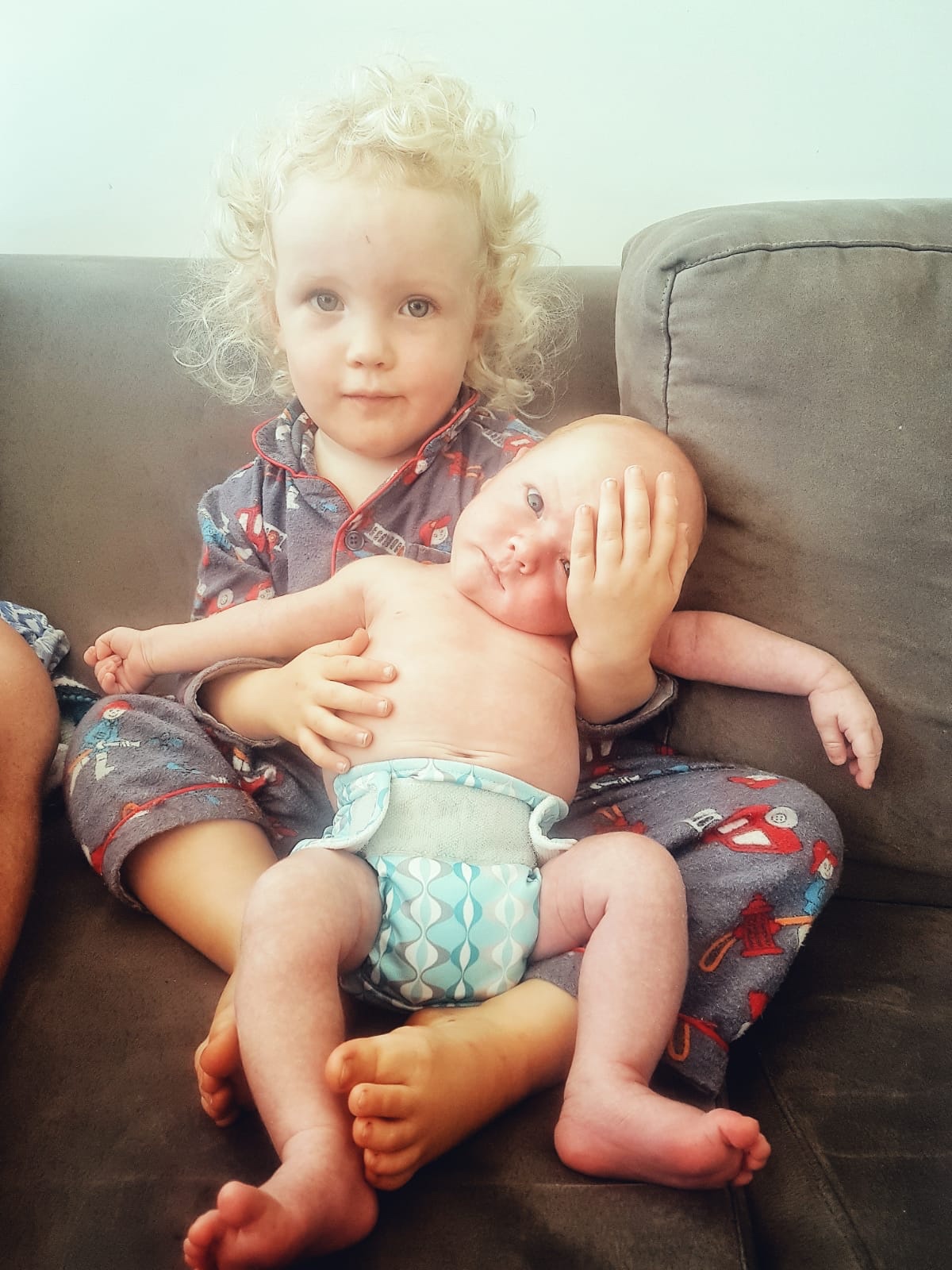
What shall we leave for them. Anyway that is what I am thinking about.
What are your thoughts? The positive ones – we have had enough of doom and gloom. Let’s get busy on feeding the future.
Cecilia

 The Kitchen's Garden
71 responses to “PREDICTIONS”
Apple Pay is amazing, and supposedly the safest way to use your credit card now.
Hmm! I am going to look into it! Thank you
I’ve had a similar vision for the future, and so here I am somewhat early perhaps but early adapters need to be on the ground now for their influence to reach 150 years forward. We live a modest lifestyle in an old house with small windows, rainwater tanks, onsite septic sewerage, responsible electricity use… no solar panels, on a small tree-filled block of land in a village, growing and doing what we can ourselves, and educating by example… for us and others like us, these are tendencies evolving from understanding post-war -in particular- civilisation isn’t sustainable. This is our legacy.
And your place looks lovely too. It is hard work but great to be so self sufficient
I’m teaching spinning yarn in Adult Education here in San Diego County. Mostly because I love spinning & teaching and also because it is important to preserve and teach forward the old skills. Granted my students are adults but they have families to teach. We do a lot of outreach at public events to remind people that we are not dead!
And once you have made yarn, there is a need to make something with it so we are promoting weaving, knitting, crochet and whatever else you want to do with yarn or fibers.
Love your blog posts, especially this one!
Oh my goodness! How I would love to come to your classes. I would get sheep again if I had a way to spin then weave the wool. I always dreamt of having a woven blanket from my own sheep.
I am seriously lacking in foresight, but not in delight– Following is off topic.
When you first offered Instagram, I wasn’t able to figure out how to access it. Instagram tried to help me on several occasions, but finally I’d given up. But Sunday I tried once more, hoping their claim it was so much easier, and lo and behold it was. I was absolutely blown away by all the photographs AND videos. Spent over an hour just so happy enjoying the videos, playing them over and over. Favorites–Jude surprising WaiWai on his way out of the barn and WaiWai giving him a little kick but Jude undeterred, really undeterred. Another one: Sheila munching on a pumpkin. Sound effects were terrific. Another: Little Jude just 3 days old popping out of a room to join you. OMG! And then to think how he almost died twice! Another: the quiet ethereal sunset and the cows munching contentedly.
I had no idea so many riches awaited!
I wish so often I could “like” your all’s comments & appreciate your “liking” mine. This “liking” comments ability is not available on my old my Mac access to blogs as I have questioned here before. (My son says my systems are archaic.) But I so much enjoy reading your comments on Celi’s blog whenever she posts & her replies & thank you for reading & sometimes “liking” mine.
I found the ‘like’ when I started using the WordPress app in my phone. Though your comment was much more fun!
I don’t see the “like” button on the Mac either JM, but it is here on the WordPress app one the phone: )
Perhaps it’s in your settings, Miss C?
Hey, Margaret! I loved your phrase “teach forward the old skills”. Lovely, just a lovely phrase!
Margaret, I really like your comment about teaching forward……………….
The children coming in are brilliant and creative and will find ways to change this. At least many of them. Back in the 60’s my husband was a proponent of zero population. One for each of us. I decided to agree for other reasons and now my children have had no children. End of story. But there are many sweet faces still on this planet and I want them to have more, not less than we had. So many of us are trying so hard while others think we are crazy. But try we must. We will probably go through another learning cycle with the younger generation and women coming to the rescue. Many are very thoughtful. Trees must be planted where we have taken out so many. Those sweet faces you have there are just too precious not to try everything to save us.
About 125 years ago or so my great-grandmother lived about a quarter mile from where I’m living now, she had a cow, a pig, a large vegetable garden, chickens, a well and an outhouse, that place is now approximately in the middle of I-57. I’m sure she never could have imagined her house knocked down and everything she saw every day gone. I suspect with the internet and the changing face of the workplace there will be far less reason for large cities since remote work is growing and more companies are learning that they don’t need a fixed place for a large workforce. It would be a good thing for people to grow more of their own food. I’ve been quietly pushing to get a few chickens, not having much success but the landlord has not forbidden it yet. 150 years isn’t a long time and I think there will be less change than your speculate. Homo sapiens is indeed a very resiliant creature, adaptable and capable. We do need to keep the old knowledge, it can inform us and spark new methods and means. We do need to clean up our act globally, pick up our trash, find ways to reuse, recycle, repurpose things already in existance, but we must not forget that as a species, homo sapiens is not the best at living in harmony with the natural world. There is a great deal to learn, to rethink, and to change.
Working from homes that are rural would surely help with the congestion and dependence of those big big cities.. but if you look at the change in oil use, water use, technology, health and population in just The last 5o years- I think we will see many more changes yet. I hope they are for the best!
I have been thinking over your comments all day, pondering and trying to think what my prediction of the future would look like. It’s a little different to yours – not that I’m saying you’re wrong! I just have different ideas, and maybe I will be wrong. I don’t think it will be quite so dramatic a change as you think. I think we will just gradually drift back into the older ways, which were kinder on the planet and made for a happier and less stressed-out lifestyle. Even five years ago, people thought nothing of using plastic – those who tried doing away with plastic were seen as ‘hippies’ or ‘greenies’ and seen as a bit unusual. Now people everywhere, living ordinary city lives, are trying ways to cut back plastic use. There has been a huge shift in the way we view the planet and our footprint on it over the past few years. I think it is in large part down to the internet, and the ability it gives to share what is happening around the globe, and share ideas on how to help prevent the global disasters happening. And I think that is really my picture of the future – people working together to bring about ways of living which don’t harm the planet. If we can work together, I hope that we can think of ways to reduce, and even remove, the plastic from the oceans before all life is gone from it. I think we will bring about ways of living IN the ocean, without harming it, as the sea levels rise. I think there will be new ways of manufacturing power found, something like nuclear, which only needs such a small amount of resource to make a huge amount of energy, but without the harmful side effects and waste. With the internet, it is now easier than ever to source locally grown produce, and I think there will be more groups, in cities as well as towns, which pop up to share and swap their cucumbers and tomatoes. Rooftops can be used to grow community gardens, and this also helps absorb and reflect the sun’s heat in summer.
All these ideas are dependent on working together, and that also means the leaders of our countries. As the leaders seem to get greedier for more and more, they push our countries towards war, and it is war of the nuclear variety which will bring about the huge cataclysmic changes you predict. I really hope we can avoid this, but I agree with you that we need to keep the old skills alive, ready for future generations who may need them again.
I also agree with you about not wanting to live 200 years! Not unless they also find a way to slow ageing down. And really, does the planet need more people living longer? How many years would we be expected to work before retiring if we live until 200?! 🙂
This is a great comment kitty and really positive. And I think that much of this will come to pass in our lifetimes. And I agree that to work we need to get everyone onboard. The saddest thing is when we even talk about what is best for our planet ( and surely it is obvious) Out here in The states it becomes political.
Yes Ma’am, great thought. I belong to india, we are feeling this future now.To secure future for our kids we have to spread this message all over the world.
Climate is changing so rapidly , and pepole are not prepare for that.
Amazing post, so much to think about. But yes, I feel we need to revert to the older, simplervways of living where people valued what and who they had around them.
Very interesting post and I love all the comments. I agree with Miss Kitty. We all need to pull together.
Lots of food for thought there, Miss C…. I’m waiting for the day when we don’t need to carry money or ID because we have a chip implanted into our wrists at birth. You just wave your wrist under a scanner to pay for your groceries, or wave your way through the turnstile at the station. Chips are a mature technology now, so I’m amazed it hasn’t begun already. I can’t help feeling you’re probably right about an epidemic drastically reducing the population; people travel so widely and quickly now that disease can spread like wildfire before anyone really knows it’s among us.
Suddenly thinking of George Orwell’s « 1984 » and sadly, not thinking of chip technology as positively as you, Kate…
I know… but we are already watched, tracked, assessed, observed and targeted so much. We may as well derive some benefit from it, I suppose.
The phone has solved the problem for them, I suppose; we willingly carry them and all that entails…
Interesting post worth pondering. I try to be hopeful, but I am not. I am especially discouraged at what I see of the ideas about Socialism and a population of young people who are completely ignorant to the fact that many of our ancestors came from Socialist countries, fleeing that way of life. Many folks do not bother informing themselves or educating themselves by looking back through history or inquiring of elders who have lived life. They are out of touch about root causes of troubling life issues. Many people get caught up in the idea of a utopian way of life – that has never existed. Ever. There are reasons for that. It is all part of this experience called life, on planet earth. We cannot know what we do not understand until we have the experience – both negative and positive.
I grew up on a conservative and small farm. I come from a rural area where at that time folks helped one another and neighbors knew each other well. Food was grown in our backyard and it was plentiful, clean food. We shared with others. I think I probably grew up in the best of times. As I’ve aged, I am appalled and discouraged at our population (for the most part) – at the laziness and lack of common sense. Our young people now eat processed, boxed foods full of chemicals and have all sorts of health issues. We live in gluttonous societies, competitively driven to have the most and be the best. We’re depressed, unhappy and we numb ourselves with addictive crap food, alcohol and drugs.
Hard times will come. Our world population will take a hit. Few people will be equipped to forge forth with what it will take to survive. But just as Mother Nature brings all sorts of catastrophic changes… she brings rebirth and regeneration. Life springs from fire, water and wind. It is the cycle of life. Nature is resilient… and those people who are strong will survive too.
Yes, exactly Little Sundog. People helping their neighbours is Community, not Socialism and how country folk have always lived. Farmers are farmers, no matter where they put down roots; )