

After the winter, the beehives need a wee hand with their spring cleaning. Also during the winter the whole hive has often migrated towards the top of the hive leaving the bottom levels neglected. Sometimes there is honey down there that they may need.
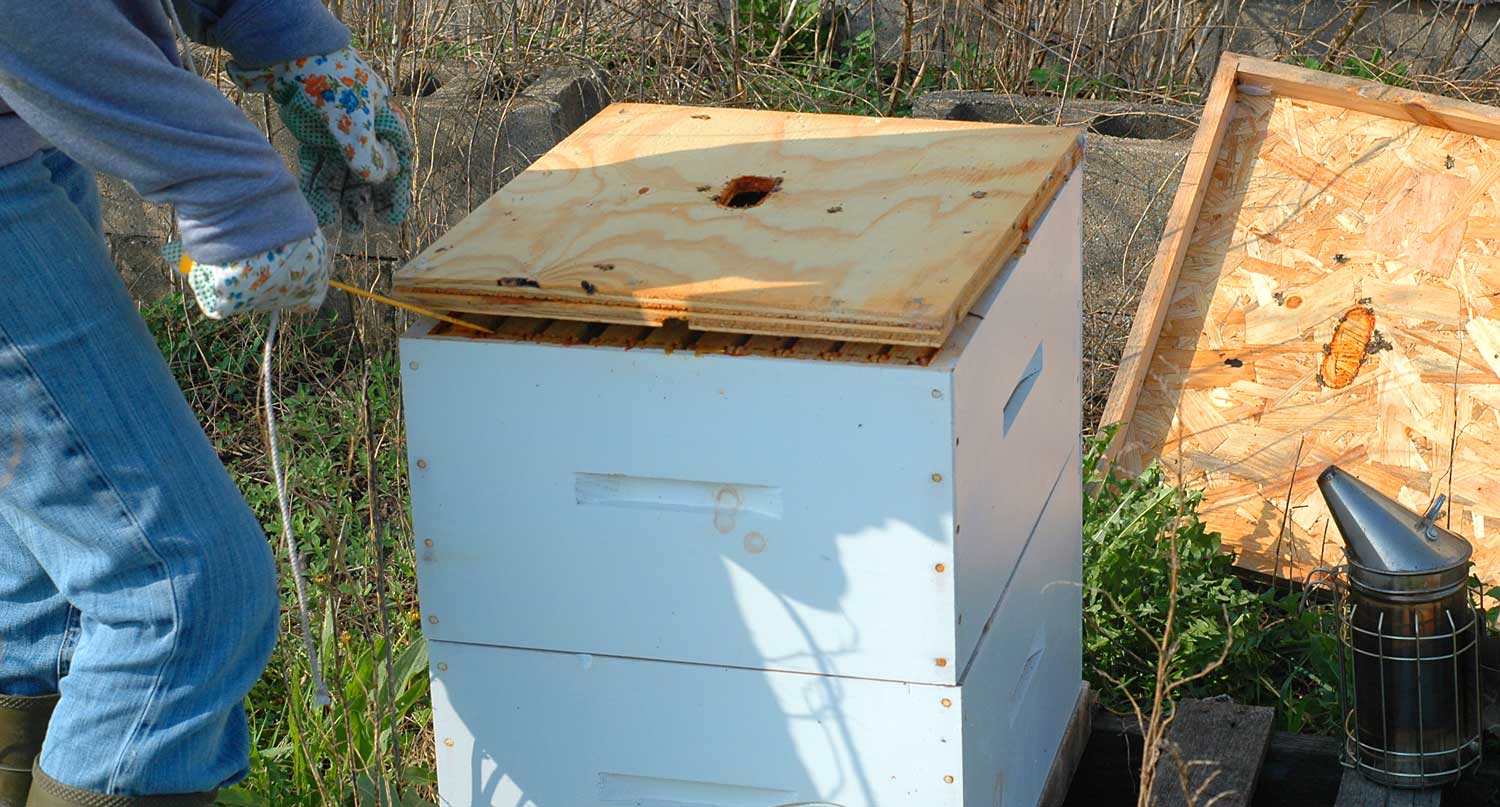
So in the spring, usually late April early May. When I am sure it will stay warm. I take the hive apart. Check for health. Clean the bottom tray where dead bees accumulate over the winter, then rotate the Supers (boxes) so that the Bottom Super is on the top and vice versa. We are very early but the bees have been active for over three weeks now. We have had a huge number of blossoms all out at the same time. New bees will be hatching very soon. If the hives get crowded the worker bees will make a new queen then escape with her and sometimes over half the hive, swarming to find a new home, leaving only the old queen and a few worker bees behind. So I may need to add supers to make extra room for them and head off the swarming instinct. 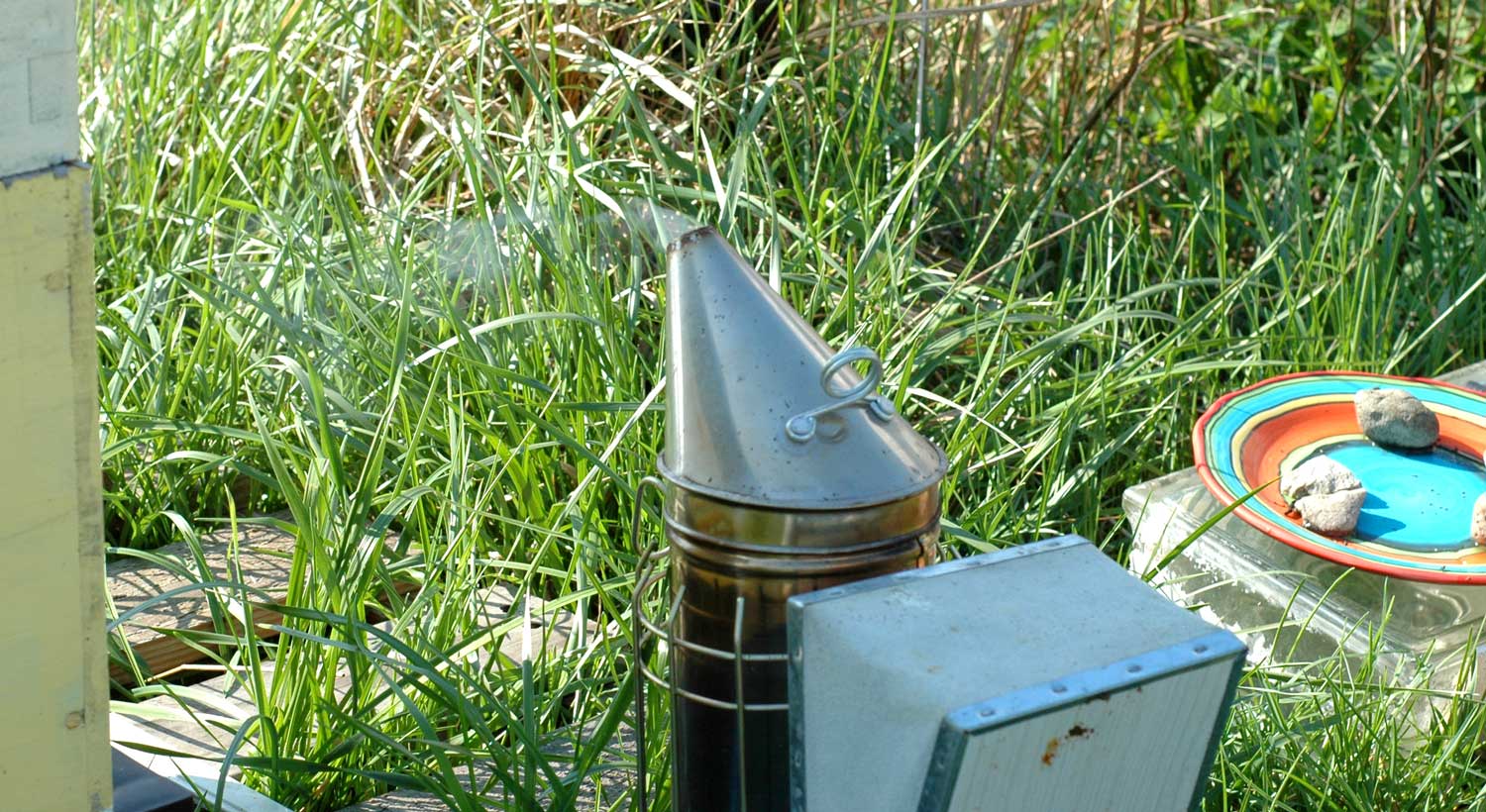
I always smoke the bees lightly as this inspection takes a wee while. And after the winter I do not know what I will find.
The swarm that I referred you back to yesterday, was housed and grew in the Blog Hive. This is what I found when I opened this hive.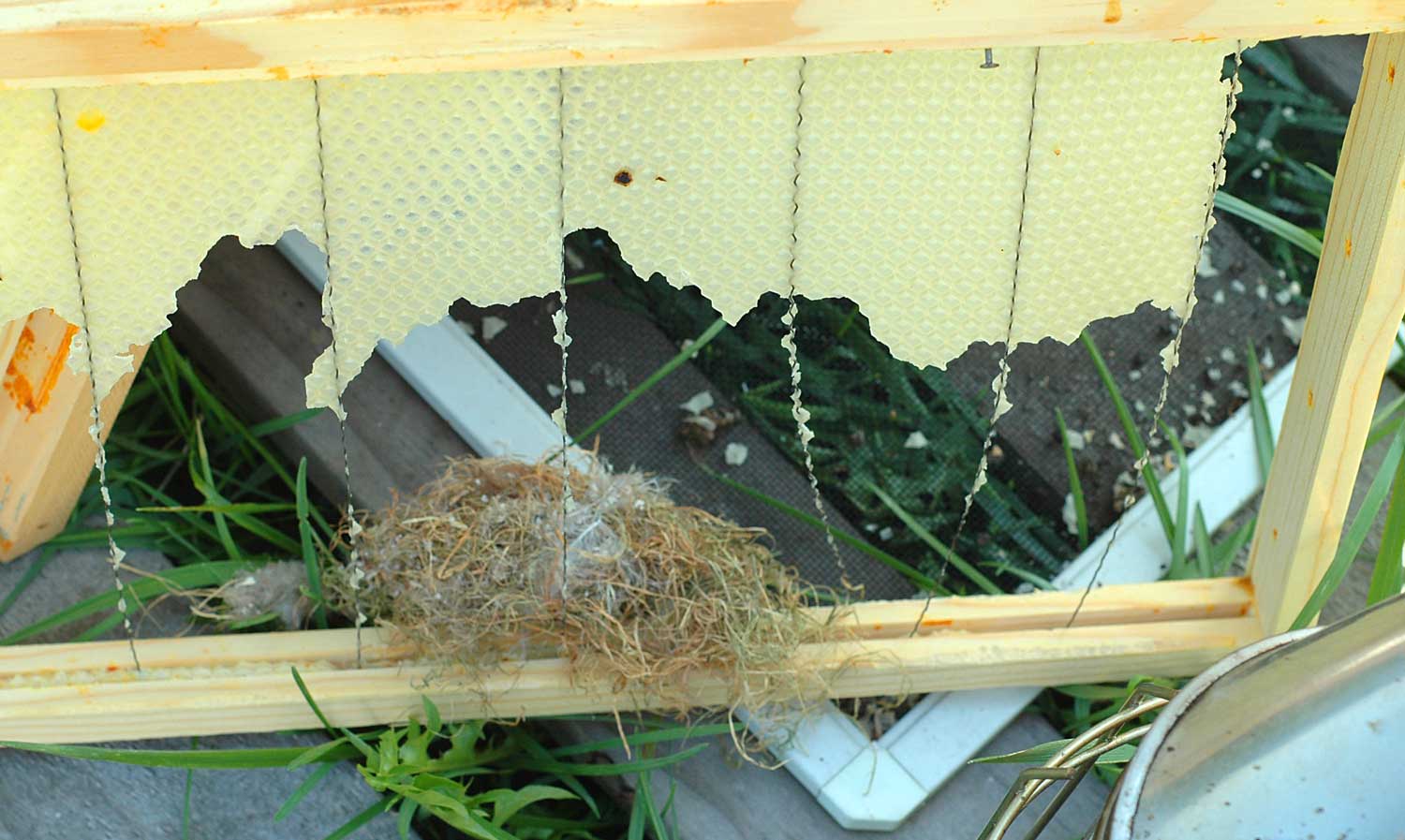
A mouses nest. A mouse will sometimes set up a winter home in a hive and often it will decimate the hive. It eats everything as mice do. If it is a bad winter sometimes nothing is left but the mouse. 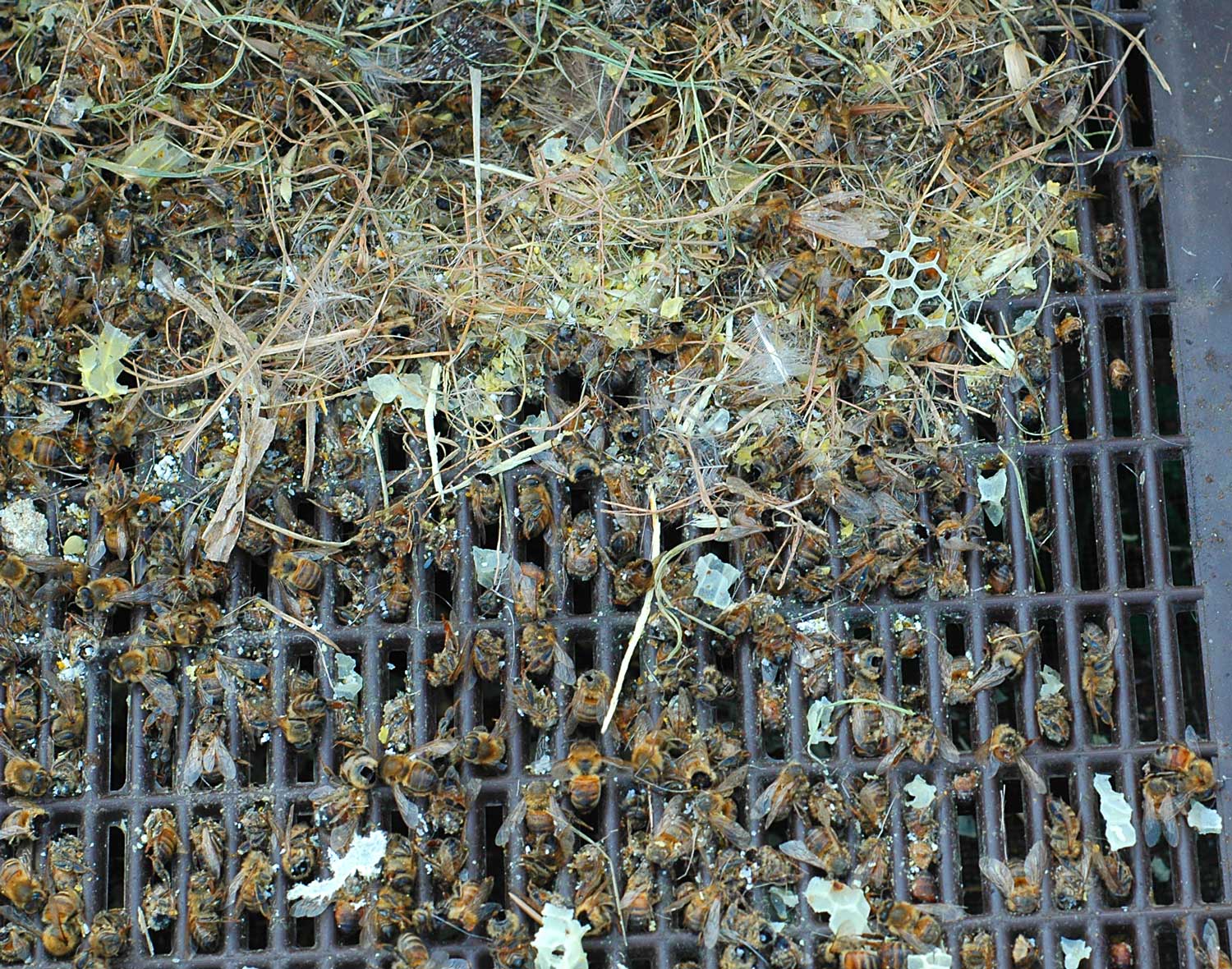
Not so this time. The hive is very alive and busy, has OK numbers, is feeding brood and seems to have recovered from its unwelcome and long gone visitor. I think he was thrown out with the garbage. This shot above is from the tray at the bottom of this hive. What a mess. This hive is filling up fast so I shall put on a new super on in two weeks.
Next I opened the little Rat House hive. This is the one we have been worried about. Their bottom tray was piled with dead bees. More than I have even seen. A terrible loss.
But to my delight enough survived, including their queen. And look below. Bees feeding brood. They were quiet and good and busy. I rotated their two supers and their numbers are very low, but they have an active queen, a little honey already and as soon as their babies start hatching they will begin to grow. No extra super for them yet though, as they still have plenty of room. I do not think they are a flight risk. The warm winter saved them. 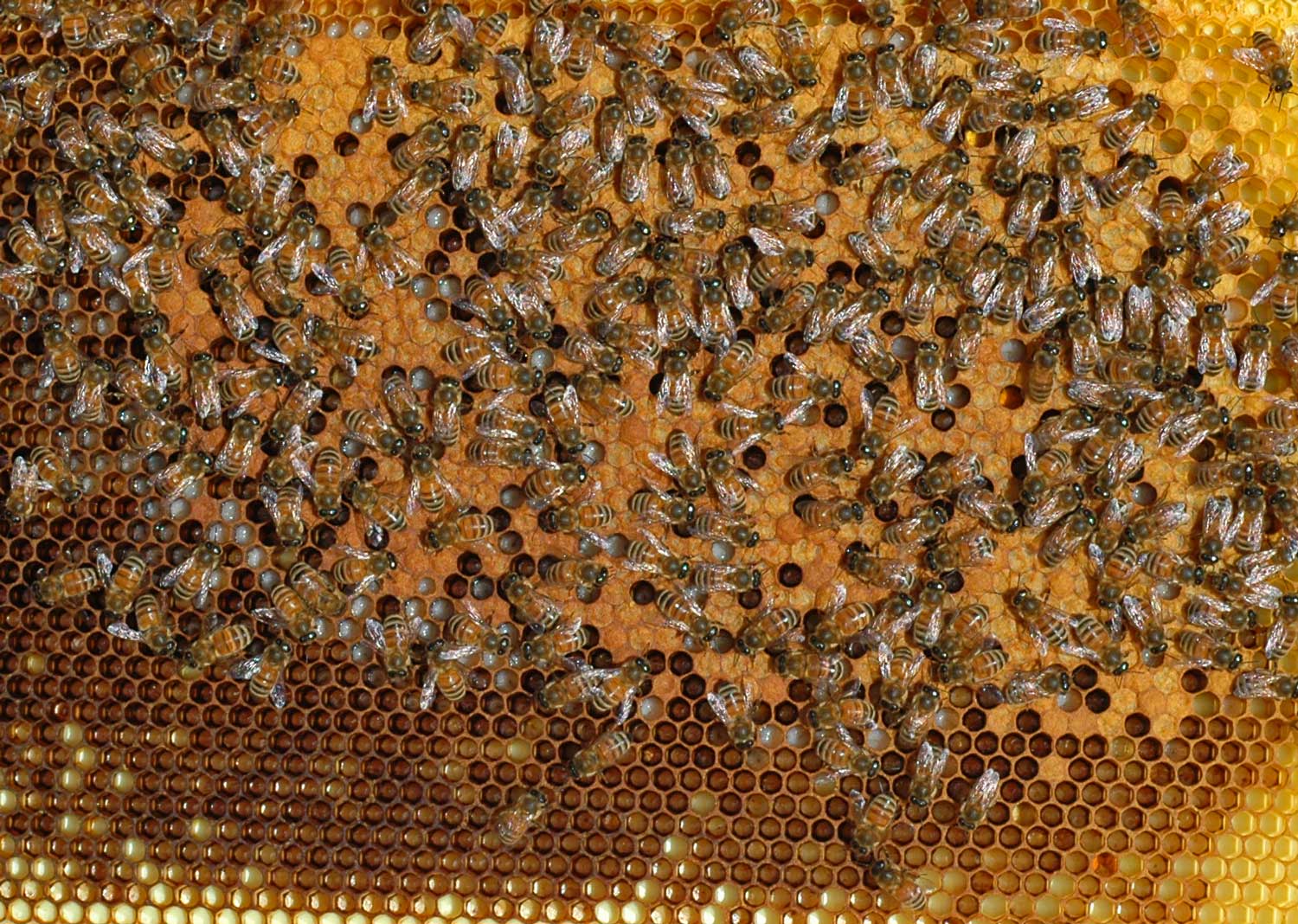
Do you see the little white deposits in the wee hexagon shaped holes, that is a developing bee. They are still at the larvae stage being fed by the nurse bees. They will grow into pupae and in twenty days they will emerge as worker bees. 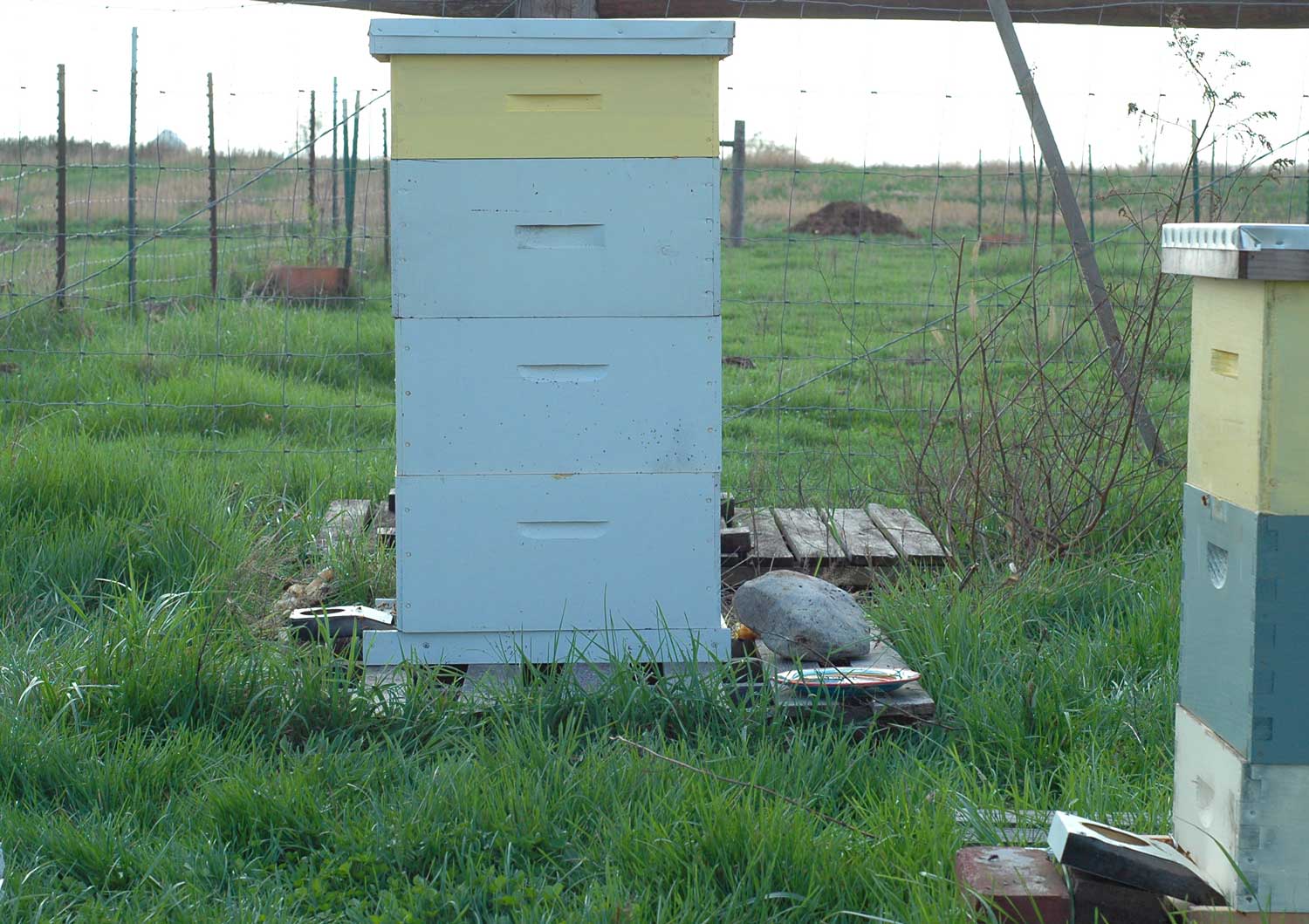
The Jennifer Hive is doing astonishingly well. This hive is heaving with bees. The supers are heavy with honey. They are filled almost to the top. There is brood everywhere, no mice, no moth and so I have added another empty super already. This hive was hard work. Rotating these heavy boxes made my skinny girly arms ache. John who was only wearing a hood was chased off by a small squadron of fighter bees and kept at a distance. I could not understand where my help had disappeared to. They took him right back to the grape vines and held him there. No stinging. Just circling and buzzing loudly at his face. But he is wary of the bees. Sensible chappy. So chuckling I finished the last hive alone.  Not looking! I was loading this shot and thought that you all know that the sweet clean fluffy black and white sheep in a perfect pasture is a myth! Sheep sleep on the ground and the grubbier the better! Their wool is a magnet sticks and straw and mud.
Good morning. It is cooler this morning and windy. Back to warmer clothes for the day.
Time to start work again, the sky has lightened. My visitors have gone back to their family. And I expect a quiet busy day. My favourite actually. Quiet and busy. Have fun.
celi
 The Kitchen's Garden
59 responses to “Mouse in the Bee’s House”
Good Morning, Miss C! Glad your bees made it because we just cannot do without more honey recipes this year. t
youa re so right miss T.. ‘more honey more better!!’.. c
Oh I did find that interesting, Celie. Thank you. I’d forgotten how fascinating bee-keeping is. There are several apiaries around here, and I always buy local honey.
BTW it is much colder here today, too. Still sunny, though. I’m off out for my ration of gardening.
It is lovely to be able to buy local honey and interestingly eating local honey keeps those pesky sinus allergies at bay as you develop a resistance to local pollen by consuming the honey made from it, that makes perfect sense doesn’t it..an interesting theory anyway c
Good Morning Celi. Hats off to those doing something I couldn’t … beekeeping! BTW – I was surprised to recently see some honey bees on the spring flowers – surprised because i don’t see them in the wild as often.
morning frank, excellent to see bees in your flowers, that is the best thing a non bee keeper can do, grow more bee friendly flowers and trees!! maybe the mild winter has enabled some wild bees to survive better. The winters have been fiercely cold in the last few years we need a few mild ones for the bees.. but of course then the other bugs survive too! c
Will you describe the honey you normally get? Color? Flavor? Most dominate flower source?
Hmm, well our honey is quite light so far as its most dominate flower is the clover and borage, but a lot of lavender has gone into the gardens now and so this year I expect it to darken a little and develop a wee tang. Also this year we will have a succession of buckwheat which will darken it too. I will go and taste some and think about its code. Every year is different of course as the gardens and fields develop. c
Yes, I’m curious as is annashortcakes about the honey. Have read amazing news recently about the health benefits of certain honeys, acacia specifically and others. I’m also curious: wouldn’t the bees sting the mouse? Seems like a very hostile environment for setting up house.
This is exactly what john said. By the looks of the damage the mouse was not there long.. wouldn’t it be great if we had a miniature webcam in there, tho it would be useless as the hive is dark!! c
Celi, I didn’t understand how bees can “make” another queen to move to a new home. Do they take an ordinary bee and dub her queen? Can any female bee become queen? Thanks.
Ronnie
When the message goes out that the hive is under stress the worker bees build queen cells, the larvae in these larger cells are fed a special Royal mixture that will turn the unsuspecting worker larvae into a queen. They make quite a few usually .. if the Resident Queen hears about this she will come over and try to kill the new queens as they emerge. This is how they replace an old queen, she will lose the fight. But in a busy heaving hive a queen can emerge undetected and will escape with her new followers thereby dividing the hive. This is the natural order of a hive, this is a natural split. But we want a really strong hive that will make so much extra honey that I can have some, so we try to prevent the natural swarming process. Maybe a bee expert will pop in and give you a better description.. hope that is useful Ronnie.. Good question too.. c
Really interesting, Celi. I like the way everything from bees to mud, sticks, and straw on sheep all tied together. Just back from a bit of time in Denmark with family. Busy day here, and 21c. Lovely spring weather. Hope yours is perfect. xx
Morning Misky.. how was Denmark? I bet it was beautiful at this time of year! c
Denmark is a beautiful place no matter the weather but I’m told that it warmed up on the day that we left. LOL!
ah, typical! c
Well, that certainly clarified things for me. What an interesting and rewarding task.. seeing all that lovely honey being made.. healthy bees are a rarity these days I’ve heard! xo Smidge
I bet they love your garden smidge! c
I am completely fascinated, Celi! There is so much more to the keeping of bees than I would know, and your wonderfully informative photos are so educational. I loved seeing the little dots that are the developing bees! This post was a major effort for someone as busy as yiu, so I really thank you! Debra
I had no idea bee keeping was such hard work. I hope you get lots of lovely honey.
I’m always fascinated by bees, but like John I would have been off in the distance. You are quite brave!
Lots of great info here..thank you. I hope you collect loads and loads of honey this year.
Jess
So interesting…did you read up or study this or did you just learn from experience? And a quiet busy day is indeed the best!
i read a lot but i have to admit the bess have taught me a lot too! when I get it wrong they take full advantage!! morning tanya.. c
A bit like me with the veggie garden and the chickens!
My favorite also! Busy and to myself without having to worry about others.
Have fun!
Linda
http://coloradofarmlife.wordpress.com
You understand Linda, thought you might! c
This really was an interesting and informative post about honey bees. I agree, you are brave and more so than I would be, but am loving beekeeping vicariously! So I have a question: how can you visually tell a Queen from a worker, nurse, bomber, etc.? I think this must take quite a bit of observation to be able to sort out who is employed for what!
morning betsy, the queen is longer and bigger and often surrounded in a circle of obsequious worker bees as she goes about the business of laying her eggs. I have a terrible time finding her and so I look for evidence of her work.. often taking a photo of the frame allows me to look for her later on.. I hate to keep a hive open too long.. c