

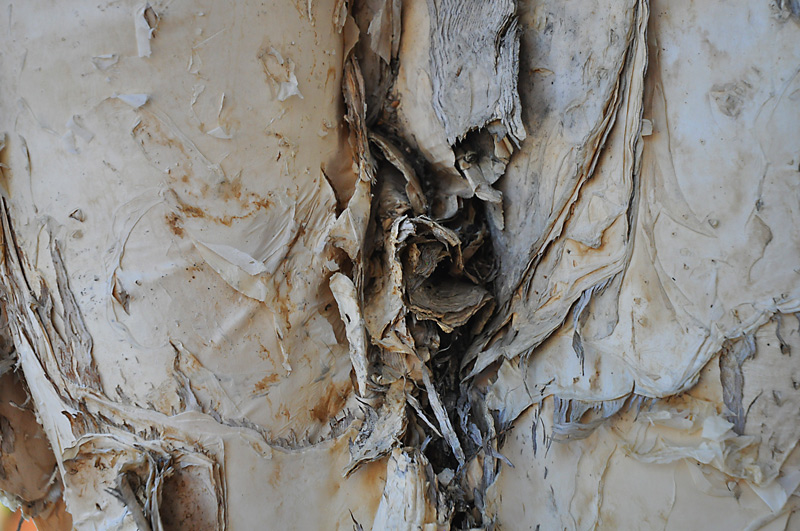
(For some reason this morning none of my photographs would load for the early post. Thankfully, and for no apparent reason, later on the problem fixed itself – apologies to earlier readers who missed out on these few pictures.)

In New Zealand this would be called a Dairy in Ausralia they call them a Milk Bar. Interesting, these colloquialisms.
In Melbourne yesterday, when we were all walking down to Lygon Street to have breakfast, we found a Paperbark Tree. The tree itself was not an unusual find but we had my cousin with us and she is a teacher in the Northern Territories working way out in the outback with indigenous peoples and told us how important this tree is to the indigenous peoples of Australia.

Maria: Traditionally, in the East Arnhem, N.T, when a person passes, their body is wrapped in paperbark (a member of the Melaleuca genus) and laid to rest out-bush in the final stages of the sorry-business ceremony. After a year has passed, the remains are collected and placed inside a hollow log; lorrkon. These are decorated according to their country, tribe, family and painting style specific to the area. Effectively, the loved one is returned to their ‘country’.
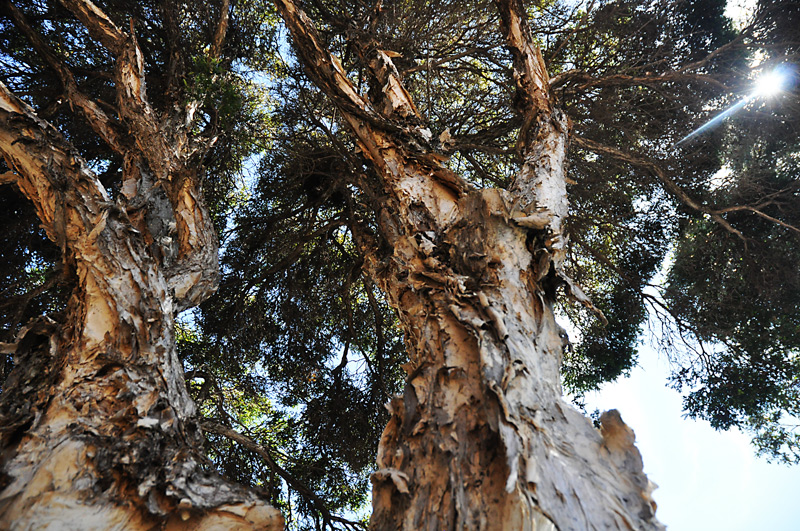
(When the indigenous peoples of Australia refer to their ‘country’ this means the small area in which they live or come from. As in the mob (people) from the salt lands country, or the sunshine country or the sunset country. A country can be just a few square acres or larger.)
As an interesting aside Archeological digs have shown that the Northern Territories were originally settled by the indigenous peoples of Australia almost 40,000 years ago.
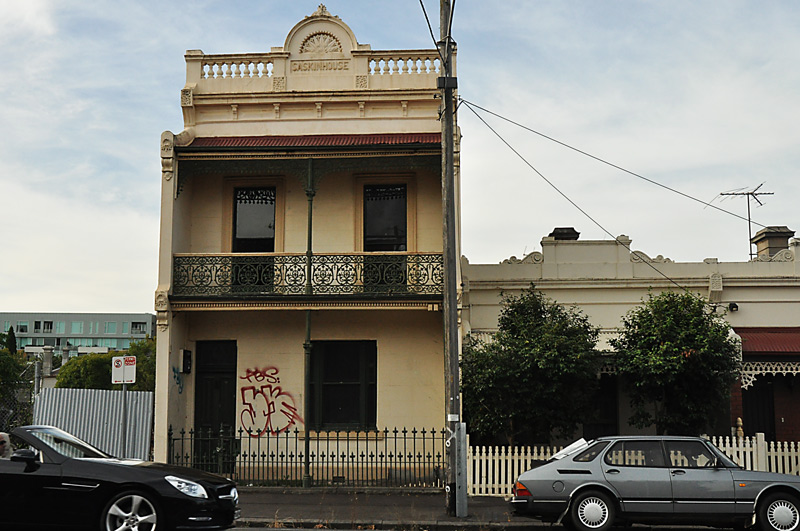
Melbourne is a comparitively new city with a good port. In the early days it was founded by renegade politicians with wool money and then the gold rushes of the mid 1800’s pumped it up to city level. By the late 1800’s many of Melbourne’s streets were serviced by a well designed network of electric trams and these exist to the present day as an efficient means of public transportation. They have their own lanes with wires above and tracks below. The tram lines run right down the center of the very wide streets that characterise Melbourne. When a tram stops it puts out little Stop signs to stop the vehicular traffic so passengers can alight into the road and move to the footpath without fear of being run over. Sometimes small areas of the tram lanes into fenced into safe bus stop area so the passengers can wait safely in the middle of a four lane roadway for their transport to appear. In fact many more streets were designed to run trams than actually have trams, some of these extra wide streets now have parking in the center, some have a wide grassy strip with trees. This adds to the peaceful feeling of the area of Princes Hill where my daughter lives and where I spent yesterday exploring.
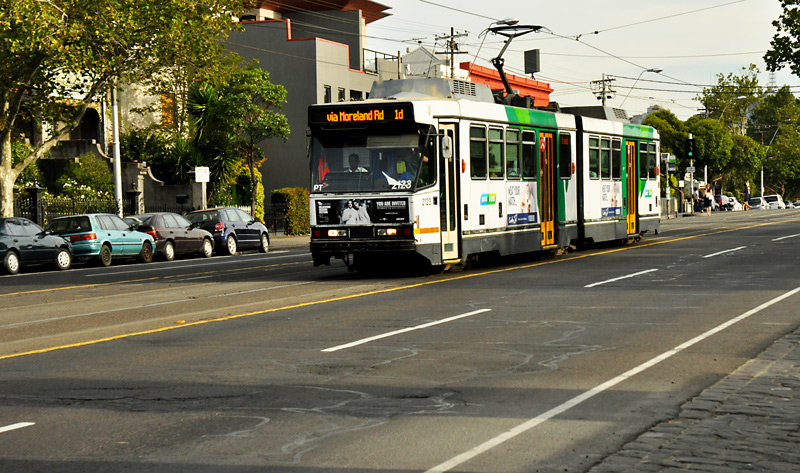
It almost seems to me that the town fathers designed this very lovely town around the trams instead of designing a town first then thinking about public transportation later.


Today we launch ourselves out into the city again. Then tomorrow we go camping.
Have a lovely day.
celi
 The Kitchen's Garden
61 responses to “Melbourne: Trees and Trams”
Have a lovely day. Camping sounds exciting! I hope you get your photos sorted in time for that trip. 😀
You too. I love the names of the “countries”. A really beautiful way to describe geography.
C. did you ever read the book, Morgan’s Run by Colleen McCullough? It’s about how the British decided to populate Australia in the latter part of the 1700’s, then a pretty much unknown continent with English criminals. It’s one of my favorite books by her..who as we all know, wrote the Thorn Birds!
And on the same subject, Thomas Keneally’s The Playmaker might interest you…
Shall order both – immense thanks !!
Ditto – intrigued by these books. Thanks
So glad you mentioned ‘Morgan’s Run’ – I plan to check amazon.com today & hope to buy this book – it sounds fascinating!!
I recently had problems uploading photos on WordPress. Discovered that I had used all my space and had to add more.
Your trip sounds absolutely wonderful, by-the-way.
aha – I might look into that – all fixed for the moment thankfully
I loved learning all this about a city I really enjoyed visiting. Had to smile about how people relate to their own little patch of “country ” as the Spanish folk I know are all fiercely loyal to their birth village in the same way.
Yes. Just like that but without the buildings.. c
the tram system sounds so very smart. Have a lovely day!
I never knew the story of the Paperbark tree, thanks for sharing it. Enjoy your time camping and climbing walls!
Loved the story of the paperbark tree also!
Me, too…in spades! Question: 4th time asking: Why is Camera House thus named? Much love, Gayle
No reason at all. just Camera House. c
Hi Gayle, there’s a chain of camera stores in the southern hemisphere called Camera House. Maybe it just resonated for Celi? xx
Nope. No reason – his name is just Camera House. Some things have no meaning!! ha ha ha
I can think of a really good reason. It’s where so many your visions dwell, and the out-of-doors spirit visits, and we are invited for refreshment.
THANK YOU KATE!!! Smoochies, Gayle
This summer on one of my morning walks I found a large piece of paperbark that had shed from it’s tree. I carried it home to use in my still life photos. It is so gorgeous. Love the trams in Melbourne too. Good luck with the WordPress issues. I have that problem every now and then and I think the problem is on their end. It seems to self correct in half a day or day.
That paperbark is an amazing tree – you will get some good shots with it. c
I love that first photo! I’ve always dreamed of having a place like that.
Gosh Melbourne is beautiful ! Good times – thanks for sharing 🙂
Robin
I love the mini history/cultural lesson today. Thank you for sharing Miss C 🙂
We have scratched the surface – Australia is a fascinating and terrible place.. c
explain ‘terrible’ please 😀 !!
Wonderful stories and pictures.. Australia has such oodles of space,they can spare the land for ultra wide roads. I love wide streets – something that really impressed me about Berlin.
Enjoy your varied programme.
Love,
ViV xox
Yes – there sure is a lot of land here.. australia is huge.. c
I like the forethought of the Melbourne town fathers in designing a city which would carry people around sensibly, economically and without disruption. I’ve always loved the trams, and am so glad they are an established part of city life; so many other cities abolished them and dug up the tracks. Now, they’re sorry.
And on the subject of Country, I respectfully acknowledge the traditional owners of the Kulin Nation, the place we know as Melbourne. For the Wurundjeri, Boonwurrung, Taungurong, Dja Dja Wurrung and the Wathaurung people who make up the Kulin Nation, Melbourne has always been an important meeting place and location for social, educational, sporting and cultural events and activities. I’ve always been very grateful to share it!
Thank you Kate, I was going to write about the Kulin Nation tomorrow but you have said it so well. c
Oh! I’m sorry, I hijacked your theme! One thing I love about Melbourne is that you come across acknowledgement of the traditional owners in all sorts of unexpected places, it’s like a tiny window into the past.
Thank you for the history and the photos of the paperbark tree. Fascinating!
I thought the area looked familiar, I grew up not far away in Kew, and there’d always be a Sunday afternoon walk out to the cemetery, up Princes Hill, back along the river and home to great grandma’s, with my mum and brother, cousins, aunties, grandmother and great grandmother, and sometimes great uncles as well. There were always scones and fruit cake at great granny’s and weak tea or home made ginger beer for us kids. I loved those walks, especially in autumn, when we’d crunch through all the leaves in the cemetery.
OMG, I lived my first 6 weeks in Australia with my sister in Kew, and I know *exactly* the walk you mean! She lived in Asquith Street, now living in Dorrigo. The world truly is a village…