

My father has been following the blog since its beginnings and is not altogether sure about the merits of my bread recipe. Yes, you can go back and have a bit of a laugh at it if you like!! You will remember that Dad is a boat builder and measurements and procedures are second nature to him. He has been reading your comments too and has noticed that there have been a few requests for the family bread recipe so he has offered to help out. So we have a guest blogger today. Over to you Dad….
Hi Cecilia – writing to you all the way from the land of your birth. It’s springtime here, always a hopeful time.
I have noticed that some of your correspondents love the idea of making bread but they are a little daunted by your way of making it. You apparently just throw in a bit of flour and a bit of yeast and a bit of water and mix it and knead it and because you know what your dough should feel like you get a lovely loaf of bread. That isn’t much help, so I thought I would tell you all how I make mine way down here in New Zealand.
I’m a marine engineer from way back so I will measure things. I like things to work when I make them, first time, every time and if this recipe is followed exactly it will work first time.
Ingredients list.
- 285 grams of wholemeal flour
- 3 tablespoons Active Dried Yeast
- 2 tablespoons dark brown sugar
- 1/3 cup kibbled grains
- 1/3 cup pumpkin seeds
- 2 ½ cups warm water
- 1 tablespoon salt
- 685 grams strong white flour
You guys in the US of A are going to have to do some fancy arithmetic to work out your weights in pounds and ounces but with all the conversion systems you get on the ‘Net that shouldn’t be too hard but to make things a bit more precise my Cup is 236 ml, my Half cup is, not surprisingly, 118ml. The Tablespoon measure I use is 20 ml. these are standard metric measurements I think. So off you go, fire up your computer and do your sums.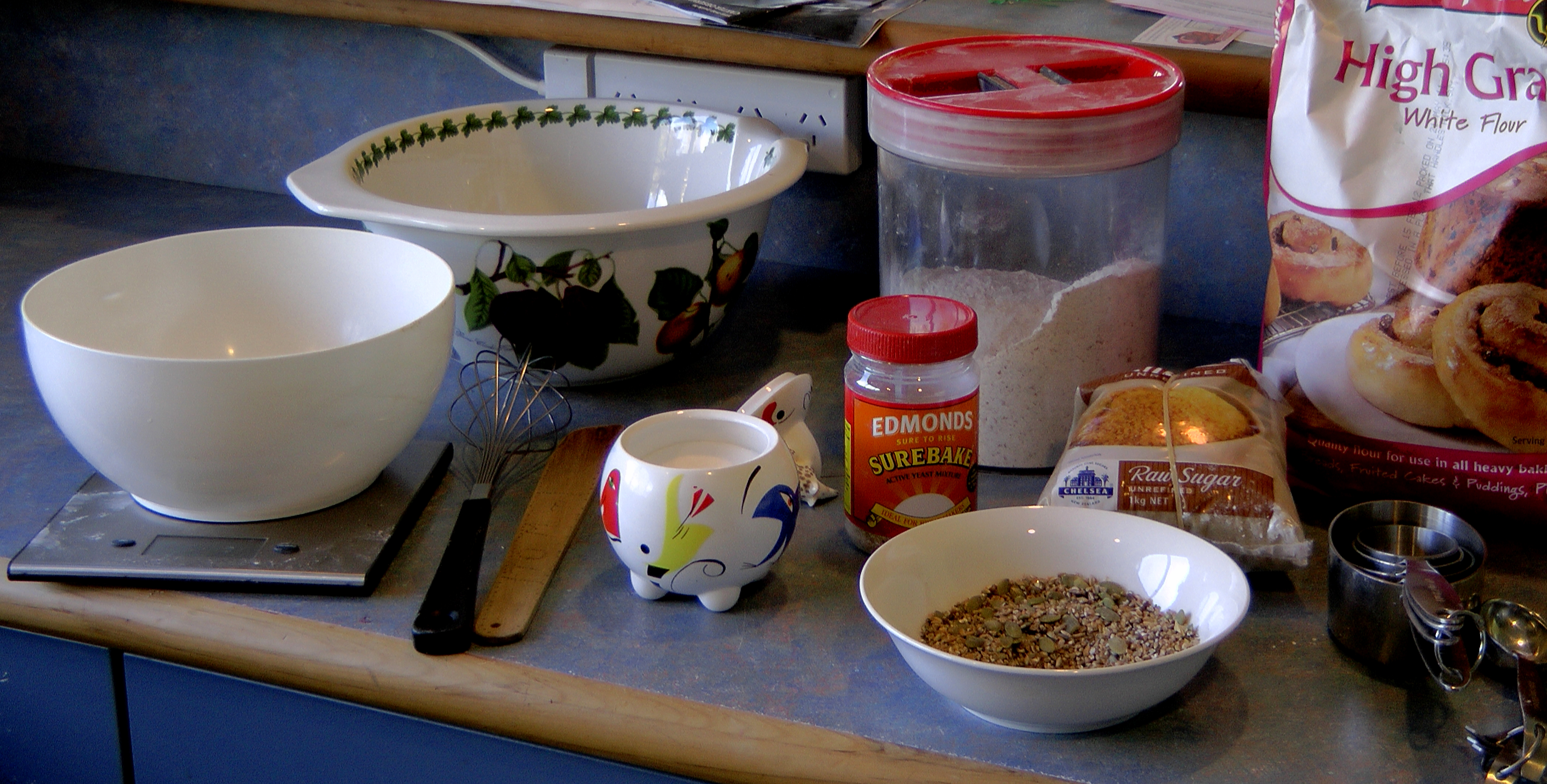
Right to work. Get all your stuff on the bench and put your salt someplace where you won’t forget it. Bread without salt is the pits. First off we are going to, “Sponge” the yeast mix, so measure out the wholemeal flour, the yeast, the sugar, the kibbled grains and pumpkin seeds into your nice big mixing bowl. I’ve used pumpkin seeds and kibbled grains because that’s what I’ve used in my bread this morning but you can add any other crunchy stuff that you like but if this is your first try don’t get too carried away. You don’t need to use grits at all if you don’t want to.
Now add the water to the mix and whisk it all up. Then sit the bowl in warm water. The water bath temperature is hand hot that is if you can run it over the back of your hand and it doesn’t feel as though it’s going to take the skin off it should be OK. If you want to get technical that seems to be about 38 to 40 degrees Celsius. ( Sorry about that). I run it into the kitchen sink until I have enough in there at this temperature to float the bowl with the mixture in it. Let it “Sponge” for 20 minutes. By this time it should be frothy and bubbly and smell beaut. Then sprinkle in the salt and whisk it up again. Good we haven’t forgotten the salt, it’s in.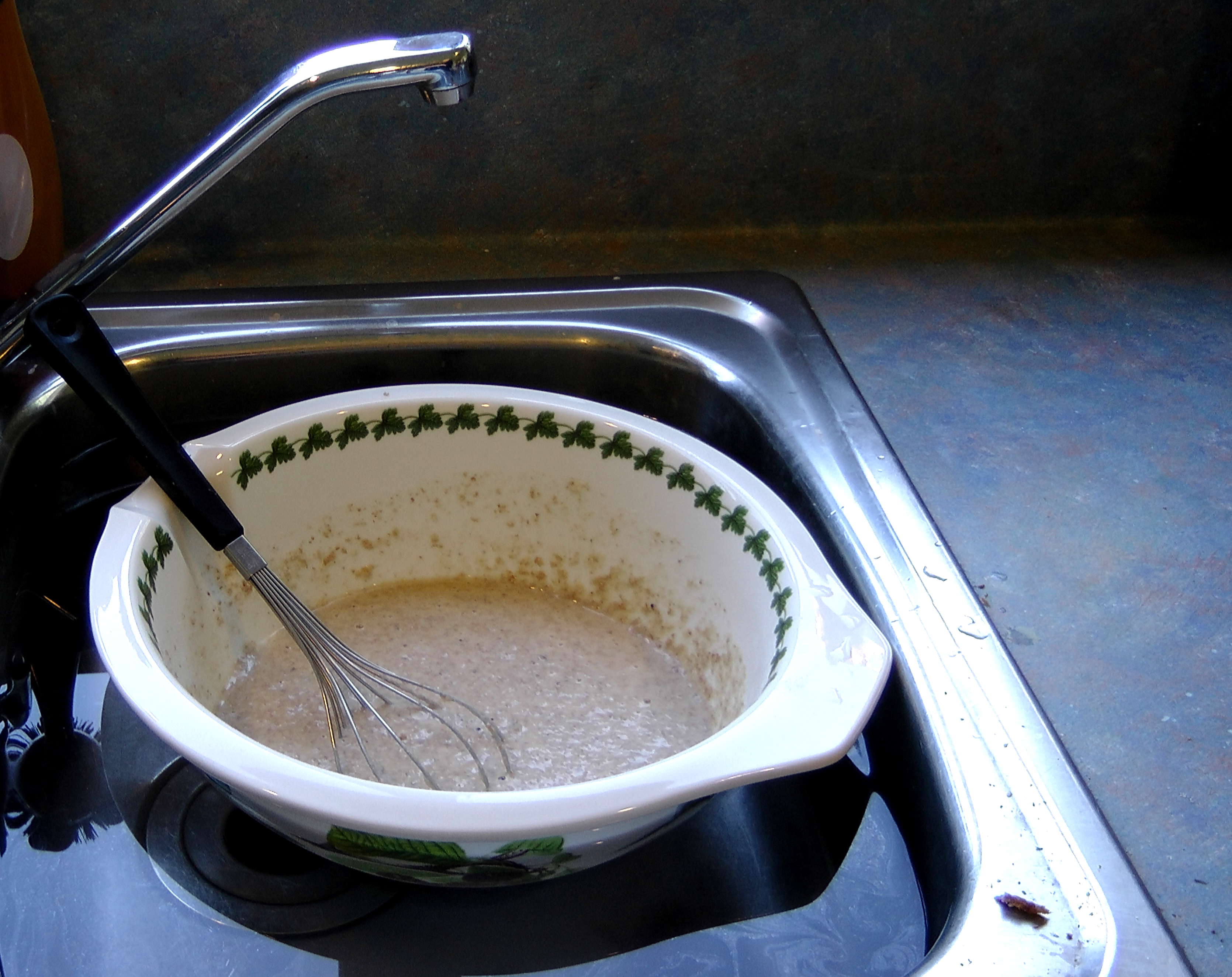
Now lift your bowl out of the sink and pour in the white flour. The white flour wants to be what is called “Hard“ flour but if the label tells you it’s suitable for bread making that’s what you want. Mix it up with a strong stirrer for as long as you can and then scrape it all out onto a clean bench.
Now this is where the bread really comes to life. I knead it for ten minutes by the clock. I think it’s important not to skimp this step and it is fun anyway, I feel as though I am part of a tradition that goes way way back while I am kneading my dough. Keep scraping the dry bits back in as you go and if you have weighed and measured the ingredients accurately you should not need to add water. If it is too dry or if it is too sticky just wet you hands in the warm water in the sink or dip them into the flour bin and keep on going. The finished dough should be almost sticky but not quite, if you know what I mean, but should not stick to your bench.
Ten minutes are up. Wash out your mixing bowl and dry it thoroughly and plonk the ball of dough into it. Cover it with a supermarket bag to keep it in a humid atmosphere and leave it to rise for an hour in a nice warm place. Hopefully it will have risen up enormously in that time. Then drop it onto your bench again and knock it down and make it into a roll so you can cut it up to make two loaves.
The tins you put your dough into are best made of metal as the heat of the oven is transferred quickly into the dough and you get a good ”Oven Jump”. The bread just rises as you watch but that’s still at least another hour away. But anyway, spray the inside of the tins with cooking spray and push the dough down into the tins firmly and spread it evenly, more towards the ends than the middle as the loaves seem to always rise more in the middle that the ends. The tins should be a little over half full. Then cover each with it’s supermarket bag and leave them for another hour and a quarter or so, to rise. Turn on your oven set to 200 deg C. Is that 400 deg F? I dunno, too much for an old fella and when it is well up to temperature carefully place you tins of dough into your oven. Don’t knock them about at this stage or they’ll go flat on you. Cook your bread for 30 minutes turning them round for the last five minutes or so to get them evenly browned. You can spray them with cooking spray when you turn them to make them look all nice a glossy and help them brown.
There we are. That was easy wasn’t it. Tip your loaves of bread out onto a cooling rack and if you can resist the temptation leave them to cool at least a bit before you whack off the crusty end and slather butter onto it and munch.

Dad
 The Kitchen's Garden
73 responses to “Dad’s easy tasty Bread Recipe”
That’s an entertaining recipe! what’s kibbled grains? at least the measurements will work for me, won’t have to find the calculator….thanks to your dad for sharing his recipe, C 🙂
By kibbled grains he means wholemeal stuff, like wheatgerm or flaxseed or whatever you like to pop in there that is grainy. c
I think it is wonderful that you can have your Dad do a guess post all the way from home. C I’m much like you, I go by feel, probably because I can never find the measuring spoons and cups and the wash up is easier. I have always add “kibbled wheat” to just about everything. Oatmeal, bread, pancakes. Here in Canada you find it as Red River cereal.
I just love your blog, it feels warm and inviting. If I close my eyes we could be neighbours. Send your Dad hugs, he is blessed. Debj
morning debj and welcome to the farmy Lounge of Comments. c
Great guest post, Celi’s Dad! And we were just on the hunt for a good bread recipe too. Perfect timing! Thanks so much! Also…your family is so great, Celi. Despite the distance, they all seem to have such a wonderful presence in your life. Many blessings to you all.
Thank you honey, I hope things are going well for you … c
My dad was a great bread-maker too, and he also liked to measure things exactly (being a bank-worker, I guess he had to balance the books each day), and so I appreciate this careful step-by-step recipe, the fond memories it’s brought back, and to meet your dad Cecilia.
Oh, I see that I’ve gone to last year’s page, thinking it was this year! – because I just clicked your name from where you commented on my blog. Never mind, I had a delicious experience.
Hi Cecilia..Nice to read your posts. I really love the kind of surrounding you’ re in. Bread making do excite me a lot. By the way, What’s kibbled grains?
Kibble is the least processed grain you can buy, in the US it would be called whole grain I think..but a true whole grain. you probably know what I mean .. Lovely to see you .. c