

While we are waiting for Charlotte to farrow let’s make a worm farm in the garden. Worms are a gardeners friend. They improve the fertility of your garden, they improve soil structure and ultimately they will improve drainage. I do have a worm farm in the basement but I also make summer worm farm ditches in the gardens, especially close to plants that will benefit from the additional nutrients in a few months. Like tomatoes!
Firstly dig a trench between your plants. Not too close to the plants though. There will be green matter and roots are not overly fond of green matter. You can also dig this trench around the outside of your garden. My trench is about 8 inches deep but you can go deeper if you have more scraps. There is a bit of competition for left overs here except for coffee grounds, the worms love coffee grounds. Like all worm farms make sure you feed them a balanced meal.

Every day add your kitchen scraps and cover up. Begin at one end and stack a fresh pile in each day. Do Not Sprinkle the greens into the ditch. Lay the piles down like standing bricks moving slowly along the trench. Does that make sense?
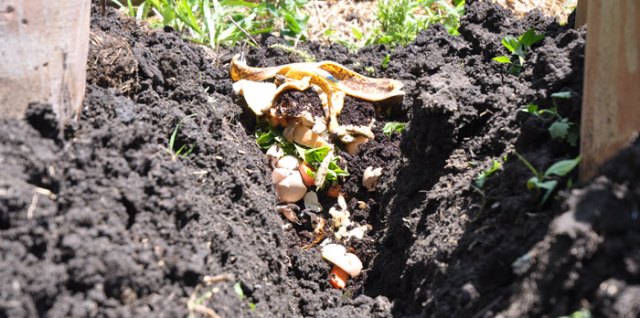
Remember that Sister Delphina dug little trenches and put in eggs shells, banana peels and tea leaves for the roses. Well, this is an extension of that idea. Cover that section of composting scraps completely with soil and if you have been mowing – top with some grass clippings too. Little by little fill along the whole trench with your green compost, covering with soil as you go. We don’t want it drying out. And the soil helps it decompose too.
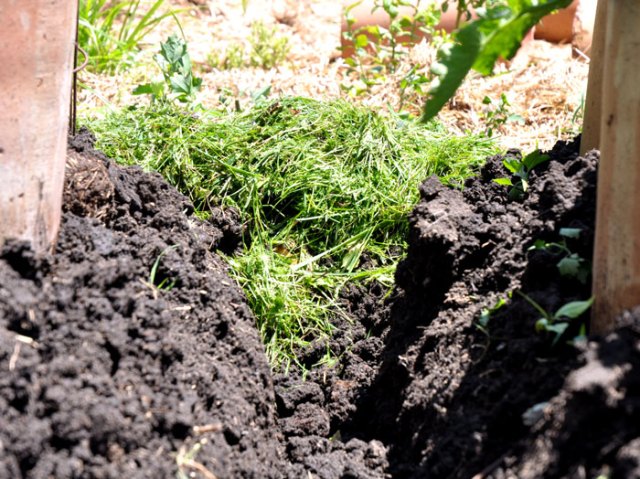
The worms will very quickly migrate to the fresh compost and begin their work. As you add more matter every day, they will work their way down the trench. When you water the garden let some soak into your trench. Not too much, it needs to be as moist (sorry Roger) as a wrung out dish rag. Because I have spare worms in the basement I scoop in some compost worms too just to speed the process up. The worms do stay around, they may migrate out if it gets dry but if you keep filling and adding nice big heaps of vegetative matter, as you work your way down the trench, they will stay with you, breed and soon you will have the most amazing soil heaving with worms. The other way to speed the process up is to chop the scraps up and mix them about before burying. Big pieces do take longer to turn into compost. It goes without saying that you will not put meat or dairy in here.
And there you are, your very own worm farm in your garden. And there is no shot for the finished product as it is hidden in your garden. No smell, no flies, no unsightly compost heap in your tiny back yard. The work is being done underground. And all those nutrients have been returned to the soil and straight to the roots of your chosen plants.
Our cherries are beginning to ripen and it is looking like a bumper crop. I see sweet cherry pie in the near future.

The roses above the gate to Stalkers Garden have the most divine scent.

The unDaily view.

I popped out to the barn before I started this post and Charlotte grunted good morning from the winter quarters. Who knows where she will farrow. She hates it if I close her in but is showing no signs of making a nest yet, sleeping somewhere different every night. Three full days to go, if she is on time and pigs often are. Plenty of time.
And now off to work for me.
You all have a lovely day. See you tomorrow.
your friend, celi
 The Kitchen's Garden
49 responses to “How to make a Worm Farm in your garden.”
I don’t know if you saw this recent poem, but your post reminded me of this stanza.
It’s Be Kind to Worms Year
to stop the earth being spoiled
by large swathes of monoculture,
heavy machinery ploughing deep,
too much building covering the earth
compacting the dirt, impacting
the habitat of good bacteria
and worms
who exist to keep our soil
fertile and aereated for food.
We are definitely on the same wavelength here! I usually give the coffee grounds to our olive tree, which is in a pot, so we can move it to shelter in the winter.
I bet you are getting restless waiting for Charlotte. Have a lovely day.
I love the worm idea..my worms live in a can o worms and I
never dreamed of putting them in the garden…THANK YOU
Do you gather them back up in the fall ?
If I add some from my worm farm they will not survive the winter and of course garden worms will not survive in an interior worm farm either, so i just leave them to do their work and call it even.. c
ahhh..great point !!
You are using tiles!! I have many tiles that I use. Our ground water is even tiled with those very same tiles. People around here would not know how to farm without the tiles since our soil is onto of a huge shale line. The tile gather the irrigation water that seeps through and carries it out of the ground and away from our basements back into the canals.
Fun seeing your tiles.
Linda
http://coloradofarmlife.wordpress.com
¸.•°❤❤⊱彡
We have foxes here. When I tried this a few years ago, the foxes thought it was a buffet, and dug up the whole garden. Argh.
oops, that is not good.. c
We had worm beds at the farm when I was little. We’d also go dig some up to go fishing (fishing not really a sport – also called getting dinner) We are very lucky to have lots of worms in the yard – they break up the sticky gumbo so everything grows better…the problem is that Molly seems to hear them underground and will dig them out if not watched…she runs around the yard and we see little worm tails hanging out of her mouth. She’ll release them (she never chomps them – just wants to set them down and play…but her paws can be too heavy) It’s given the phrase “going to go outside and eat worms” a new twist. We love worms!
I’m excited to see to new piglets!
May give this a go in my overgrown and underused small veggie patch.
I’ve never made a worm farm, but I once made a house fly.
laugh!! your house can fly.. i am off to talk to my time machine, we are missing out!
You even make worm farming an entertaining read. Thank you.
Cherries, roses and worms! I have a worm bin in my car port, tucked away discreetly, and it’s humming along. There’s a tap at the bottom out of which I collect the worm ‘tea’ to dilute 1 to 10 on my balcony garden. When I started it I was told to use only tiger worms, which I had to buy (they were mailed in a tube). I love your trench idea. I dig in my organic waste at the bach, into the garden, before I leave, and have been slowly turning clay to good dark soil.
But I’ve been told that the tiger worms will die if I put them into the garden.
They will, they cannot deal with fluctuations in temperature, so it is better to do what you are doing and dig in the scraps, this in itself attracts worms.. c
This seems a much better way to make a worm farm than anything else I have been reading on the subject, so I’m going to have a go at making my own in my garden (near the tomatoes of course)!
Thanks Miss C, you are a mine of very useful and practical information!
“Without the work of this humble creature, who knows nothing of the benefits he confers upon mankind, agriculture, as we know it, would be very difficult, if not wholly impossible”
Charles Darwin on earthworms, 1881… when the world farmed the proper way 🙂
What a wonderful cherry harvest to come and the roses look so voluptious! Methinks you have made a lot of your readers think about composting and worms, for which ‘thank you’! I live in a fenceless community with too small a personal space to make a useful trench like this, but, with my old one worn out, shall get a new worm’farm’ in the spring: we can buy some very goodlooking rustic ones avec a quantity of worms: there’s a tap towards the bottom for all the lovely concentrated fertilizer once the system begins working and some proper compost in the end: based on a kind’of ‘layer’ system: works great in smaller areas . . .
that liquid fertiliser is gold.. I love it!
Once again, I learned something new when I came here tonight. If I ever decide that it’s safe to use my soil again, I’ll come back here for advice. Or, I’ll just send you an email. 🙂
I do use a fertilizer made of worm casings, though, that I buy at the home brewing store. I know that it’s supposed to be used for growing hops for beer but I think some of their customers have other plants in mind. So good to see your cherries doing so well. That’s a big improvement over last year. John’s pies sound wonderful! Have a great night, Celi!
Your blog is always an education. 🙂