

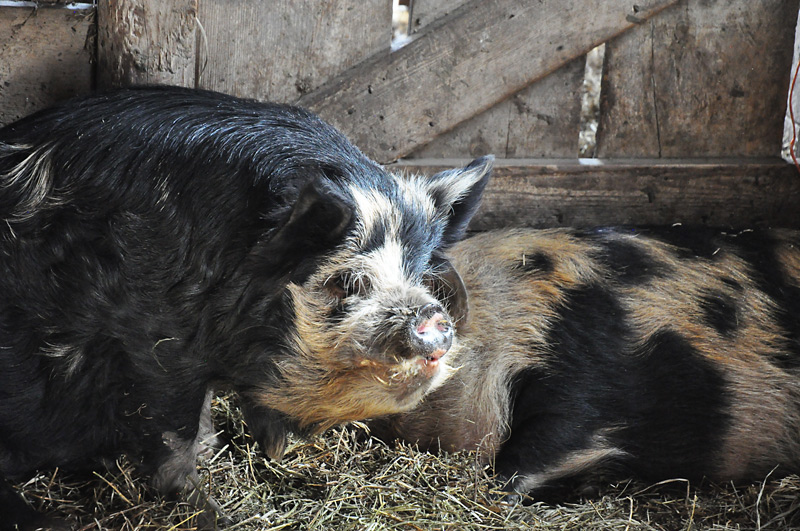
I am using a new formula for my pasture recovery and beef fattening. One third grasses, one third legumes and one third brassicas. Plus sunflowers and pinto beans and turnips, I think that cows and pigs (like humans) need a more diverse range of foods – they are healthier and fatter. Plus we need deep rooted and nitrogen fixing plants for soil health. Many of the pasture mixes that are available seem to carry only two or three different species, theya re designed for animal growth not pasture balance – I am sowing fifteen different species of plant into the fields this year.
So today the salad bar paddock was sown in my new cocktail, plus Daisy’s paddock was top sown in it as well.And all the little pig fields too. Daisy’s paddock was one of the first sown when I began to farm and is worn out.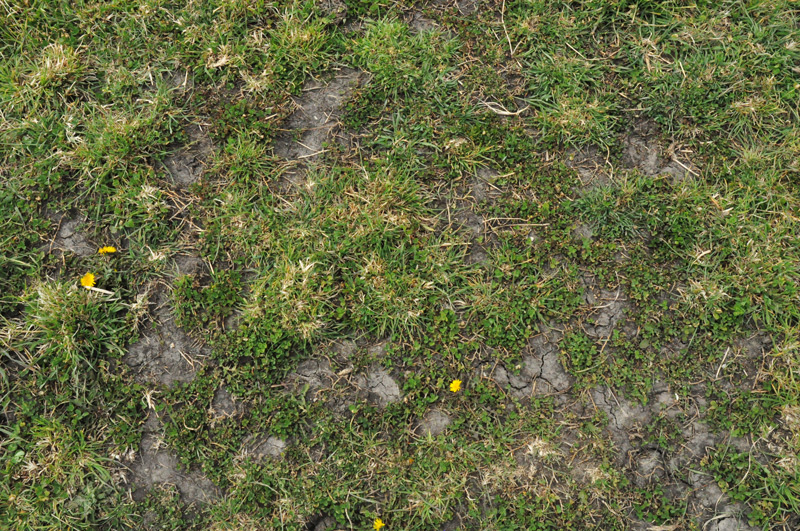
These fields were in a rotation of corn and beans and constant tilling for almost eighty years before I took them back to pasture. I try to resow each pasture every six years at the most and I have brought two more acres from monoculture monster machine cropping back into the farm each year.

Yo can see where the seed drill cuts a shallow slice into the ground and sows a collection of different seeds. These were mixed by my patient seed rep who I have had to encourage to let go of all his conventions and education in typical modern pasture management, stop trying to sell me pre mixes and use his knowledge of the actual plants and soil recovery to help me design these fields. I will take a shot of this section of Daisy’s paddock once a week (if I remember) so we can see any changes. So you and I can watch the grass grow.
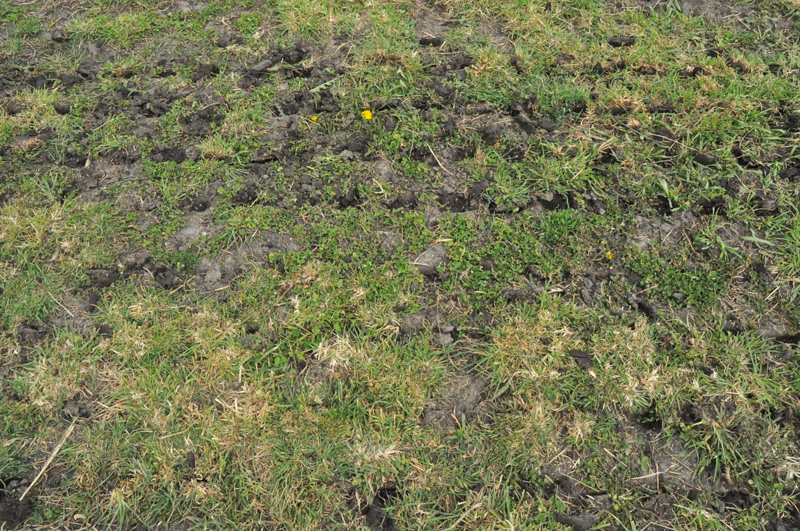
The health of my fields is as important as the health of my animals. In fact they need to be in balance to enhance each other so I was thrilled to find worms in the ground yesterday morning. When I began to recover these fields from years and years of intensive industrial horticulture I found that the earth smelled like it had been buried under tarmac and there were no worms at all, no insects or little animals, no micro-organisms, nothing. It was inert.Dust. Even rain crusts the top like sun on sand. The constant tilling and introduction of some pretty strong and damaging chemicals has taken a terrible toll on these huge plains. Thousands of years of fertility and soil structure has been plundered from the earth. At this time of year when they begin burning the fields and tilling the ground we are surrounded in dust and smoke. The monster machines that roll over the earth tilling the little bit on the top compact the soils, creating a hard pan a few feet below that becomes like a sheet of iron, drainage is interrupted and the grounds flood in the smallest of rains. Then they bring in bigger machines to dig trenches and lay pipe to drain the earth and so the rain immediately flows into all the ditches and creeks and the land is sodden and backed up and flooded anyway. The trees have been pulled out and burnt so there are no deep roots to help drain the fields, and bind the top soil to the earth. Neither corn nor beans go deep enough to help.
I wish they could find a way to grow field corn and soy beans without using soil. It seems such a shame to literally destroy our soils in such a grim and dogged manner. I would like to see these crops grown in high rise car parks or something. Off the ground.
I have yet to see a farmer or owner of these lands get out of her tractor or his truck and kneel in the soil and pick up a handful of soil and smell it. Or dig into it and examine the structure. Or even plant a tree. Or just sit in the middle of this waste land they and their fathers and grandfathers created and think about what they are doing.
This is not my land. I will never own more than what surrounds our house. But I weep for it and long to have the ability to save more than the acres we rent. To protect it. One of the field fires got out of hand last night and whipped right down the length of the bank across the creek. John fought it at one end so it did not burn our hay fields. But it ran straight across the far fellowship forest right through where the poles for the zip line are. My little path is gone. The nesting birds flew away. I have not had the heart to check and see if the beaver dam caught alight. This morning I will know. The ground is now all black, scorched. I went into one of my furies. I will have to wait and see if the trees recover, these grass fires move very fast so there is a chance they will be ok and fire often activates new seeds. And with a big breath I will go back to my seed man tomorrow and taking advantage of the empty ground I will sow wild flowers into the blackened ground. Not a lot, as the seed is expensive, but a little.
When I was at school we were taught that a field should be rotationaly cropped for three years then rested in a cover crop in the fourth year. No-one rests the soil anymore. No-one even uses a cover crop for the winter. They would lose too much money. They even burn off the corn husks. But I cannot fix these things, I can only look after the areas I rent from John’s family for the lifetime of my stewardship. My choice is to use pasture as a means of recovering the soil and feeding my family. We have to work together with the soil. It is a delicate balance. It is also an act of faith in the earth. The wild flowers are an act of faith.
And at last after maybe six years of management the worms are returning. This is good. 
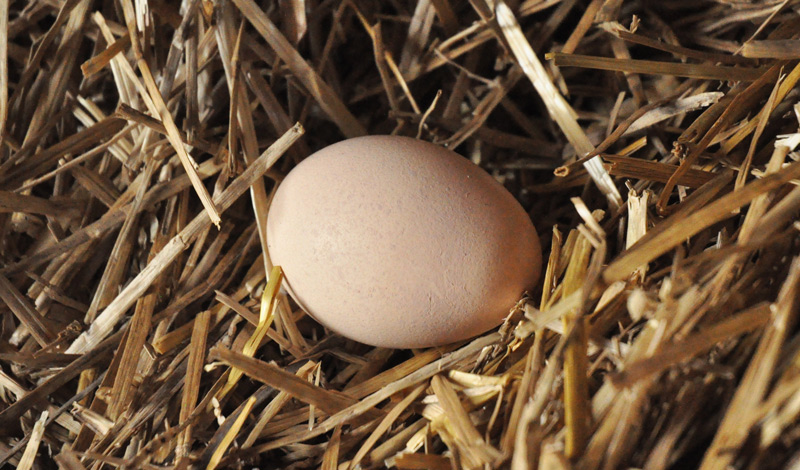
The peahens are laying again.
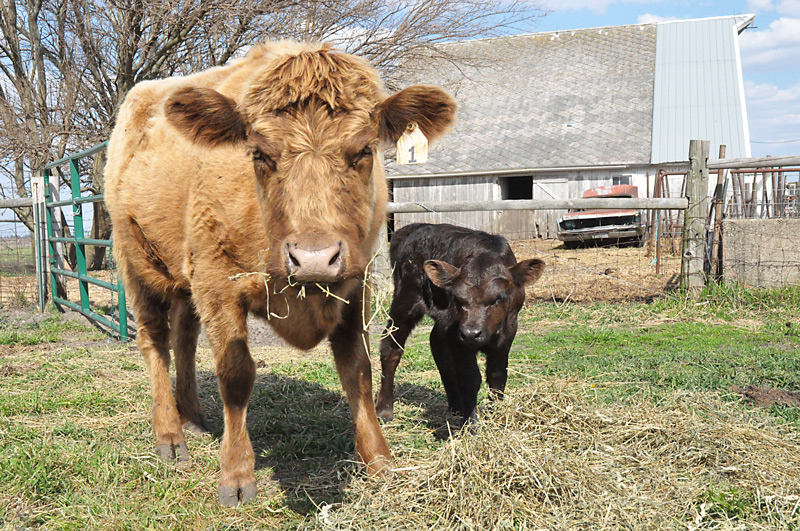
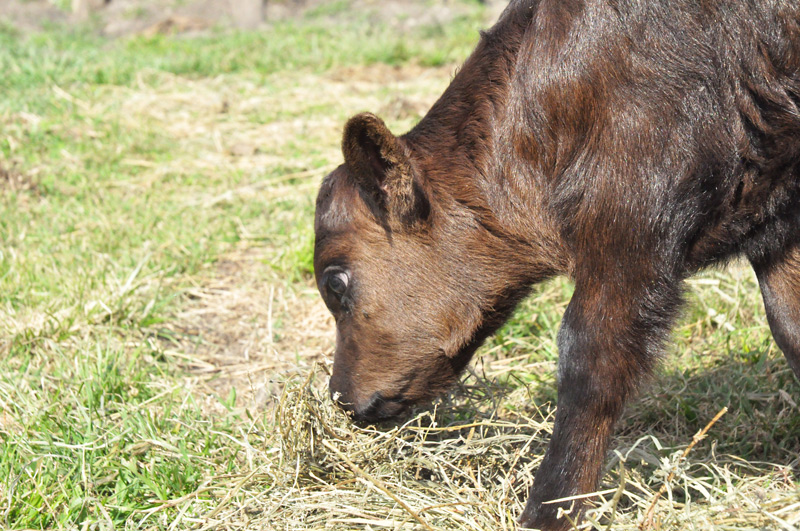
Check out the family resemblance between mother and daughter.
Still waiting of any real sign that Poppy is pregnant. Though I sense a wee belly here. It could be my wishful imagination. I have every reason to believe that she may go another month to her third date.
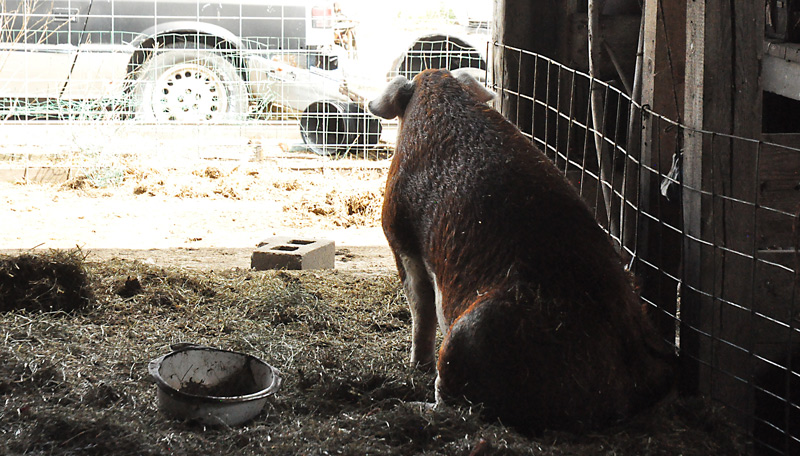
Which is fine. Though I am going to have an awful lot of piglets here at one time if Molly and Tahiti breed as well.
Another beautiful day is unfolding in the gardens. I must gird my loins and go out to inspect the damage in the daylight – that fire was still burning until late in the night.
I hope you have a lovely day.
celi
 The Kitchen's Garden
46 responses to “My pasture cocktail and fire”
You will have to follow up on this in regard to the sunflowers in the fields with your critters. I have never seen our pigs or cattle eat sunflower plants…the birds (chickens etc) will go after the seeds from the heads, but not the stalks. All the rest of the things you are putting in, i know they will love!! I also love the momma-baby pic…sooo perfect!!! That’s a pic for framing -nice job!
The other reason I am introducing sunflowers is for the pollinators, I need more wild bees in the fields.. Though my pigs love them, especially when they are young..but the seeds are eaten by everyone.. however they are annuals so they will not become much of a problem.. c
I’ve fed my sweet Maisy sunflower stalks and our turkeys fought her for the leaves!
Gosh, I hope the damage is minimal although I suspect that’s wishful thinking.
Oh gosh! So sorry to hear about the fire. Hopefully the damage will be minimal. It is a pity that not more people care about their land as much as you do. It is our future.
It is said that we animal farmers should not call ourselves sheep farmers or ranchers, etc., but grass farmers. The only way to really raise meat the right way is by having the right grasses that they are meant to be eating and digesting. It’s so nice to hear that you have brought some of the land back from the desert of its life! It must be difficult to be surrounded by the industrialness of the farms there. We are a little luckier in Maine, not so many big tracts of flat fieldss, but lots of small, more sustainable farming is going on here. I definitely feel your pain. So sorry that the fire spread.
Sorry about the fire, I hope things are not too bad. Fire is a frighting thing.
We drove 90 minutes across south east Iowa yesterday. There were many farmers out practicing their craft of monoculture.
Have you seen the news about the large grass fires in Kansas?
I hope all is well.
Yes, it’s such a horrible thing that has been done to the soil over the decades. It’s wonderful to see you bringing your acres back to life once again. It will be great to see the weekly pic of the pasture with the new cocktail mix planted. We are always on the lookout for mixes that are good for our animals! Here, too, when we started our gardens there was not a worm to be found. And no bees to pollinate anything. With our raised beds, and growing our soil with compost, compost tea, other nutrients, and cover crops the soil has become more fertile, thank goodness! But it is a continual process, as precious soil is hard to come by in these Ozark Mountains.
Tears were pouring down my cheeks on reading your reminder of the rape of the soil. Your post should be read by every “factory” farmer in the world.
The fire is probably less serious – it often leads to a dramatic upsurge in growth. I pray that will happen in your case.
Tziki has her mother’s eyes.
love,
ViV
Wonderful that the worms are back, they are the best workers on the farmy. I too am interested in seeing how the pastures develop and grow. Sad about the fire and the damage to the trees. I had to cut down a 40yr old Acacia this week. It had contracted the disease and was rotting from centre out and dropped a widow making branch – luckily nobody was hurt this time. There is now a huge hole in my sky, I miss it. I will attempt to find a couple replacements but hesitant because of our on going drought and water restrictions. Laura
It would be nice if you could teach what you do en masse to our farmers and future farmers. The burning is lazy farming and so are all the chemicals. I see no use for so much corn and soy as they are both mostly contaminated now anyway. I know you are trying to teach each person that comes and works with you and hopefully, they can pass it along. Tziki does look just like her mama in the face. I will hope for the best in the fire damage.
I drive through western Iowa regularly, and it is sickening how many trees I’ve seen cut down and burned in the past 10 years, just to clear another acre for corn and soy beans. My grandfather was a farmer in Iowa many years ago, and I think he would be appalled at what farming has become. It gives me hope, though, that there are farmers like you, and you are helping to teach and inspire others.
When seen through the wisdom of the past, “progress” loses much of its luster.
I have two thoughts after reading this – the first is admiration… such admiration… for your love of the animals and of the earth. And after reading this, I’m so upset to know there aren’t any little animals, insects or worms in the soil of those large, industrial farms. Soil without all those things is NOT soil. It’s just ‘dirt’. The soil are our farm in Quebec was rich and dark chocolate brown. Everything grew beautifully – esp. my veggies and flowers. (The fields were not my department.) It’s such an abuse of nature to ruin the soil. And now you’ve had to endure a destructive fire…. I’m so sorry for you – and for the animals and birds which made that land their home. Luckily you have new babies and all the ‘newness’ of spring to look forward to! ; o )
I do so agree with you about the land management… I wish more people would follow your example.