

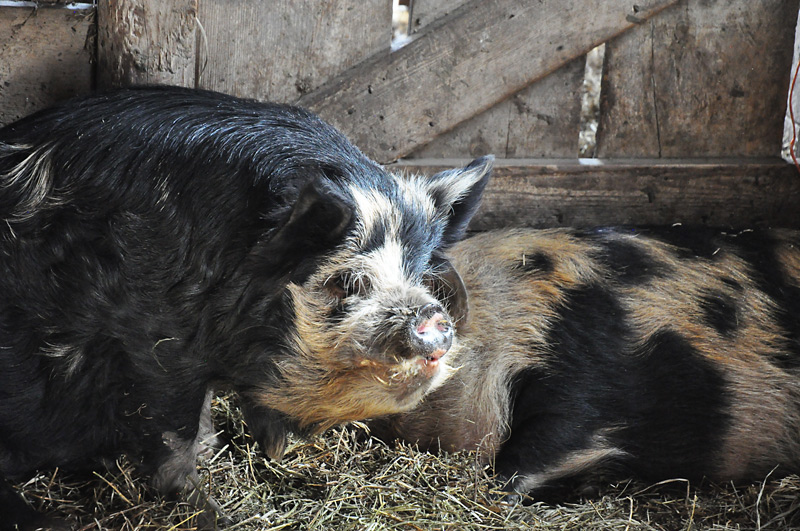
I am using a new formula for my pasture recovery and beef fattening. One third grasses, one third legumes and one third brassicas. Plus sunflowers and pinto beans and turnips, I think that cows and pigs (like humans) need a more diverse range of foods – they are healthier and fatter. Plus we need deep rooted and nitrogen fixing plants for soil health. Many of the pasture mixes that are available seem to carry only two or three different species, theya re designed for animal growth not pasture balance – I am sowing fifteen different species of plant into the fields this year.
So today the salad bar paddock was sown in my new cocktail, plus Daisy’s paddock was top sown in it as well.And all the little pig fields too. Daisy’s paddock was one of the first sown when I began to farm and is worn out.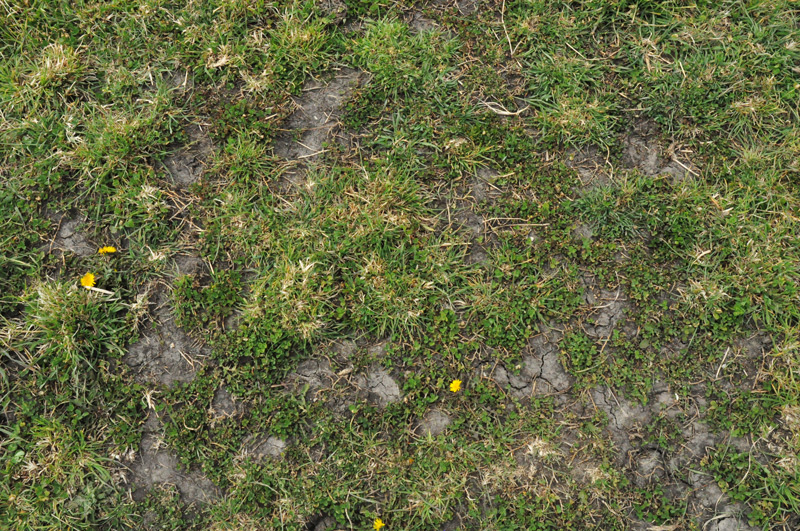
These fields were in a rotation of corn and beans and constant tilling for almost eighty years before I took them back to pasture. I try to resow each pasture every six years at the most and I have brought two more acres from monoculture monster machine cropping back into the farm each year.

Yo can see where the seed drill cuts a shallow slice into the ground and sows a collection of different seeds. These were mixed by my patient seed rep who I have had to encourage to let go of all his conventions and education in typical modern pasture management, stop trying to sell me pre mixes and use his knowledge of the actual plants and soil recovery to help me design these fields. I will take a shot of this section of Daisy’s paddock once a week (if I remember) so we can see any changes. So you and I can watch the grass grow.
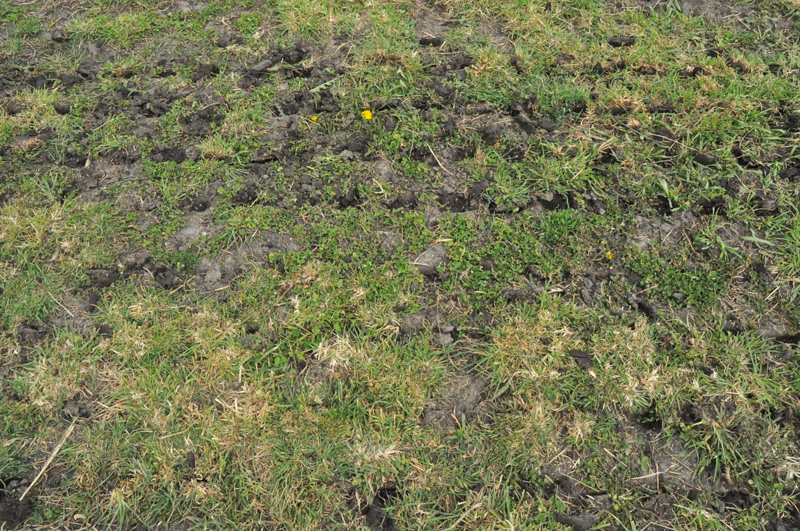
The health of my fields is as important as the health of my animals. In fact they need to be in balance to enhance each other so I was thrilled to find worms in the ground yesterday morning. When I began to recover these fields from years and years of intensive industrial horticulture I found that the earth smelled like it had been buried under tarmac and there were no worms at all, no insects or little animals, no micro-organisms, nothing. It was inert.Dust. Even rain crusts the top like sun on sand. The constant tilling and introduction of some pretty strong and damaging chemicals has taken a terrible toll on these huge plains. Thousands of years of fertility and soil structure has been plundered from the earth. At this time of year when they begin burning the fields and tilling the ground we are surrounded in dust and smoke. The monster machines that roll over the earth tilling the little bit on the top compact the soils, creating a hard pan a few feet below that becomes like a sheet of iron, drainage is interrupted and the grounds flood in the smallest of rains. Then they bring in bigger machines to dig trenches and lay pipe to drain the earth and so the rain immediately flows into all the ditches and creeks and the land is sodden and backed up and flooded anyway. The trees have been pulled out and burnt so there are no deep roots to help drain the fields, and bind the top soil to the earth. Neither corn nor beans go deep enough to help.
I wish they could find a way to grow field corn and soy beans without using soil. It seems such a shame to literally destroy our soils in such a grim and dogged manner. I would like to see these crops grown in high rise car parks or something. Off the ground.
I have yet to see a farmer or owner of these lands get out of her tractor or his truck and kneel in the soil and pick up a handful of soil and smell it. Or dig into it and examine the structure. Or even plant a tree. Or just sit in the middle of this waste land they and their fathers and grandfathers created and think about what they are doing.
This is not my land. I will never own more than what surrounds our house. But I weep for it and long to have the ability to save more than the acres we rent. To protect it. One of the field fires got out of hand last night and whipped right down the length of the bank across the creek. John fought it at one end so it did not burn our hay fields. But it ran straight across the far fellowship forest right through where the poles for the zip line are. My little path is gone. The nesting birds flew away. I have not had the heart to check and see if the beaver dam caught alight. This morning I will know. The ground is now all black, scorched. I went into one of my furies. I will have to wait and see if the trees recover, these grass fires move very fast so there is a chance they will be ok and fire often activates new seeds. And with a big breath I will go back to my seed man tomorrow and taking advantage of the empty ground I will sow wild flowers into the blackened ground. Not a lot, as the seed is expensive, but a little.
When I was at school we were taught that a field should be rotationaly cropped for three years then rested in a cover crop in the fourth year. No-one rests the soil anymore. No-one even uses a cover crop for the winter. They would lose too much money. They even burn off the corn husks. But I cannot fix these things, I can only look after the areas I rent from John’s family for the lifetime of my stewardship. My choice is to use pasture as a means of recovering the soil and feeding my family. We have to work together with the soil. It is a delicate balance. It is also an act of faith in the earth. The wild flowers are an act of faith.
And at last after maybe six years of management the worms are returning. This is good. 
The peahens are laying again.
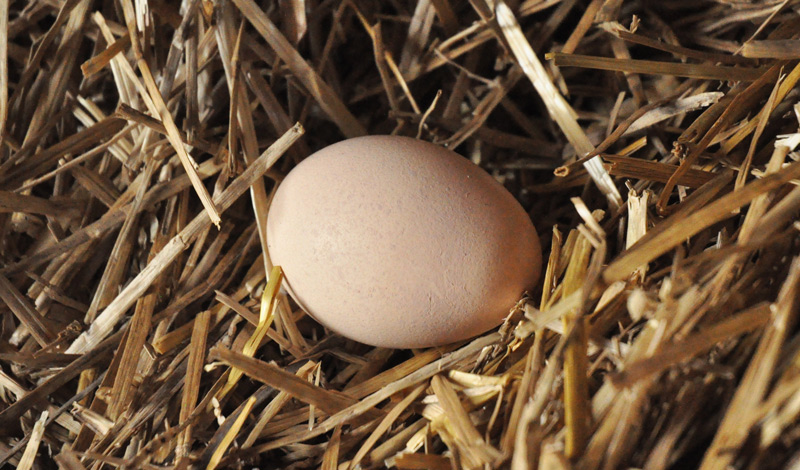
Check out the family resemblance between mother and daughter.
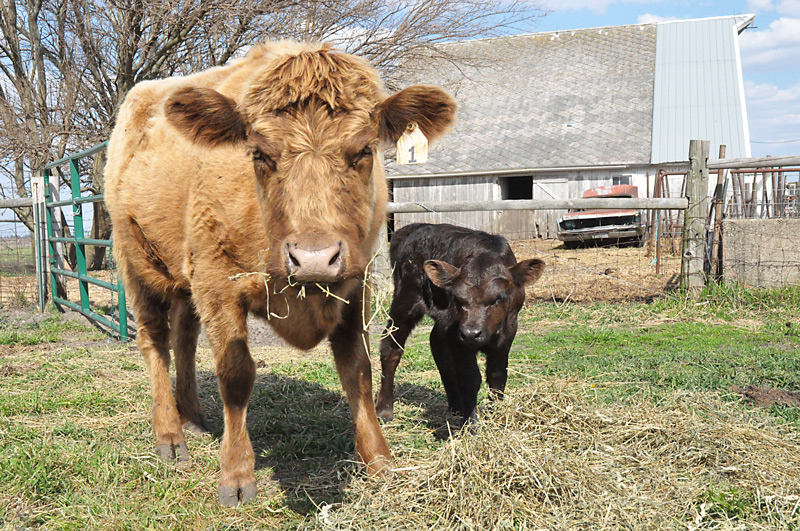
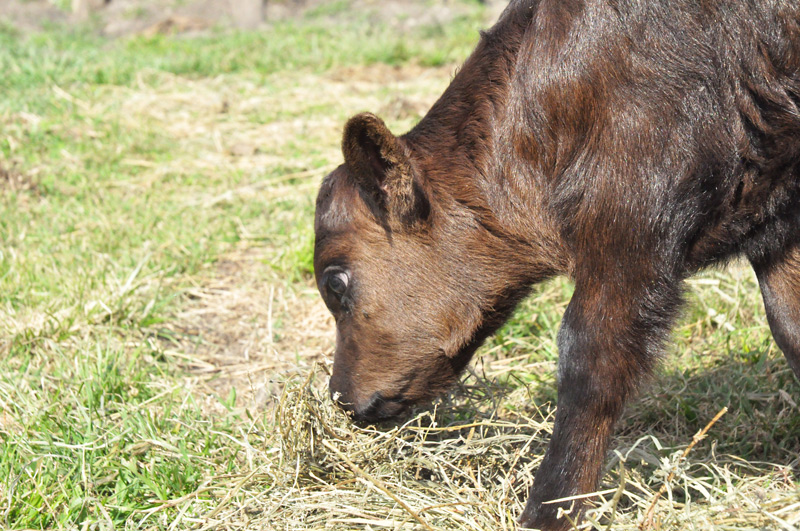
Still waiting of any real sign that Poppy is pregnant. Though I sense a wee belly here. It could be my wishful imagination. I have every reason to believe that she may go another month to her third date.
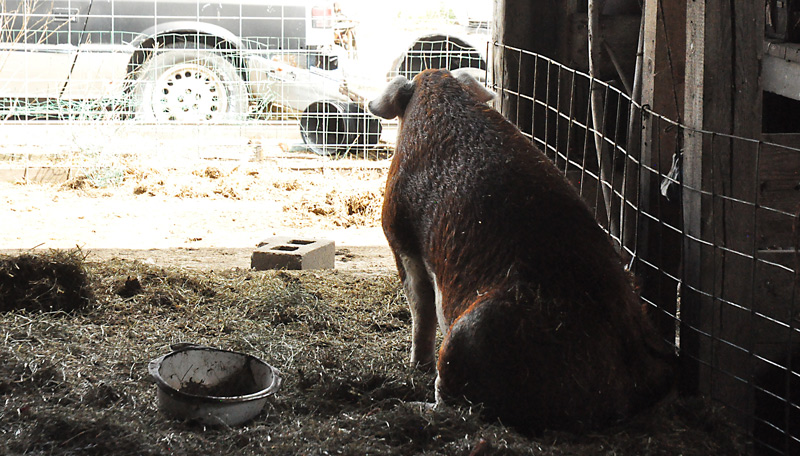
Which is fine. Though I am going to have an awful lot of piglets here at one time if Molly and Tahiti breed as well.
Another beautiful day is unfolding in the gardens. I must gird my loins and go out to inspect the damage in the daylight – that fire was still burning until late in the night.
I hope you have a lovely day.
celi
 The Kitchen's Garden
46 responses to “My pasture cocktail and fire”
Digging your hands in loamy soil is such a live affirming thing. I hope the fire didn’t hurt your farm too badly. It will be nice to watch the grass grow.
So glad you are reclaiming and healing some of that prairie. There is nothing better than good healthy soil and your pasture recipe should really help it. Though, many of the farmers up here are raising only corn for their cattle (which I hate, grass is better), they do rotate fields with legumes, but they never sit with cover crop for a year. They don’t till, they overplant.
You versed so bravely what is the reality of our Midwestern plains. I feel overwhelmed by the magnitude of the problem. My soul weeps for Mother Earth and Father Sky. I have watched my Nebraska homeland become this big agricultural corporate monster in my lifetime. Even here in the South I see the mistreatment of land used for livestock production. I observe the flagrant waste of water resources, chemical treatments for soil, and contamination of our air, rivers and lakes – the natural environment. My fear is that (not in my lifetime) the plains states will be a desert land, and Monsanto and other toxic giants will pull up and move out. Just recently here in Oklahoma we are beginning to see the results of decades of oil and gas production and the catastrophic aftermath of fracking and erosion. Only when rock bottom is hit, will man see the err of his ways.
People really need to take notice of what is going on in western AZ and parts of eastern CA. Foreign countries who are facing drought and lack of hay/feed in their own countries are buying thousands and thousands of acres of dry desert land, drilling deep wells, and irrigating fields and fields of crops which are immediately shipped out of the US to their countries. You can easily see the long strips of green among the sand from satellite images.
In certain counties /states there are laws limiting water use/over use of wells in some areas/traditionally cultivated or populated areas – but not the entire state. You’d think citizens who deal with rationing and strict water regulations would be storming their legislatures – concern is growing and bills are being introduce, but the entire country needs to keep an eye on this.
I agree completely! The magnitude of all of this is overwhelming to me.
Thank you. It needed to be said.
We soon will be getting the smoke from the MX fields burning. Didn’t know they still burned where you are. Not done on purpose here except “controlled” burns in wetland/prairie conservation park areas – only lightning has managed that the past few years.
Field management is terribly interesting – I recall farmers who owned the very old tractors walking their pastures and fields checking the dirt texture and quality in the winter to decide what to do in the spring. There was a lot more care given to small local farm lands and fields did rest – and grazing was rotated as well as crops. Factory farms may supply a big product, but of lesser quality and damaging the soil.
Worms are good! Bees will come – along with all the rest. It will work. (and the path will return along with the birds) Go Farmy Ci!
Variety is not only the spice of life, it is the very foundation of it. Without the kind of diversification you are practicing so carefully and wisely, the earth, as you note, dies—and eventually, all of us with it. I thank you for your part in fighting the longtime tide of ignorance, both in practice and in print. You are an example to us all. May your post-fire inspection bring you far better news than any of us dreams possible!
xoxo,
K
I hope the fires didn’t destroy everything. Your thoughts here echo my own, and I applaud your VERY meaningful work towards restoring the land and fertility. What we have done to the earth is appalling, and I am hoping within the next generation we will see a revival of the old ways of restoring the land after/during planting. Factory farming is not good for man nor beast, nor land, of course. Do you have Conservation Districts there? My local CD has great classes and information on restoring pastures, pasture rotation, mud management (a HUGE issue here in the rainy Pacific Northwest) and protecting our water from runoff. When I first got my property a representative came out and helped me with a farm plan (no fee – just part of what they do!) for managing the animals, pasture, etc. It was a great help!
I do hope the beaver dam survived.
I’ve never understood the short sightedness that ignored the need to let pasture rest and give it a cover crop to be slashed and mulched in, to sow helpful plants with deep, deep roots to bring up the nutrients and open pathways for the worms, to spread good manure from healthy animals who are not fed a constant diet of antibiotics and vermifuges, and building soils that will hold and absorb water instead of creating hardpan where the precious stuff runs off because it cannot penetrate and there are no water management systems to keep it where it’s needed, like swales, or berms. Celi, thank you for doing what must be done in your small patch of the agricultural desert which our world is becoming.
So sad about the fire, such a shame that others don’t have the same love and respect for the land that you do. Thank God for farmers like you.
You are truly a steward of the land, and what you wrote today is so very sad. Overwhelmingly so.
You really can tell a lot about the soil by smelling it. Worms smell just right. I made a worm bin at work to feed the leftover tortoise diet to, and the castings are going up into the sterile red clay on my hill to try to improve the soil to prevent erosion. Worms work magic.
And that is the prettiest little calf I have ever seen!
I’m with you and think good land management is essential.
i think then you are using a No Till Planter? can you talk more about that, show us what it looks like?
Take heart Celi, on a small scale the family I buy meat from is slowly but surely bringing back the health of the soil in his fields. He moves his chicken tractors and aerates with his pigs and plants things like daikon and turnips to bring up the minerals and the beef, pork and chicken has wonderful flavor. I’ve had many many really thoughtful discussions with them. On a side note, the steers his daughter shows in 4H must be raised on grain to bring them to a size comparable to those shown by other competitors but after people have tasted the meat from his pasture raised beef he has a hard time selling these grain fed ones! On a larger scale our state weekly, Wisconsin State Farmer, has more and more articles in it about more and more farmers planting deep rooted plants in their fields and using cover crops as ‘green manure’. There are also many articles about the farmers transitioning to organic production which is a big job considering all the hoops they must jump through. Even though I pass by fields with horribly desiccated, dusty soil on my daily walk I am encouraged that many are sitting back and rethinking their methods. There is hope yet!