


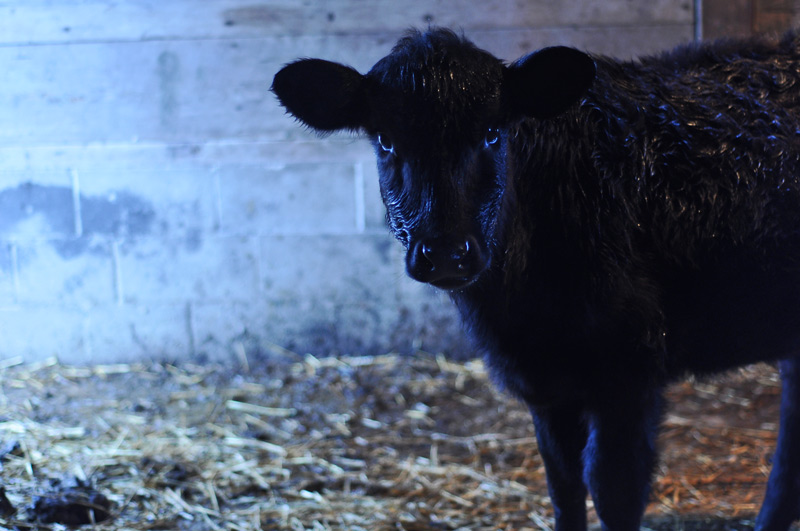
Tia is looking quite beautiful in this shot don’t you think? .
It poured with rain yesterday. POURED!
It was an inside day for everyone.

I have been having trouble with a group of layers who want to sleep in the laying boxes. It is not the sleeping that is the problem it is the fresh manure that piles up in the corners of the boxes every night, making the early eggs dirty and needing cleaning every day and I was replacing the bedding in the boxes every day and that was becoming unsustainable. I only have a certain number of straw bales. Every cent is accounted for this winter.
I put the box chickens back up on their roosts every night and they just flutter about and cry and then return to the boxes. So I looked about for something new to put in the boxes. Applying my new system – stop complaining and fix it or ADAPT. I have found these laying mats. They are made of plastic, looking like long haired door mats and are easy to clean with a good shake.
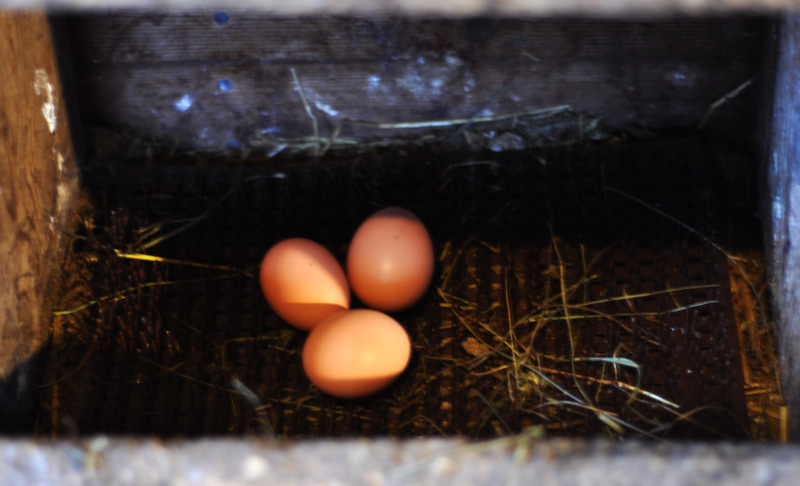
The mats have been in the chook house for two days now. I cannot change the unwelcome visitors but I can create an easy way to clean up after them. Chickens hate new things. But they laid fourteen eggs on the clean mats – a new high for this time of year – and much to my surprise, last night there were no chickens sleeping in the boxes, not when I checked anyway.
Yesterday I also caught four more of the wild chickens, who lay anywhere they like, and popped them in with the old layers, this is causing a ruckus in the chook house also. Possibly contributing to the box sleepers deciding to stick with their mates on the ample roosts. So part of my fixing it was to make some noise apparently. 
Because they have started laying early, (usually by now we are down to one or no eggs a day), I must follow their lead and I have put on their extra daytime light to jump start the rest. This year I put cold bulbs into the heat lamp holders and hung them. What is interesting is that the chickens stick to those pools of light scratching about and doing their busy work right under the lights. So when, in the past, I thought they were gravitating to the warmth, it was actually the light that attracted them – these modern light bulbs have no warmth at all.
You can see from the image above that their wall window is half open due to the warm weather – this natural light (though no sun) and the warm winter has contributed to the egg count. It will be interesting to see what happens when the real winter cold comes – and it will come.
Just not today. Today we are going for a high of 47F/8C. Another NZ winters day on the prairies of Illinois. Rainy and foggy with lots of mud. But I cannot change the weather or maybe I can. I figure – if it took two hundred years to change the weather patterns, it will take two hundred years to heal them. I don’t care what the nay sayers say, I am leaving them blubbering in their corners, I am working on my corner now. I am an optimist. I have happy pebbles. So I am going to plant more and more trees (my healing of choice), and combine my feed runs in the big truck into one trip each fortnight and adapt to the changes that have been wrought so far.

Plus as you know I fly a lot in the winter which is another cross against my footprint count so I have even more trees to plant! The Fellowship Forest is going to be magnificent. I will focus on native fruit trees again this year and oaks and mulberries. (You are most welcome to plant a tree here too if you have no space at your place). And this year one huge plot of wild native flowers and grasses is going in for the bees and butterflies. I will sow piles of milkweed which will drive the croppers around here crazy! They like everything mowed and tidy and spray any flowering weeds they see. They hate milkweed. Then we wonder where the butterflies and bees have gone! They are slow to adapt but I am not.
I hope I have a good group of woofers this year – we have work to do!
The sun must come back one day. Not today though. I remind myself that cloudy days are good for the skin.
I hope you have a lovely day.
love celi
 The Kitchen's Garden
59 responses to “Mats for chooks”
I can just imagine that woman complaining about dirty eggs at the farmers’ market again! I’m glad you found a solution to the straw 🙂
She is going to stick in our heads – that woman! c
Perhaps she’d like to give the chickens a good talking to 😉
The light is so blue in your first photos. Isn’t the color blue interesting though – and the emotions to blue. Sad, melancholy, calm, peaceful, retrospective. Which – you could say yesterday’s post was both retrospective and prospective.
Your laying mats make me think about door mats you wipe your feet on prior to entering – wouldn’t be the most comfortable spot to rest your bum…… 🙂
Actually the light is blue because i left the white balance set – to inside fluorescent – to take the shots of the lemon honey then forgot to change it back when i took it outside – it is a nice effect though? c
What clever solution those mats are, and look at the size of those early season eggs! They are going to be extra-huge 🙂 by mid summer with those glorious orange yolks I so envy. Laura
These eggs are from the older layers too- and they can get pretty big – c
Ha shaking the chickens up and out of their bad habits! That’s the way. I love that word blubbering it makes me smile. Stop yer blubbering or else! Your planting plan is a very good one, I want to plant more bee and butterfly friendly plants this year too. We have sun here but cold. Off to Austria tomorrow so my footprint is not good either.
Austria – marvellous! I will plant an extra couple of trees for you!
Ohh thank you! 😀
My footprint’s not good either, I’m off to india tomorrow! Tomorrow!? I’d better go pack 🙂
Good tip on the mats! Now, can you figure out a way to keep mine from flying up into the loft to hide their eggs???
Don’t you hate that!! Then they go rotton! c
Celi, where did you find the laying mats? They look like something we could definitely use too! And on another note, your comment “I remind myself that cloudy days are good for the skin.” made me laugh, but also makes me wonder if you use sunscreen and a hat when you are outside. I just had 3 small spots frozen off my face, and want to pass the word on. I have been super consistent with sunscreen and hat usage since being on our little farm, but the results of time in the sun from my earlier years may be coming forward. Nothing to worry about, and thank goodness for that, as I love the sun, and with a river 3 miles away and a huge lake system 1 mile away, and the farm, I’m always out in the sun. I just make sure I always use sunscreen and a hat! I’m hoping that you do too! 🙂
I am from New Zealand – if we do not wear sunscreen in NZ you are burnt within 15 minutes – and I mean BURNT – the sun is ferocious. American sun is a baby. It is like comparing Budlite to a Boutique Elephant Beer. But I have been trained since a young age to wear sunscreen on my face and shoulders and etc. And hats and of course the long sleeved shirt when in the garden . All summer a big pot of sunscreen sits on the porch though the chemicals are very harsh so in the end a hat and shirt are the best defense. I want to get one of those big Mexican hats for really hot days! The layer mats I bought for just over two dollars each from QC supply. They call it a nesting pad. They were very fast to send them to me too, and with straw at 3.50 a bale these will have paid for themselves very quickly. The man who recommended them to me has had the same set in his hen house for almost ten years. c
I must get some! That should solve the poop in the boxes problem! 🙂
Thank you for the idea of putting mats in the nests. My chickens have been doing the same thing, sleeping in the nests and making lots of mess. I will find something similar to put in there today!
Plus there was no fouling on the mats this morning – all five boxes were clean – so i am pleased. c
Once the insane heat, humidity and heavy rain of the Wet abate a little, I’ll be planting fruit trees: banana, avocado, lychee, custard apple, lime and lemon. There will be something for the nectar feeders too, some frangipani and murraya, which both the native bees and the sunbirds love, and a couple of brugmansias, or angel trumpets, just because I love the scent of their flowers and find them beautiful. I am restoring a little oxygen in this corner of Queensland…
As usual you are very busy! c
Not yet, not till this stinking hot and humid weather eases a bit… For now, I’m staying inside and sewing 🙂
47F… not bad. We are enjoying a balmy 34F today.
Balmy – this warm weather makes things so much easier c
very clever on the mats, never seen them before for the chickens, my hens took a six week break and are just now coming back into laying, more eggs coming in daily now.. like you every penny an bit of hay an straw is planned for the winter..
I am planting more trees an bushes this year as well, so worth it.. you work on your wee corner, I will work on my wee corner an hopefully thousand and thousands us will continue to do so.. I had to laugh as I have milk-weed and yes, it does drive the local farmers mad.. lol
my mother in law HATES milkweed. They all tell me it is a WEED and they fought it like crazy when they were children and do you remember how that tree by the big bay window was covered in monarchs that summer of 1976. Sigh. The seventies was a tipping decade for our poor old bees and butterflies. Anyway – YUP! – you have your corner and I have mine and we will spread out from there!
I love milkweed and the monarchs, but I hated it in the pastures as it is toxic to sheep. Every time I moved fence, I had to go around pulling it before letting the sheep in. So, I have a love/hate relationship with it! Now that we have no sheep, it’s a lot better :*)
I love your philosophy on trees and milkweeds and grasses. Really that’s all we can do – improve our own footprint as best we can. If we cannot heal at least we can minimize the hurt.
I think we can heal. In fact if we all get together and begin the healing and train our children to work along the same lines, instead of crying about the damage pollution has dealt to the earth, we can spin this in an entirely new direction and heal our patch. We can take control of this. c
Chickens are indeed odd creatures. Mine often try to use the nesting boxes for beds, especially when they are broody or right after they have freed their chicks to “teenhood.” Young pullets that are being bullied will also try to use them. I hate blocking them off at night as I will then find an egg in the middle of the coop or tucked in a fouled corner the next morning. The mats look like a wonderful idea, I may have to look into them too. Nothing worse than a hand full of fouled eggs when you don’t want to wash them immediately and I don’t wash or refrigerate them unless I get a surplus. I never use lights with my birds, it shortens their laying life. I just do with fewer eggs when the light cycle is down.
I love your plan with trees and native grasses. Since we purchased our farm about a dozen years ago, we have planted many trees in areas that are too rocky to graze or mow and in areas that we want to build windbreaks to slow the gales that blow through the mountain hollow. For Christmas this year, our daughter’s family bought us a dozen trees and tall shrubs that will be used to continue our reforestry and to stabilize an earthern bank by our driveway. A huge section of my garden that has gotten too large for me to manage alone is going to be planted in oats and wildflowers this summer. We have lots of native milkweed and I am cautious to not mow where it grows and to encourage it’s reseeding in that area.
Oats are great to help your wildflowers come through – good thinking. and then the birds get the seeds – winwin. Sounds like your corner of the world is being rejuvenated! What a great christmas present – trees. As an aside – when I release the tween chickens from their big dog crate – I wire the door open slightly so only a small tween bird can get back in there -they do get a hard time from those big ones don’t they. c
Good idea about the cage. I have penned off two laying boxes and over to the edge of the doorway with a small opening before. My coop isn’t designed in a way that allows me to put a cage in there, so I have had to be creative to make it work. Fortunately, I am fairly handy with tools, wood, and fence wire. I also realized that when you click on my blog name that it takes to and old one. I need to try to fix that so other readers can find me if they wish. It is right at the bottom where I sign in, so I am unsure why it clicks you to an almost two year old post.
Perfect post for this particular day–hopeful, purposeful, global, and local.
Interesting you mention Global. This is something to remember for sure. We really are all in this together and working WITH other countries is an important part of the Earths recovery. Especially in large land masses where water and clouds and the sea know no boundaries. c
I have to remind myself of that too…it’s cloudy and snowing again here today. Maybe my wrinkles are taking a rest! 🙂
Linda
Yes – a rest day for wrinkles! c
YES! I love the thought!
Reblogged this on Wanda D. Jefferson and commented:
THEKITCHENGARDEN