

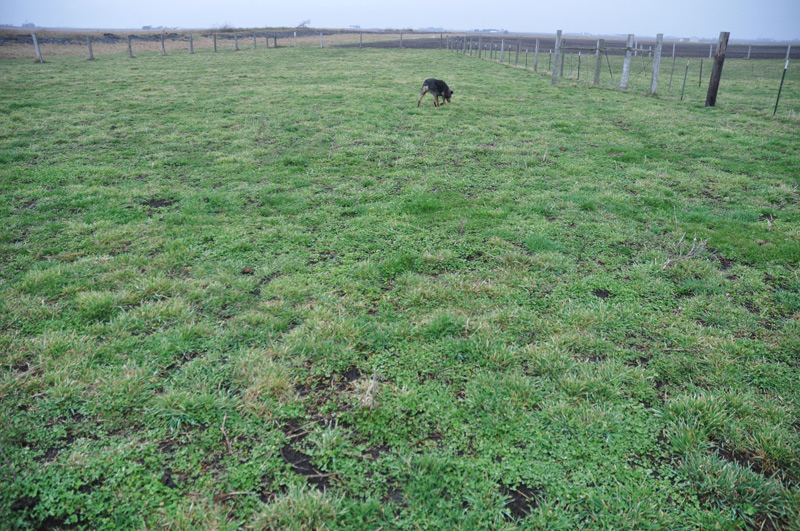
I rent these fields from Our John’s uncle. And when I first took them over they had been cropped in corn or beans or wheat for at least fifty or sixty years. Since the 70’s chemicals have taken over as the main source of herbicides, fungicides, pesticides ( the suffix cide means to kill so you get the picture) even synthetic fertilisers (often made from oil) that ultimately draw goodness out of the soil, not add to the soil, rendered this ground inert.

Not one living thing, certainly not any earthworms could be found and the ground actually smelt like the underside of a road – you know that smell when they scrape the tarmac off a road — when there are roadworks in town?
The rain water pooled, did not drain properly and the soil was silty.
From October to May the ag land is quite bare to the elements, awaiting its new crop. You have seen our surrounding fields – you will never find an earthworm out there. None of this is natural. To heal land into rich pasture is a long, long process. Most of it conducted by nature.

Imagine my delight – after seven years of growing pastures in this soil – I have found numerous earth worms. And in large numbers too. The soil has begun to heal.

Some interesting facts about earthworms.
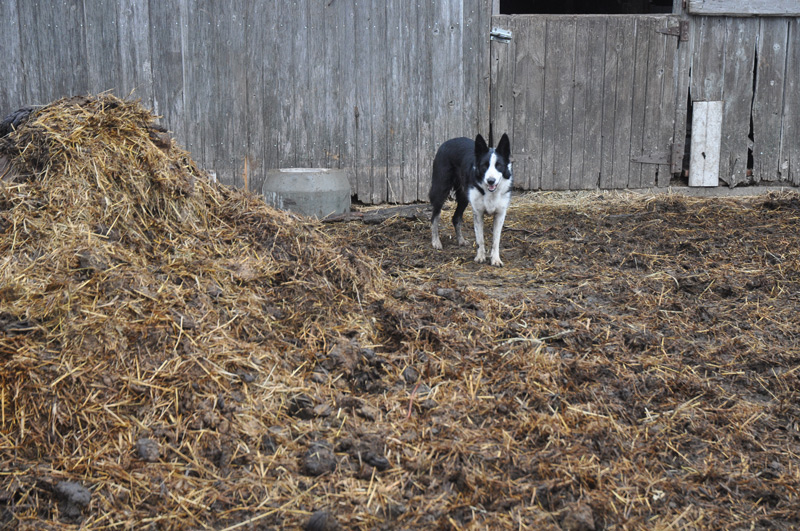
And it is all thanks to this stuff. Manure. (Though this is destined for the compost heaps down the back.)
Here is a patch of pasture that shows the amazing fertilising power of a dollop of manure.
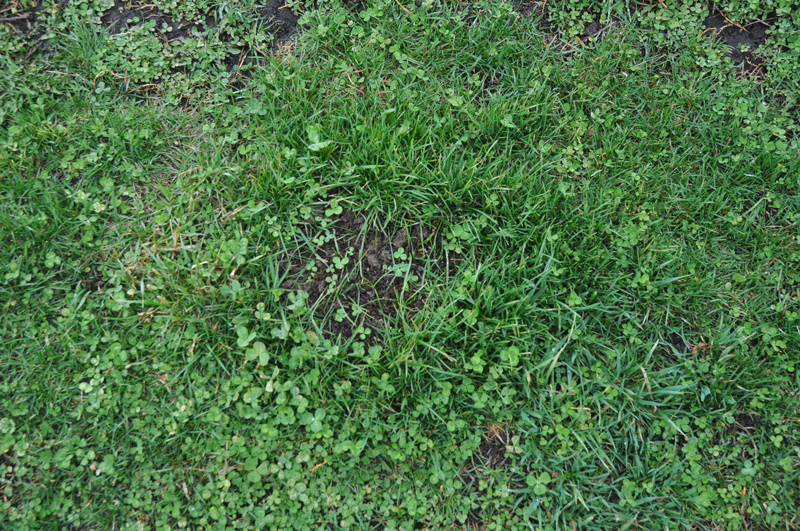
See how rich the surroundings are. And if I were to dig down under there I would find many precious earthworms. This is quite the best news.
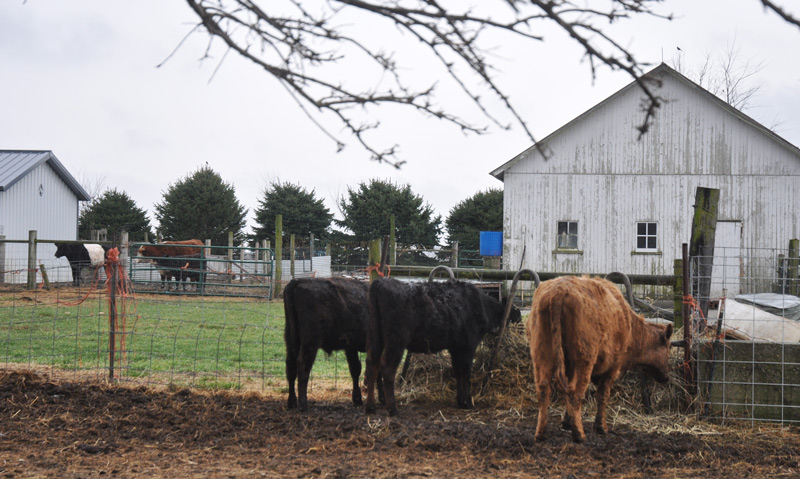
Thank you, cows.
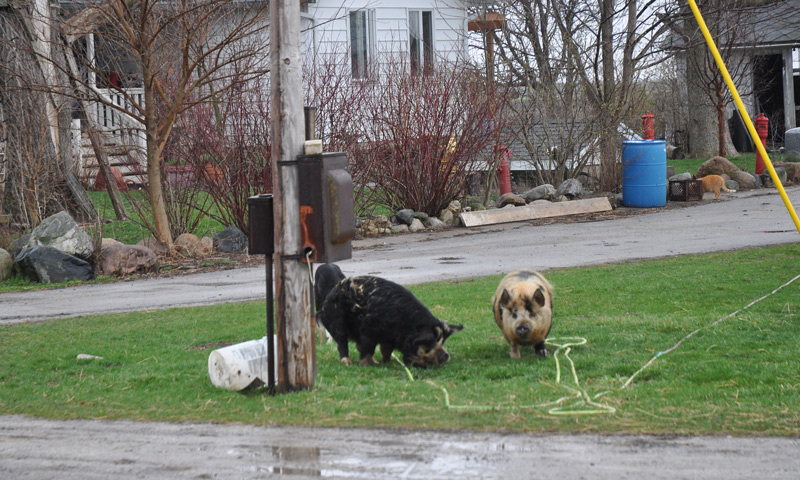
And pigs of course. All my pigs are vegetarian so their manure is also easily digested into the soil.
You all know how worms work so I won’t go into it but you can imagine my delight at finally seeing multiple worms in the soil. Worms mean this work of decomposition is happening at a rapid rate now.
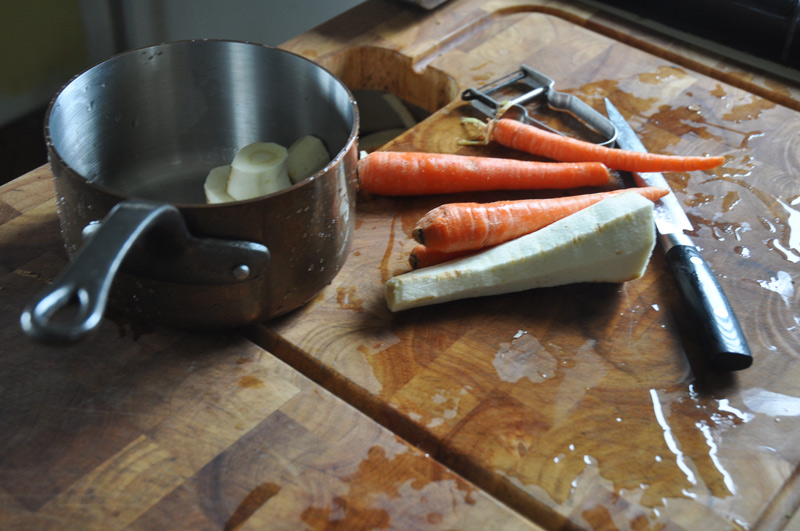
To jump from manure to carrots and parsnips is a wild one. But I love mashed parsnips and carrots. It is the best way to use up the old root vegetables while the new ones grow. The manure I use in the gardens has to be composted for a year first. Though my Dad swears that if you plant a tomato into a cow pat you will get the best fruit ever!
Actually he said his mother used to keep a tin bucket and shovel by the gate in the old days and if a horse in town was seen to poop in the street the Mums would send their kids out to scoop up the steaming piles and add it to the compost down the back by the vegetable garden.
Worms in the soil means the natural underground cycle of composting organic matter is now intact and working. Long live the worms!!
I hope you have a lovely day.
 The Kitchen's Garden
70 responses to “The re-turn of the worm”
So exciting. As a kid I was scared to death of worms. Go figure. I’m on a parsnip kick at the moment, too. Have a recipe for baked parsnips and feta cheese I’m trying tomorrow night.
That sounds GOOD!! The sweet and the sharp – a perfect pairing.. c
That parsnip-feta combination sounds stellar!
My mother used to cut the parsnips into strips, dredge them in seasoned flour and fry them until golden brown and tender. Those were always eaten quicky, we all loved them. I also slice a parsnip, carrots, celery, onion, garlic and simmer in chicken stock, then add some noodles. Wonderful things parsnips. White turnips and rutabegas too.
yes, I have planted my turnips – I LOVE them too
When I lived in Melbourne, I kept a worm farm so the little wrigglers could gobble up all my organic waste. They were amazing, they’d everything from vacuum cleaner dust to coffee grounds and teabags. The only things I couldn’t give them were citrus and onions. They gave me wonderful worm tea to dilute and use as fertiliser, castings to add to my vegie pots, and needed very little attention. They had a worm apartment block in my porch. I can’t keep them here, it’s just too hot. I have nowhere outside the house that stays cool enough, and they need too much space and are a little smelly for inside. I do love worms… Hurrah for your exploding population, hurrah for cow, pig and chicken poop and hurrah for soil with a bit of life in it.
Hurray for the return of your earthworms, so very good for our soil and such a good harbinger of soil health. I love getting your weather reports, it lets me know what to expect in the next 48 hours. Though your temperature is usually about 4 or 5 degrees cooler, the rain, wind, and thunderstorms seem to come along. This has been a strange winter into spring with little snow, too warm. Let’s keep planting our trees and do our part to try to reduce the carbon, do our part to improve our environment.
Dull, overcast and high of about 56 today. A good day for farming ! c
Yay for earthworms. I’m always happy to see them too. You have done a good job there. I have to buy compost here. No cows for miles. 😦
wonderful post- good advice! I have shared this with many friends! Have a super day!
As Joel Salatin says: “We shouldn’t treat our soil like dirt” And ok…I’m off to the store today to pick up some parsnips! 🙂
A wonderful post, left me smiling thinking the worms are back 🙂
So wonderful.. your soil is indeed healing, and the nature cycle is coming back.. this post put a huge smile on my face and I needed it.. all good here on the farm but some outside stress’s going on..
I remember finding it so amazing on the tundra.. like your cow pie.. it was the shed antler, the poo or the butcher site that would help provide life and growth for the next ten, twenty or 100 years. Its amazing how a bone can feed its own eco-system for so many years to come in regards to the plants.
Happy cows, happy pigs = happy worms and happy Celi… isn’t it? – And happy Fellowship!
Thanks to your tireless efforts. Congrats!
Worms! What wonderful news.
Sadly I think you are preaching to the converted here. We all love healthy soil here in the lounge.
But the more I learn of how many people know nothing of growing food, the more despondent I become. So many put even thinking about it in the ‘too-hard’ basket, and worse, genuinely don’t care.
Guh! I feel so frustrated by the arrogance and ignorance.
Carrots and parsnips mashed – food of the gods! Spread on Vogels toast and grilled with a hint of emmenthaller cheese. (Did I spell cheese right?) 😉
Today I am happy for worms half a world away.
We compost our horse manure — and with five horse plus two donkeys, there is a lot of it. In the fall, I start my special pile that is 50/50 manure and leaves. I use it in my garden for the flower beds and the orchard. We spread the rest on the ground, anywhere grass grows, and give some away to neighbors. People can’t believe how healthy all the plants look — I’m not a master gardener; it’s all that compost which I call black gold. …and earthworms love it too. I love seeing worms.
J & D > Even by the time they hit the ground, leaves are loaded with soil-making bacteria. Leaf mould is the stuff of gardening legends, but in our view leaf-and-manure compost is better. In our island fastness, we don’t have much in the way of leaves, but we have any amount of seaweed we want – we just have to collect it. This afternoon we got half a tonne from the beach, and added it into the compost heap.
I think you should adopt one as a pet! You can call him Lowly, like the worm in the Richard Scary books. He can sleep with Sheila…😋
Fantastic news! That has really put a smile on my face. I really CAN smell that smell you spoke of – so it is extra amazing that you have signs – huge signs! – of recovery!
J > After so many years as a highway engineer, yes I do know that smell you refer to. It’s from anaerobic conditions underneath (and possibly methane trapped below the blacktop). Soil reduced to little more than inorganic particles becomes compacted (and thereby accelarating run-off, and reducing re-charge of groundwater). The thought of all that prairie land being like that is … heart-breaking. We’ve just today closed up (with an old carpet) a compost heap (combination of last year’s waste from garden, kitchen and livestock, and this winter’s seaweed), and that will work away for another year until it’s ready to go on the land – complete with thousands and thousands and thousands of worms – most of small and new and in clusters. We have compost that makes your heart sing with joy, and the imagination summon up a year of abundandant and delicious produce!
[…] via The re-turn of the worm — thekitchensgarden […]